
Unity Industry Recap Highlights Experimental AI Workflows for 3D Data
Unity’s October 30 Industry roundup highlights an experimental AI workflow for preparing and publishing 3D data, alongside Unity Studio and pipeline integrations. These are primarily industrial production tools, not new default game-editor features.
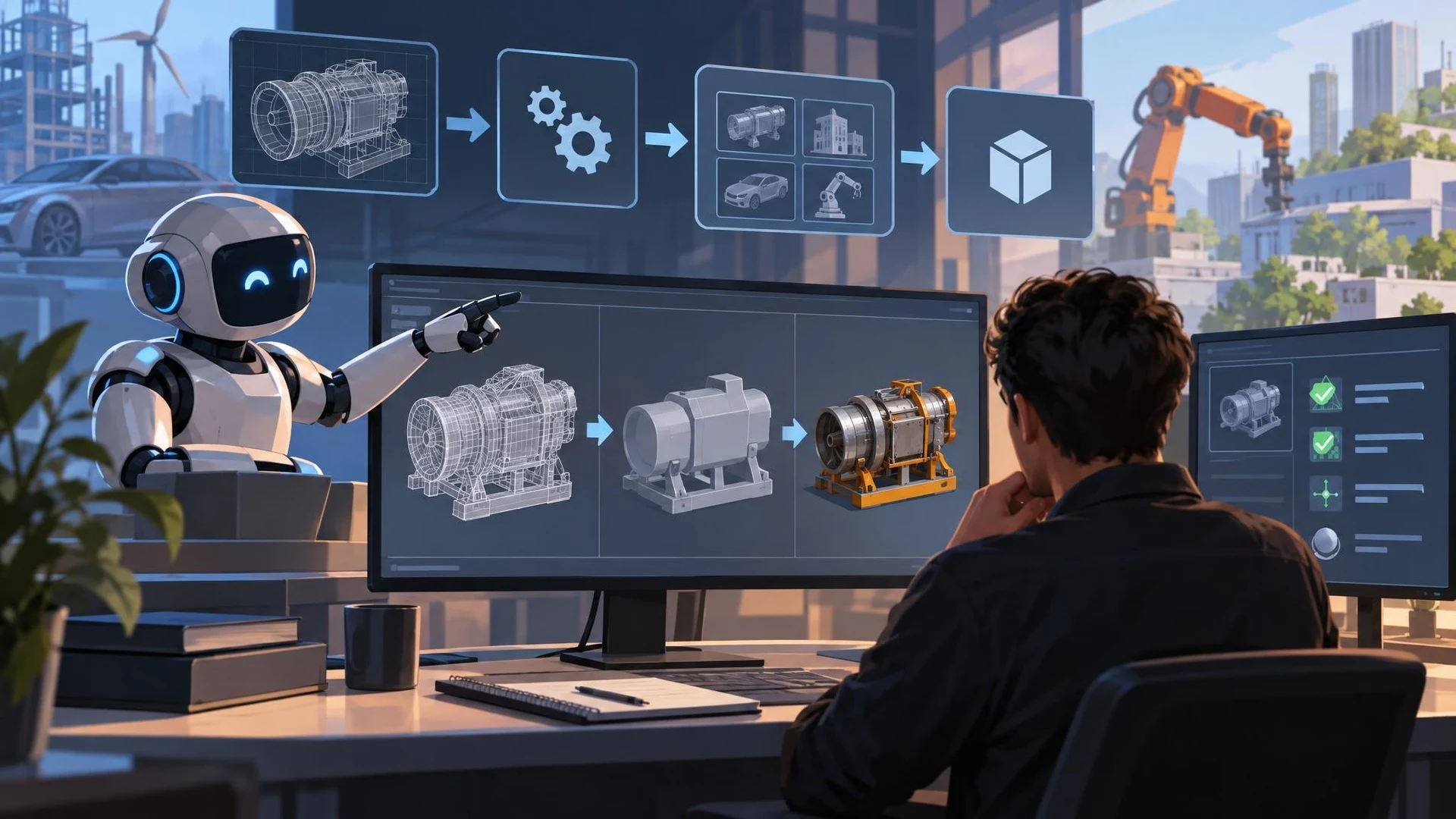
A game engine can sit at the center of a much larger 3D production pipeline. In an October 30, 2026 roundup, Unity Technologies reviewed its Unity Industry releases from the year and outlined work continuing into the fourth quarter. One notable element is an experimental integration designed to let AI agents assist with 3D data processing.
Unity says Industry AI Workflows launched as an experimental release in October. The workflow connects an agent to tasks involving asset preparation, optimization, and publication across Asset Manager, Asset Transformer, and Pipeline Automation. The focus is industrial content, particularly CAD and other complex 3D data, rather than automatically generating a finished game scene.
The wider article also describes Unity Studio, a browser-based environment for creating and sharing interactive 3D experiences, along with collaboration features and export paths into the Unity Editor. Other sections cover simulation, robotics, automotive interfaces, and digital twins. Unity presents these as parts of its Industry product suite, which has different users and commercial requirements from many independent game projects.
For game developers, the relevance lies in the idea of a structured asset pipeline with clearly defined processing steps. Importing 3D content can involve reducing complexity, organizing materials, checking scale, and producing consistent project assets. An AI agent might help initiate and monitor such tasks, but the results still need validation before entering production.
It is essential not to conflate an experimental Industry workflow with standard Unity Editor behavior. The October roundup is partly retrospective, covering releases from earlier in 2026. Its publication date does not mean every product mentioned was launched on October 30. Likewise, the preview of upcoming features is not a commitment that all will be available immediately.
A practical exercise for a game team would be to define an asset acceptance checklist for a small collection of models: naming conventions, triangle budget, texture resolution, pivot placement, and correct material assignment. Run the same checks manually on a handful of assets before considering automation. Clear inputs and measurable outputs are necessary if an agent is to do useful work.
The team could also separate asset processing from final artistic approval. A pipeline may detect oversized textures or invalid names, but it cannot be assumed to judge whether a model's silhouette supports gameplay or matches the intended style. Human review remains part of the process.
Unity's October 30 roundup is relevant as a window into 3D production tooling beyond games. Its useful lesson for game creators is the potential of repeatable asset workflows, tempered by the limitations of experimental tools and product-specific availability.
Rate this story
What did you think of this article?
Log in to rate this story, comment and like replies.
Log inNo comments yet. Be the first to share your thoughts.
More stories
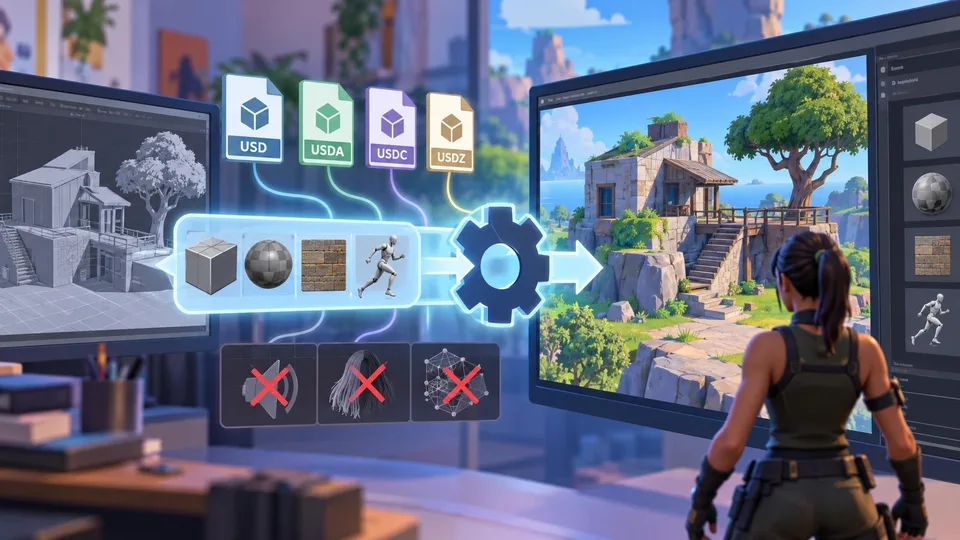
Epic Outlines USD Scene Import for Unreal Editor for Fortnite
A new Epic roadmap entry describes a USD import workflow for UEFN using the Interchange pipeline. It names several supported USD formats and asset types, while explicitly excluding USD export and some scene data.

UEFN Roadmap Describes Asset-Level Memory Snapshots and Spatial Analysis
Epic has outlined planned updates to memory reporting in UEFN, including engine memory, asset links and spatial calculations. The October 30 entry has no stated availability date and should be treated as roadmap information.

Rivian Shows How Unreal Engine 5 Powers an Embedded Halloween Experience
Epic has detailed Rivian’s Ghostbusters-themed Halloween Mode, which uses Unreal Engine 5 for real-time visuals in a vehicle interface. The automotive case study illustrates an embedded 3D workflow rather than a new game-engine feature.
Comments