
Epic Outlines USD Scene Import for Unreal Editor for Fortnite
A new Epic roadmap entry describes a USD import workflow for UEFN using the Interchange pipeline. It names several supported USD formats and asset types, while explicitly excluding USD export and some scene data.

A production scene can pass through several digital-content tools before it reaches a game. Each conversion creates an opportunity for materials, scale, hierarchy, or animation data to change. On October 30, 2026, Epic Games published a roadmap entry describing USD scene import for Unreal Editor for Fortnite, commonly known as UEFN.
The entry lists the USD, USDA, USDC, and USDZ file formats. Epic says the planned workflow can bring meshes, materials, textures, and animations into UEFN. Rather than presenting a separate importer with unrelated settings, it describes using the Interchange pipeline that already handles FBX and glTF content.
The roadmap also identifies settings for USD-specific tasks, including subdivision levels and collapsing selected parts of a scene. For studios with an existing USD-based asset pipeline, those choices may reduce the number of intermediate conversion steps. That could be useful for environmental content passing between modeling applications and Fortnite experiences.
The limitations deserve equal attention. The described capability is import, not export. The entry explicitly excludes audio, Groom data, and Geometry Cache assets. A USD scene containing those elements therefore cannot be assumed to arrive intact. Its placement in the UEFN roadmap also matters: the post should not be interpreted as a newly released import feature for every conventional Unreal Engine project.
Epic's roadmap entry shows no confirmed shipping date or release status. It is a statement of the intended workflow, not evidence that creators can already rely on the function in production. Actual support and available settings should be checked in the relevant editor version before a project changes its pipeline.
Teams considering USD could prepare a representative test scene in advance. Include one static mesh, a simple material, a texture, and a basic animation. Document the expected object hierarchy and transforms, then compare those details when the announced feature becomes available. A useful test records what survives import rather than judging only the overall appearance.
USD is attractive because complex 3D pipelines benefit from shared scene descriptions, but practical interchange depends on the details that each application supports. The October 30 roadmap post is a sign of a broader format strategy for UEFN, with important compatibility boundaries still to be validated.
Rate this story
What did you think of this article?
Log in to rate this story, comment and like replies.
Log inNo comments yet. Be the first to share your thoughts.
More stories

UEFN Roadmap Describes Asset-Level Memory Snapshots and Spatial Analysis
Epic has outlined planned updates to memory reporting in UEFN, including engine memory, asset links and spatial calculations. The October 30 entry has no stated availability date and should be treated as roadmap information.

Rivian Shows How Unreal Engine 5 Powers an Embedded Halloween Experience
Epic has detailed Rivian’s Ghostbusters-themed Halloween Mode, which uses Unreal Engine 5 for real-time visuals in a vehicle interface. The automotive case study illustrates an embedded 3D workflow rather than a new game-engine feature.
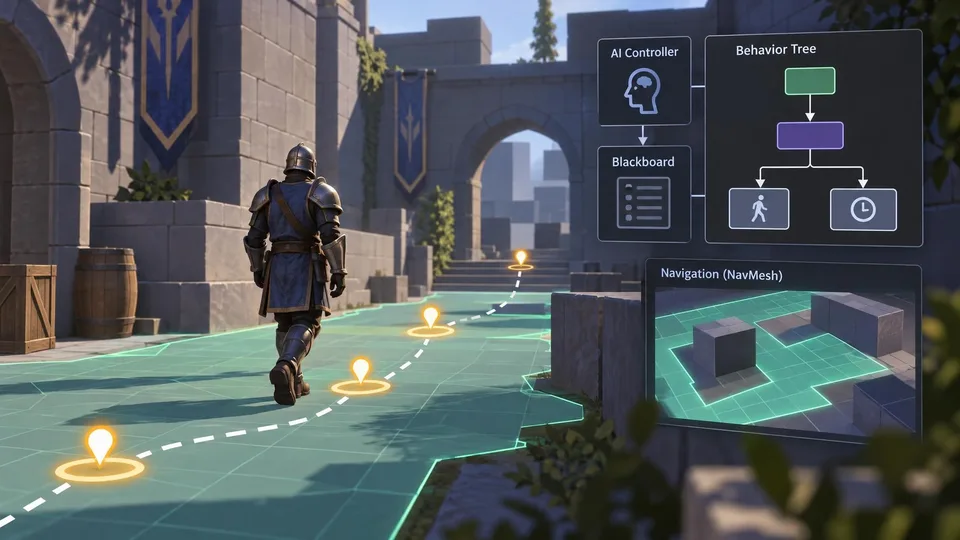
A New Unreal Engine 5.7 Blueprint Tutorial Builds a Patrolling NPC
A community tutorial published October 30 walks through a basic patrolling character in Unreal Engine 5.7 using AI Controller, Blackboard, Behavior Tree and navigation. It is educational material, not a new engine capability.
Comments