
Rivian Shows How Unreal Engine 5 Powers an Embedded Halloween Experience
Epic has detailed Rivian’s Ghostbusters-themed Halloween Mode, which uses Unreal Engine 5 for real-time visuals in a vehicle interface. The automotive case study illustrates an embedded 3D workflow rather than a new game-engine feature.
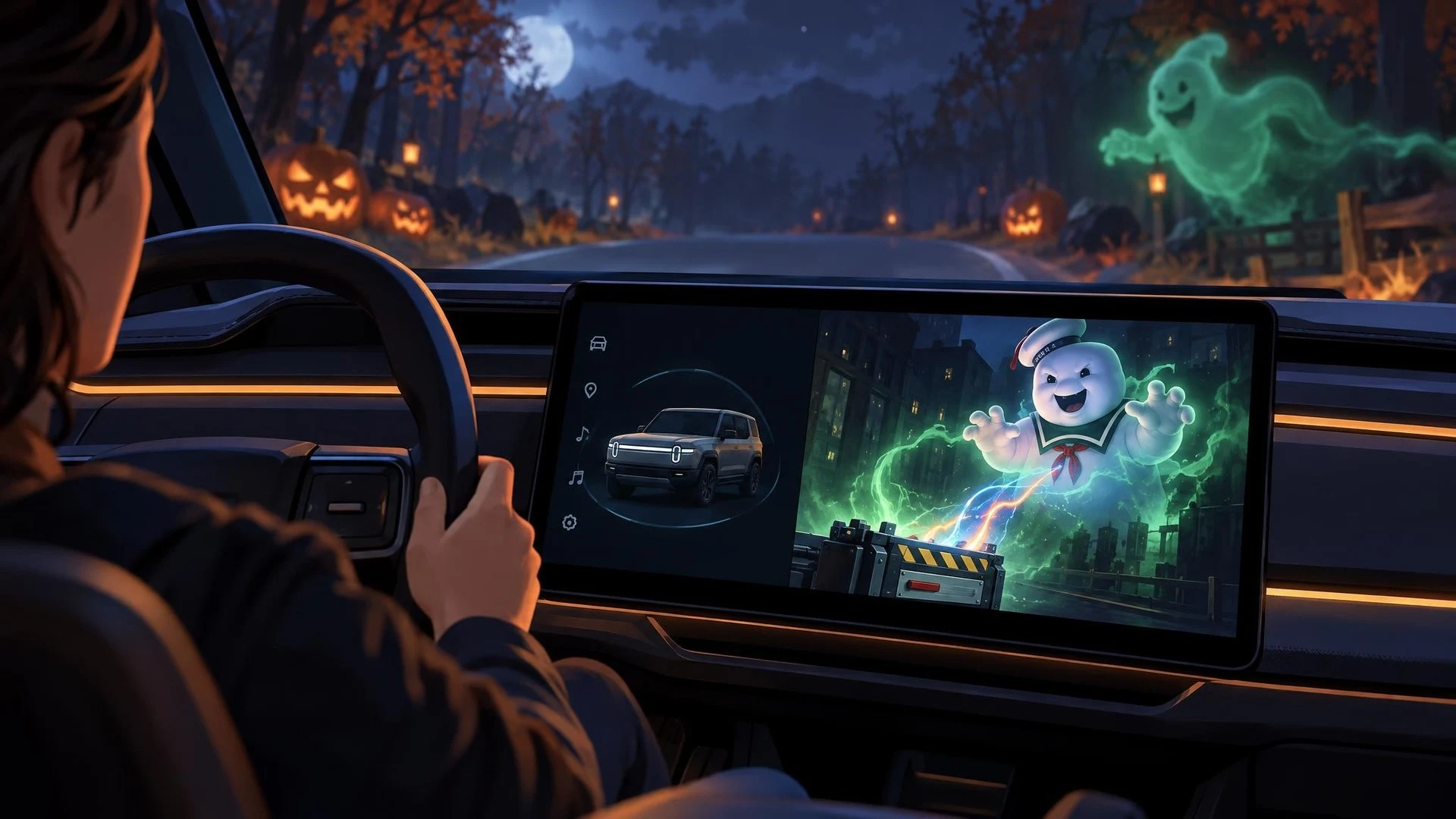
Game engines are increasingly used in products that are not games. An example published by Epic Games on October 30, 2026 looks at Rivian's Ghostbusters-themed Halloween Mode, a seasonal experience inside the company's software-defined vehicles. Unreal Engine 5 supplies the real-time 3D visuals used in the vehicle's Drive Mode application.
The experience includes themed characters and environments associated with Ghostbusters, integrated into the vehicle interface. Epic's account describes 3D scenes working alongside changes to exterior lighting, audio cues, and other seasonal interactions. This is an embedded automotive deployment, not a conventional downloadable game.
Rivian explains that Unreal Engine is part of its broader software environment. That allows its teams to create responsive interface animations and dynamic vehicle-state graphics using real-time rendering. The company presents Halloween Mode as an example of how the same underlying vehicle platform can support a distinctive experience through a software update.
For game developers, the interesting lesson is about constraints. A responsive 3D application in a car must coexist with a specialized display, controlled hardware, and other software responsibilities. The visual team cannot assume that the entire device is dedicated to rendering. These are familiar issues to studios adapting a game to mobile hardware, handheld systems, or mixed-reality devices.
Another transferable idea is the coordination of different feedback channels. A scene becomes more convincing when visuals, sound, and interface responses follow one coherent state. In a game, a similar design approach could connect an in-world alarm to lighting, UI animation, and positional audio without treating each as an unrelated effect.
Developers should not infer performance numbers, engine build settings, or hardware requirements from Epic's article. The case study does not disclose a reproducible benchmark for consumer game projects. It demonstrates a specific collaboration between Rivian, its partners, and Epic's rendering technology.
A useful experiment would be to create a small dashboard-style scene in Unreal Engine, then synchronize a state change across materials, camera framing, sound, and on-screen information. Profile the result on representative target hardware. The objective is to explore the same design principles, not to claim the scene replicates Rivian's implementation.
Rivian's Halloween Mode is a timely reminder that game-engine skills apply beyond entertainment titles. Its significance for developers lies in the real-time interface techniques and production constraints illustrated by the case, not in an update to Unreal Engine itself.
Rate this story
What did you think of this article?
Log in to rate this story, comment and like replies.
Log inNo comments yet. Be the first to share your thoughts.
More stories
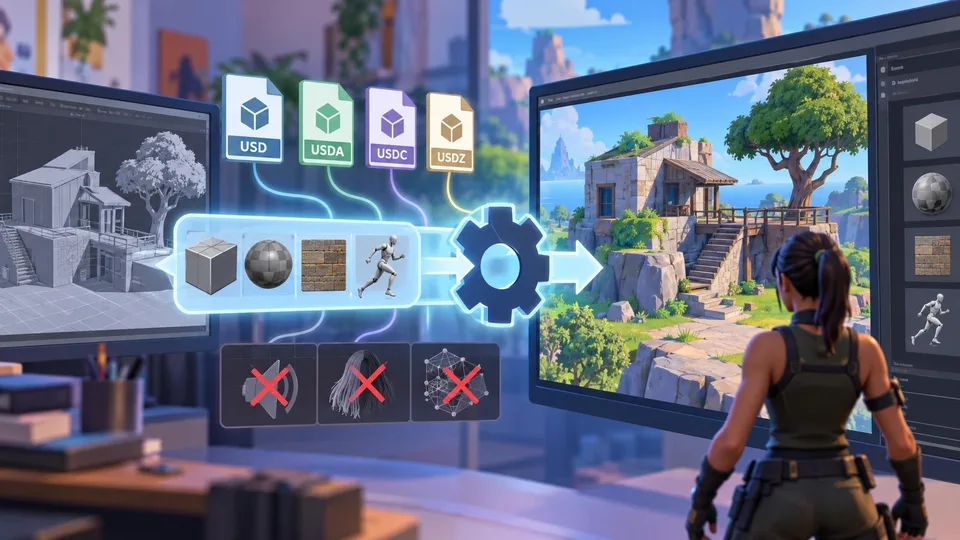
Epic Outlines USD Scene Import for Unreal Editor for Fortnite
A new Epic roadmap entry describes a USD import workflow for UEFN using the Interchange pipeline. It names several supported USD formats and asset types, while explicitly excluding USD export and some scene data.
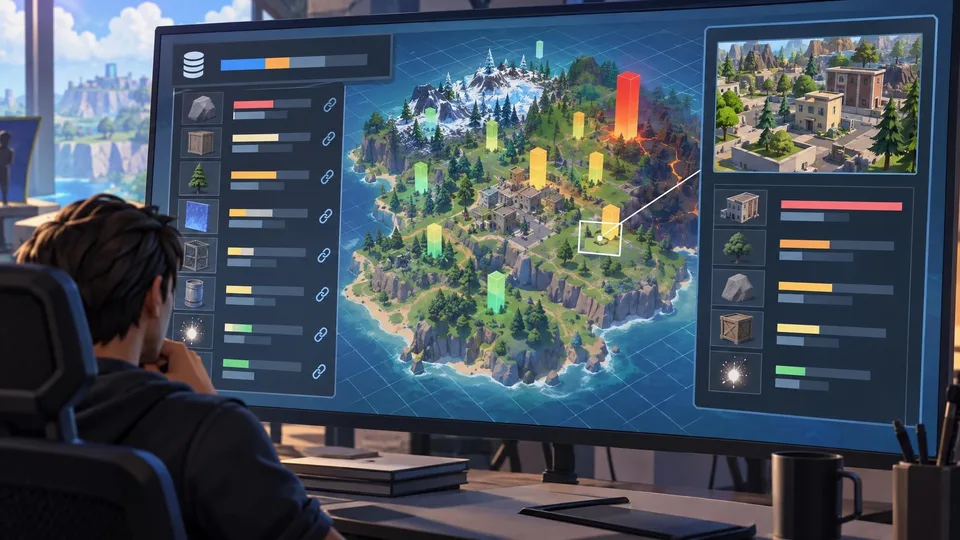
UEFN Roadmap Describes Asset-Level Memory Snapshots and Spatial Analysis
Epic has outlined planned updates to memory reporting in UEFN, including engine memory, asset links and spatial calculations. The October 30 entry has no stated availability date and should be treated as roadmap information.
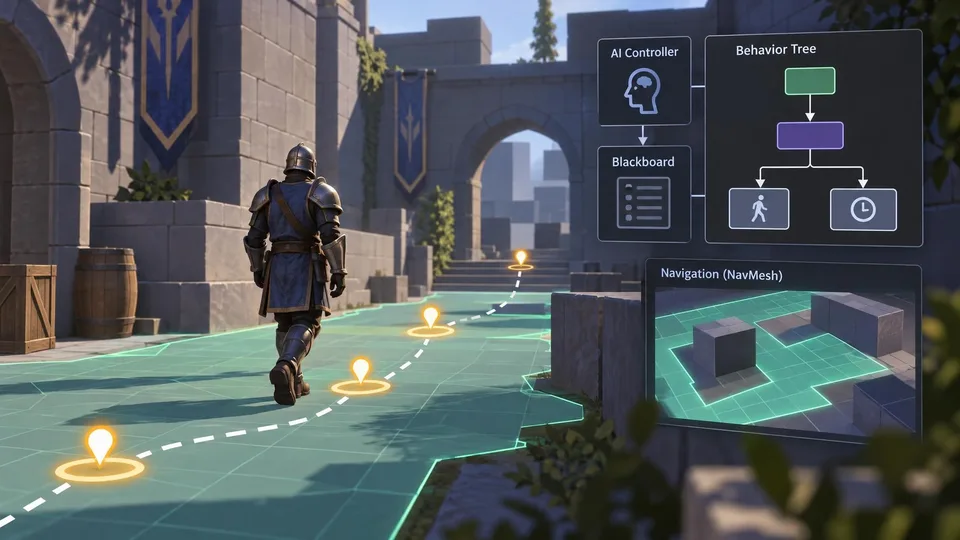
A New Unreal Engine 5.7 Blueprint Tutorial Builds a Patrolling NPC
A community tutorial published October 30 walks through a basic patrolling character in Unreal Engine 5.7 using AI Controller, Blackboard, Behavior Tree and navigation. It is educational material, not a new engine capability.
Comments