
UEFN Upgrades AI NPC Conversations With Eleven v4 Turbo
Epic Games has upgraded UEFN Conversations with faster voice responses, sentence streaming and improved character delivery, without requiring manual changes from creators.
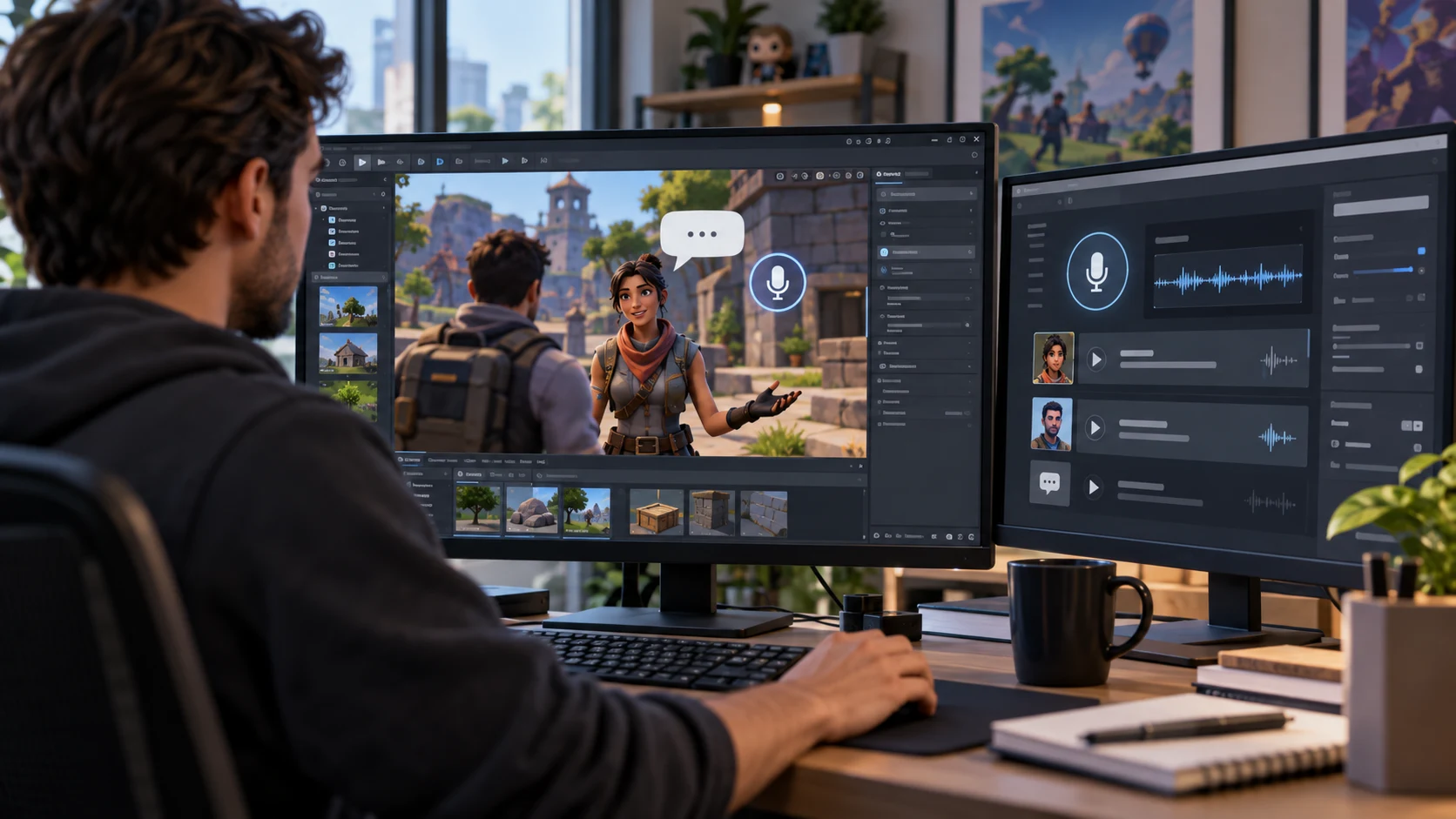
Epic Games has upgraded the Conversations system in Unreal Editor for Fortnite from Eleven v3 to Eleven v4 Turbo. Announced on October 26, 2026, the update focuses on making interactions with AI-powered characters feel more responsive.
The main addition is sentence streaming, which allows NPCs to begin speaking before their complete response has been generated. Epic also reports more expressive voices and facial animations that follow the audio more closely.
For game creators, the potential benefit is a more convincing conversation rhythm. Imagine asking a character for directions and waiting in silence while an entire answer is prepared. Starting the spoken response earlier could make that exchange feel less like submitting a request and more like talking to someone inside the game world.
Conversations lets UEFN creators define a character’s personality, knowledge and behavior through prompts, then choose a voice that fits the role. Instead of relying exclusively on predetermined dialogue branches, these characters can respond dynamically to player input.
The underlying system separates response generation from voice production. Epic describes Google’s Gemini models as handling player input and generating text responses, while ElevenLabs converts those responses into speech. The new voice model should therefore not be confused with a replacement for the entire character intelligence system.
The possibilities also extend beyond spoken dialogue. Epic’s documented tools allow creators to update what a character knows during gameplay and use structured outputs to trigger events. A conversation could influence a quest or determine whether a character grants access to an area, provided the developer builds the appropriate gameplay connections.
The voice upgrade rolls out automatically, with no creator action required and no expected disruption to existing islands.
For developers evaluating the change, a useful starting point would be a single NPC with a clearly defined role. A mechanic explaining a broken vehicle, for example, provides a manageable scenario for checking response timing, voice delivery and whether the character stays within its assigned knowledge.
Testing should include more than straightforward questions. Try an ambiguous request, a follow-up that depends on the previous answer and a question unrelated to the character’s role. These checks can help reveal whether an interaction remains coherent rather than merely sounding convincing.
Gameplay consequences deserve separate testing. A believable spoken answer should not, by itself, be treated as proof that a quest state or access condition has changed correctly. Verify the underlying game logic alongside the conversation.
This announcement applies specifically to UEFN Conversations, not an automatic upgrade for standalone Unreal Engine games. Developers working outside Fortnite would need their own supported integration rather than assuming the same system is available in an ordinary Unreal project.
The practical question is whether faster speech makes a particular interaction better. For a character that provides short, contextual guidance, the improvement could be valuable. For tightly controlled story scenes, a scripted approach may still be the more appropriate design choice. Start with a small encounter and judge the result in the context of the game.
Rate this story
What did you think of this article?
Log in to rate this story, comment and like replies.
Log inNo comments yet. Be the first to share your thoughts.
More stories

Epic Refreshes Mutable Sample for Unreal Engine 5.8
Epic's updated Mutable Sample demonstrates MetaHuman customization, clothing refitting and simpler character graphs, giving Unreal Engine developers a practical reference for building their own appearance systems.
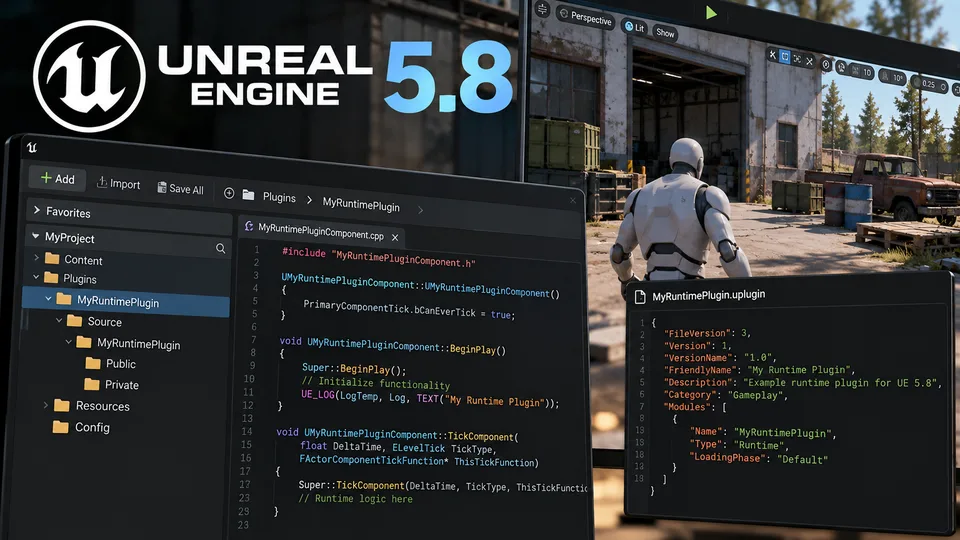
New Unreal Engine 5.8 Tutorial Introduces Runtime Plugin Development
A new community tutorial explores runtime plugins in Unreal Engine 5.8, offering a starting point for developers building reusable C++ gameplay systems.
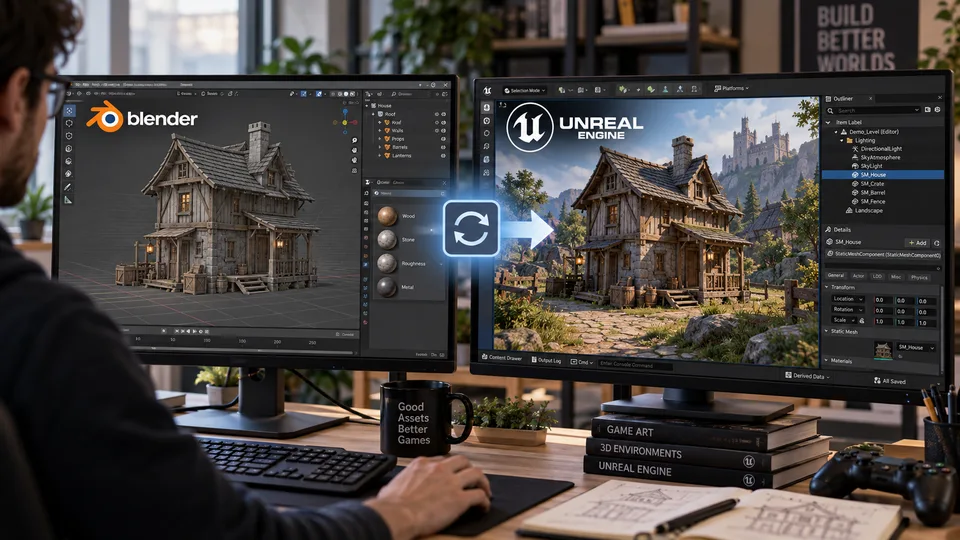
Blender Live Link Brings One-Click Asset Transfers to Unreal Engine 5
Gamma Studio’s Blender Live Link connects Blender and Unreal Engine with one-click asset transfers, automatic updates, and support for models and animations.
Comments