
A New Unreal Engine 5.7 Blueprint Tutorial Builds a Patrolling NPC
A community tutorial published October 30 walks through a basic patrolling character in Unreal Engine 5.7 using AI Controller, Blackboard, Behavior Tree and navigation. It is educational material, not a new engine capability.
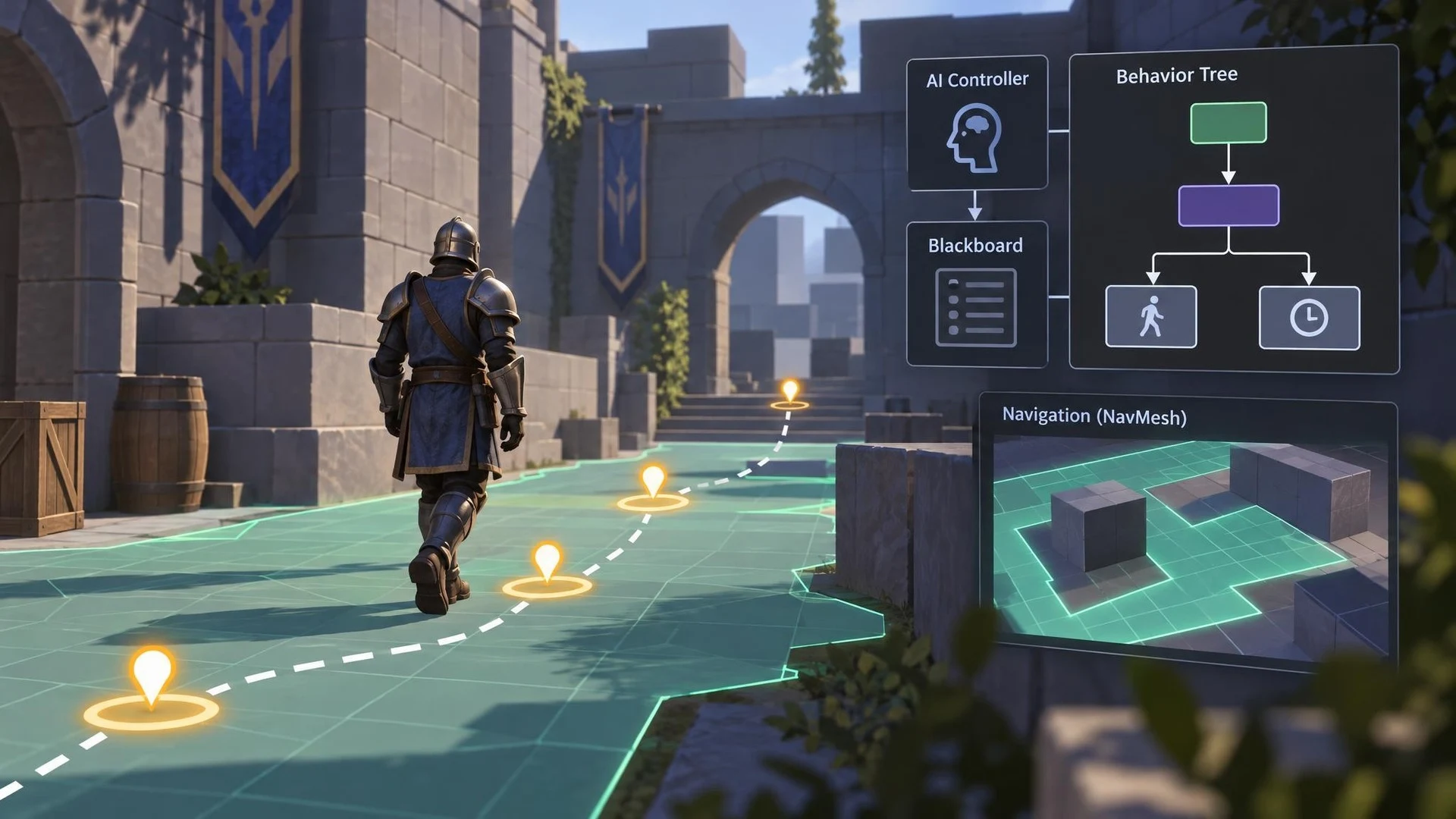
A convincing non-player character does not need a complex decision system to make a scene feel alive. Even a guard moving between several locations can communicate that an environment has routines and rules. A community tutorial shared on October 30, 2026 explains how to create that basic behavior in Unreal Engine 5.7 with Blueprints.
The walkthrough introduces an AI Controller, a Blackboard, and a Behavior Tree. These are established Unreal Engine systems for storing AI state and organizing decisions. The tutorial then creates a character and a patrol route actor containing editable points, giving the developer a way to define movement locations directly in the level.
A custom Behavior Tree task selects a random patrol point. The NPC needs a NavMesh Bounds Volume so Unreal's navigation system can determine a route across walkable space. The tutorial also covers debugging the Behavior Tree during play and resolving common beginner setup mistakes.
This is useful because game AI problems often come from several systems failing to agree. A character may have a valid target but no usable navigation mesh. The navigation may work while the Behavior Tree never selects a destination. Or the controller may not possess the intended pawn. Separating those responsibilities makes troubleshooting more systematic.
The author suggests possible extensions, including AI Perception, waiting at patrol points, and sequential movement instead of random selection. Those are exercises for expanding the design, not newly announced Unreal Engine 5.7 features. They also help distinguish predictable patrol routes from reactive behavior when the player enters the area.
A sensible experiment is to build a small room connected to two corridors and place four patrol points within the navigable area. Run one NPC through a random patrol, then add a simple wait state. Observe whether the character becomes stuck or repeatedly selects nearby positions. Use the Behavior Tree debugger to confirm that each change matches the intended logic.
For a larger game, the same foundation could become a guard patrol, a civilian routine, or a roaming enemy. Each requires additional design work: perception, combat decisions, interruption handling, animation, and authority in multiplayer. A beginner patrol example should not be mistaken for a complete production AI framework.
The October 30 release is a new learning resource that helps creators understand existing tools. Its value comes from showing a small, inspectable system whose behavior can be extended and tested before more ambitious NPC mechanics are introduced.
Rate this story
What did you think of this article?
Log in to rate this story, comment and like replies.
Log inNo comments yet. Be the first to share your thoughts.
More stories
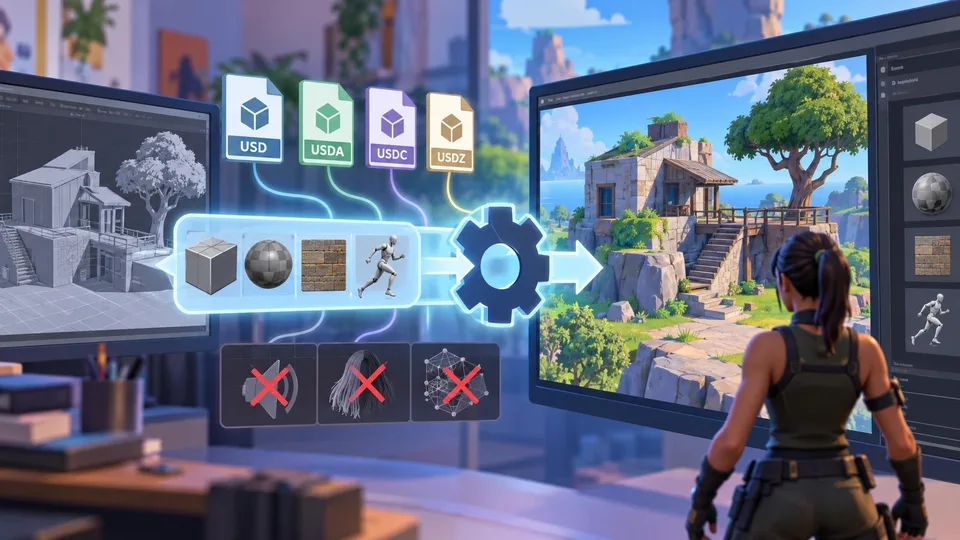
Epic Outlines USD Scene Import for Unreal Editor for Fortnite
A new Epic roadmap entry describes a USD import workflow for UEFN using the Interchange pipeline. It names several supported USD formats and asset types, while explicitly excluding USD export and some scene data.
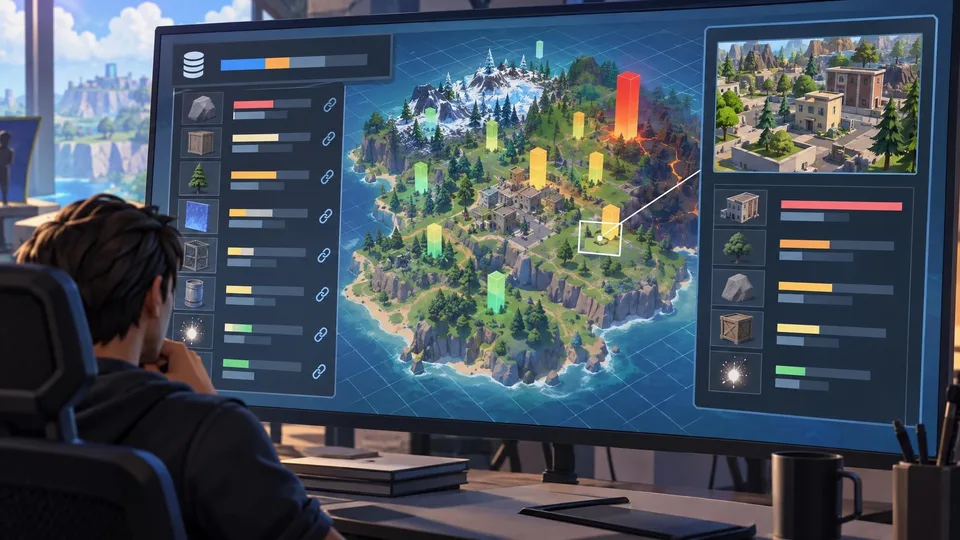
UEFN Roadmap Describes Asset-Level Memory Snapshots and Spatial Analysis
Epic has outlined planned updates to memory reporting in UEFN, including engine memory, asset links and spatial calculations. The October 30 entry has no stated availability date and should be treated as roadmap information.

Rivian Shows How Unreal Engine 5 Powers an Embedded Halloween Experience
Epic has detailed Rivian’s Ghostbusters-themed Halloween Mode, which uses Unreal Engine 5 for real-time visuals in a vehicle interface. The automotive case study illustrates an embedded 3D workflow rather than a new game-engine feature.
Comments