
OpenAI Python SDK 3.42.0 Adds Agent Session and Context Controls
The official OpenAI Python SDK release dated October 31 adds agent context compaction settings, session review controls and image-edit overlays. Developers building game-production automation can evaluate these interfaces, but they do not constitute a Unity or Unreal plugin.
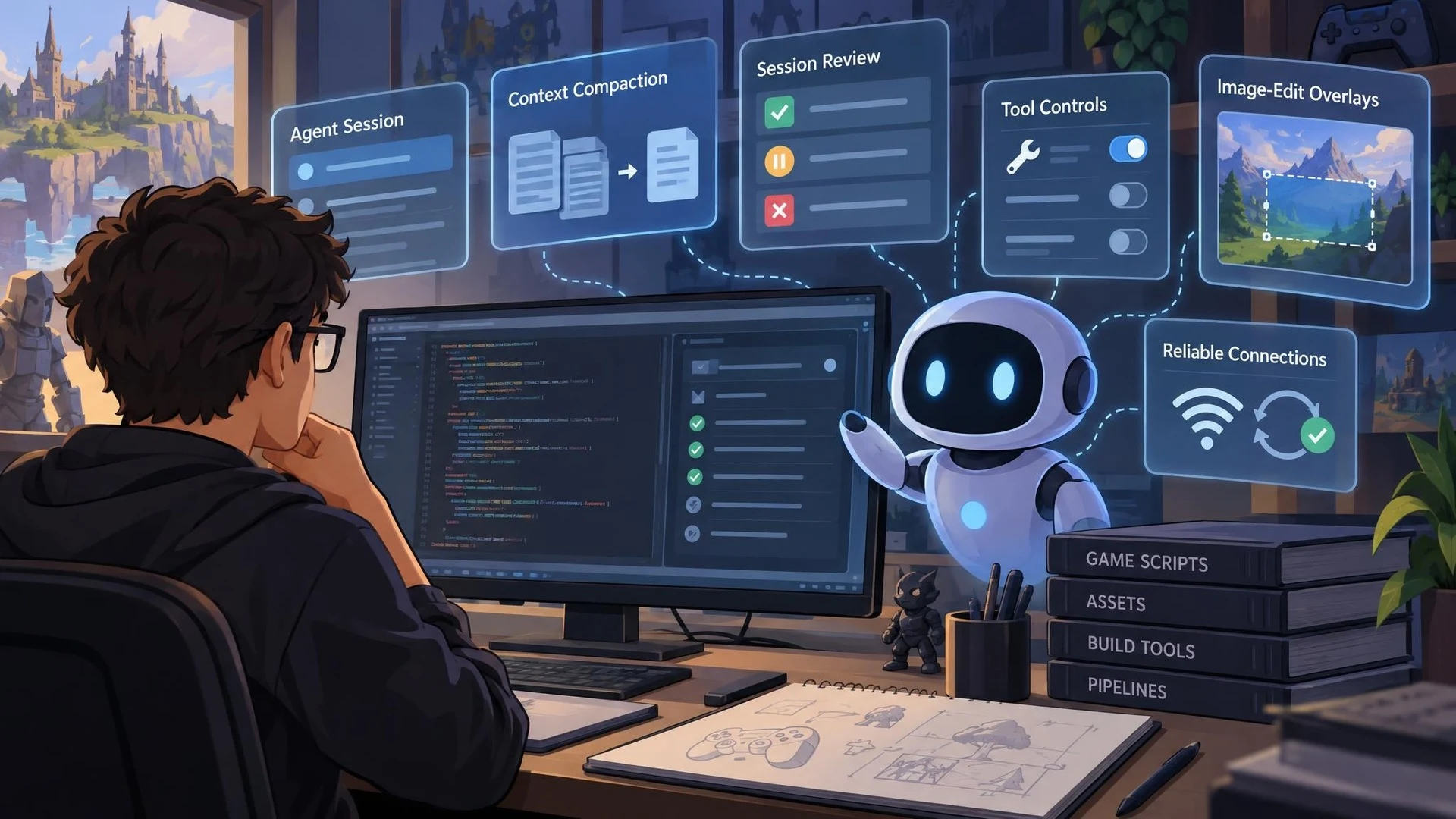
Game-development automation often involves more than asking a model to generate code. A production script may call tools, review a sequence of changes, handle an interrupted connection, and preserve enough context to explain what happened. OpenAI's official Python SDK release 3.42.0, dated October 31, 2026, adds several client interfaces related to those needs.
The release notes list new settings for agent context compaction and agent session review, along with tool controls. They also mention experimental agent time awareness and support for image-edit markup overlays. These are SDK-level additions and API surfaces; the changelog does not claim that a new Unreal Engine or Unity editor integration has been released.
For a developer maintaining Python tools around a game project, compaction settings are relevant when an agent works through a long sequence of observations. A large session can accumulate repeated logs and tool results. Managing that context is a distinct problem from maintaining the actual source files, asset database, or project history.
Session review and tool settings may also help teams build workflows in which a person can inspect proposed actions before allowing them to change project state. Such control is valuable when an assistant operates on C++ modules, Unity scenes, build scripts, or asset importers. A successful model response should not automatically be treated as proof that a generated change is correct.
The release includes several communications and reliability changes, including WebSocket recovery improvements and request-scoped callable API keys. Those features are not specific to games, but they may matter to applications combining speech, agents, or interactive development tools. The exact implementation and API eligibility should be checked against the current official documentation before adopting a feature.
A suitable test would use a small Python integration with an intentionally limited tool set. Ask it to inspect a read-only game-project manifest, produce a proposal, and record the returned session information. Then verify that tool permissions and error handling behave as expected. The objective is to test observability and controls before adding file-writing capabilities.
Developers should also review dependency compatibility before upgrading a Python environment. A new SDK interface does not guarantee that all connected server features are available under every account or configuration, and any supporting code may need adjustments.
The October 31 SDK update is a practical software-development release, not a promise of automatic game creation. Its significance comes from the controls available to developers building reliable agent-driven pipelines around existing tools.
Rate this story
What did you think of this article?
Log in to rate this story, comment and like replies.
Log inNo comments yet. Be the first to share your thoughts.
More stories
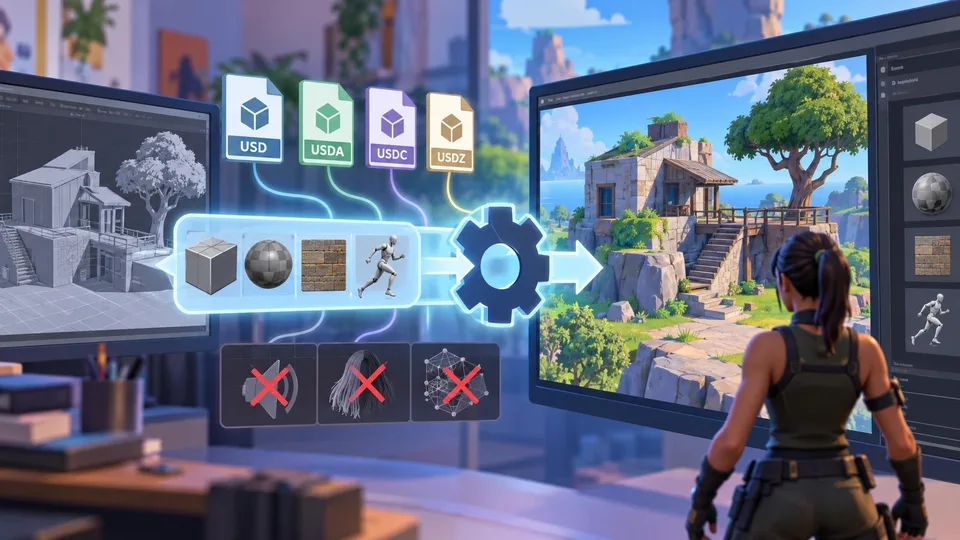
Epic Outlines USD Scene Import for Unreal Editor for Fortnite
A new Epic roadmap entry describes a USD import workflow for UEFN using the Interchange pipeline. It names several supported USD formats and asset types, while explicitly excluding USD export and some scene data.
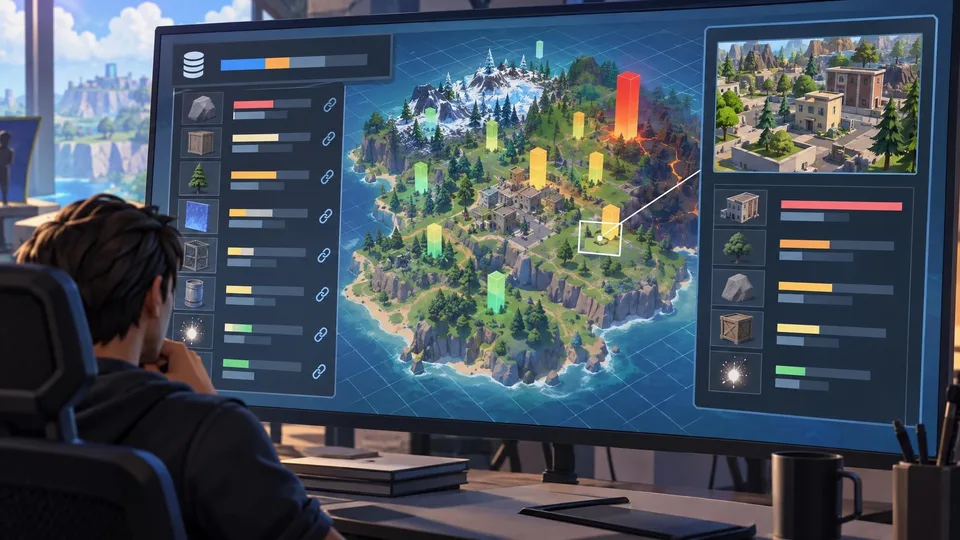
UEFN Roadmap Describes Asset-Level Memory Snapshots and Spatial Analysis
Epic has outlined planned updates to memory reporting in UEFN, including engine memory, asset links and spatial calculations. The October 30 entry has no stated availability date and should be treated as roadmap information.

Rivian Shows How Unreal Engine 5 Powers an Embedded Halloween Experience
Epic has detailed Rivian’s Ghostbusters-themed Halloween Mode, which uses Unreal Engine 5 for real-time visuals in a vehicle interface. The automotive case study illustrates an embedded 3D workflow rather than a new game-engine feature.
Comments