
New UE5 Niagara Waterfall Lesson Combines Meshes, Materials and Particles
An Unreal community tutorial demonstrates a stylized Niagara waterfall built from a shaped mesh, animated materials and layered particles. It offers a useful VFX workflow without claiming a new physically simulated water system.
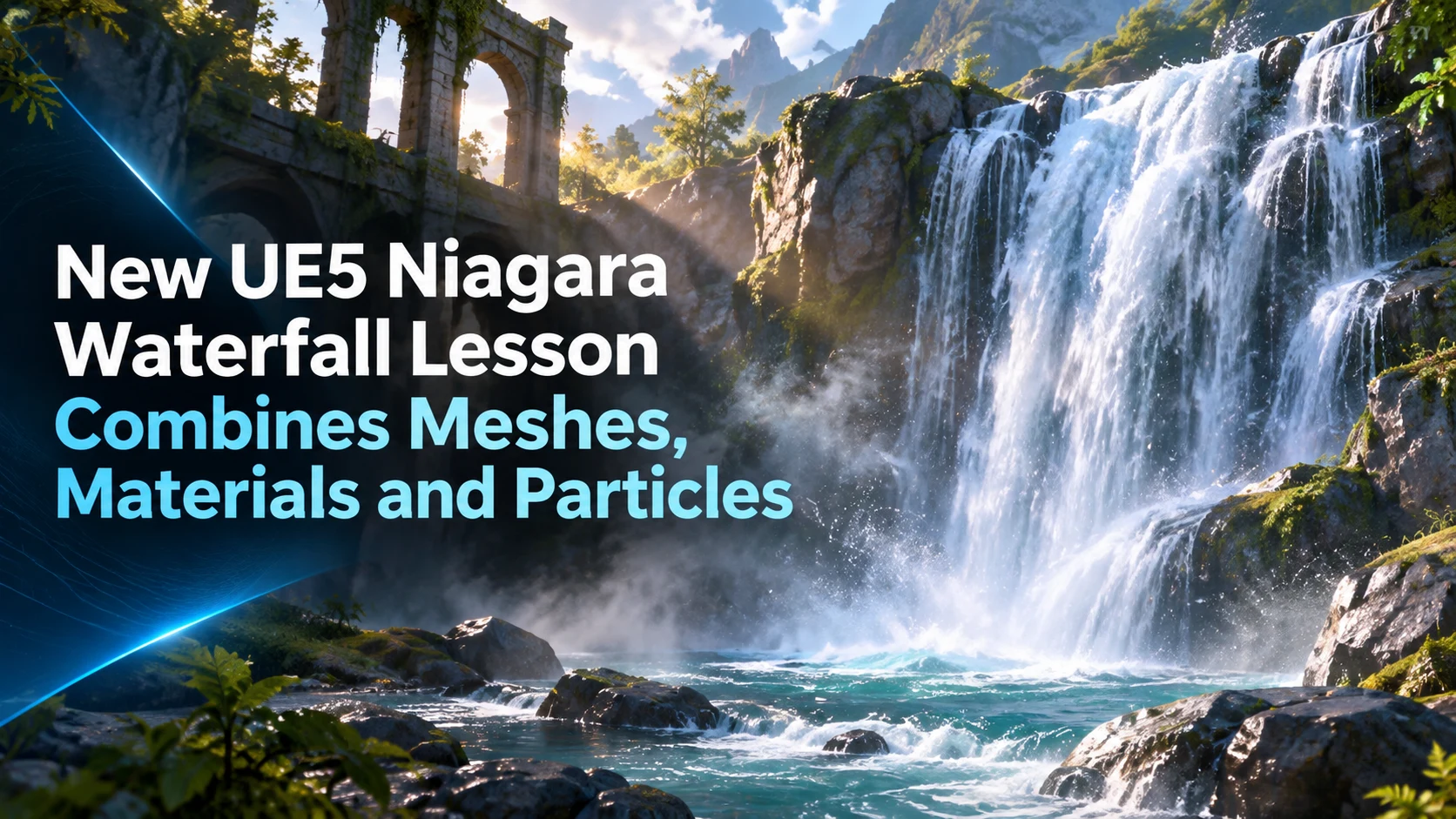
An Unreal Engine community tutorial released on November 12 walks through the construction of a waterfall effect using Niagara, material animation and custom geometry. The lesson, Niagara Waterfall VFX in UE5 From Scratch, is a practical effects demonstration rather than a new water simulation feature. That distinction matters because a visually convincing waterfall can be made without solving a full fluid simulation.
The workflow starts with geometry that establishes the broad direction of the falling water. A curved mesh provides control over the silhouette and the route from the upper ledge to the pool below. UV layout and animated materials help create the impression of fast movement across this surface. Niagara particles then add finer details such as mist, droplets and highlights that break up the rigid shape of the underlying mesh.
Combining components in this way can be efficient for a game environment. Geometry handles the large coherent form while particles provide localized motion and variation. A material can make water appear to accelerate or fade at the edges without requiring individual simulated particles across the full volume. The result is an authored visual effect, not an accurate prediction of water pressure, collisions or buoyancy.
For a production game, the next question is how the effect behaves away from its presentation camera. Transparent materials can create overdraw, especially when several waterfalls and mist systems overlap. Camera distance also changes how many details remain visible. Developers should examine collision requirements separately: a player touching the waterfall may need a sound, screen effect or gameplay trigger even though the visual water itself has no fluid-body physics.
One practical test is to reproduce a small waterfall in a neutral test level and measure its GPU cost from near, middle and far viewpoints. Turn off the mist particles, then turn off the scrolling surface material, to identify the contribution of each component. Finally, check how the effect looks against a bright sky and a dark rock wall. These controlled comparisons can turn an attractive tutorial into a more reliable effect for a shipping environment.
Rate this story
What did you think of this article?
Log in to rate this story, comment and like replies.
Log inNo comments yet. Be the first to share your thoughts.
More stories
Unity 6000.6.9f1 Fixes Rendering, Editor and Build Pipeline Issues
Unity released editor version 6000.6.9f1 on November 12 with fixes spanning DirectX 12, graphics, 2D rendering, audio and build workflows. It is a maintenance release with specific known issues developers should review before upgrading.

Community Guide Uses Unreal and Generative 3D to Plan More Consistent Game Videos
A community-authored Unreal guide describes combining deliberate 3D staging, generative assets and sequenced shots for predictable promotional video production. The lesson is most relevant to game trailers and previsualization, not gameplay runtime.
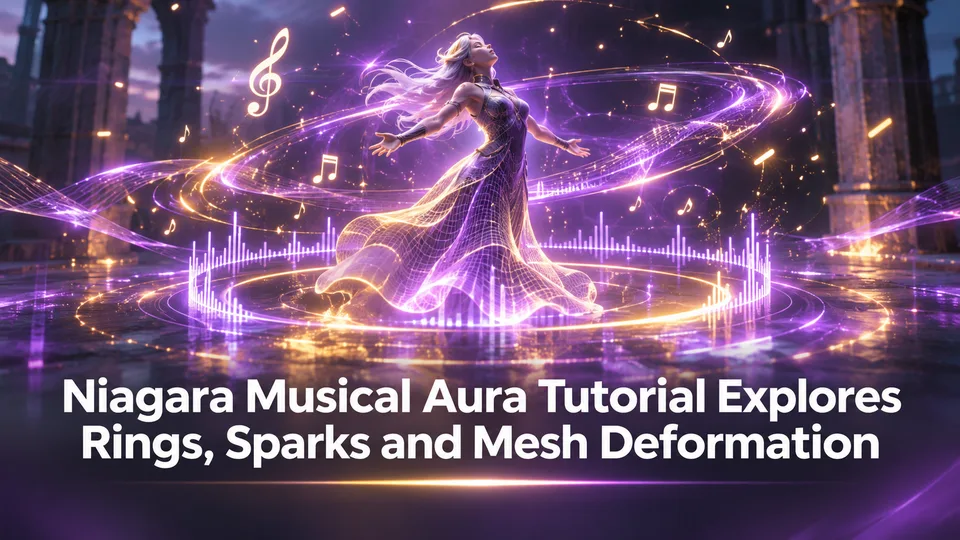
Niagara Musical Aura Tutorial Explores Rings, Sparks and Mesh Deformation
A November 12 Unreal community lesson shows a stylized musical aura built with a deformed ring mesh, animated materials and Niagara particles. Its value lies in compositing familiar effects techniques rather than a new audio-reactive engine feature.
Comments