
GitHub Copilot Makes Local Sandboxes Generally Available in JetBrains IDEs
GitHub’s October 28 JetBrains update makes local Copilot sandboxes generally available and adds next-edit suggestions. The security controls are especially relevant to AI agents editing Unity C# or Unreal C++ repositories in Rider and other supported IDEs.

Developers increasingly ask AI agents to operate inside the same IDE that contains their important project files. Those assistants may need to read code, run tests, and launch commands, but unlimited system access creates unnecessary risk. GitHub's October 28, 2026 update to Copilot for JetBrains IDEs places additional emphasis on local execution boundaries.
The company says local sandboxing is now generally available in the JetBrains integration. According to GitHub, commands and tools initiated by Copilot can run with restricted access to the filesystem, network, credentials, and other capabilities according to policies selected by the developer or organization. That is a broader execution-boundary concept than simply asking an assistant not to edit particular files.
The same announcement makes next-edit suggestions generally available. These suggestions try to anticipate nearby changes as a developer works through a file. GitHub also describes improvements to session handling, default permission settings, and the interaction between inline completion and subsequent edits.
For game programmers using JetBrains Rider, the practical appeal lies in keeping an AI coding workflow closer to C# or C++ development. The update is not specific to a Unity or Unreal version, and it should not be interpreted as a guarantee that every engine tool can be controlled automatically through the IDE.
The security boundary deserves attention. A sandbox only helps if the developer understands its policy and which operations are allowed. Building an Unreal project may require a compiler, intermediate build directories, SDK tools, and access to project dependencies. Restricting too much can interrupt valid work, while allowing everything weakens the protection.
A cautious test would use a fresh repository with a harmless component and a separate directory containing files the agent should never access. Configure a restricted session, ask Copilot to inspect and edit the authorized code, and verify that a request outside the permitted boundary is blocked. Then run the normal project tests and inspect the actual patch.
GitHub reports reliability improvements in the release, including cancellation recovery and better handling of selected-code context. These are provider claims rather than independent performance measurements, and a project may behave differently depending on the installed IDE and plugin versions.
The October 28 update is most useful as an opportunity to make agent workflows more deliberate. Developers can test faster suggestions while placing clear boundaries around commands and data, rather than treating AI assistance as an all-or-nothing permission decision.
Rate this story
What did you think of this article?
Log in to rate this story, comment and like replies.
Log inNo comments yet. Be the first to share your thoughts.
More stories
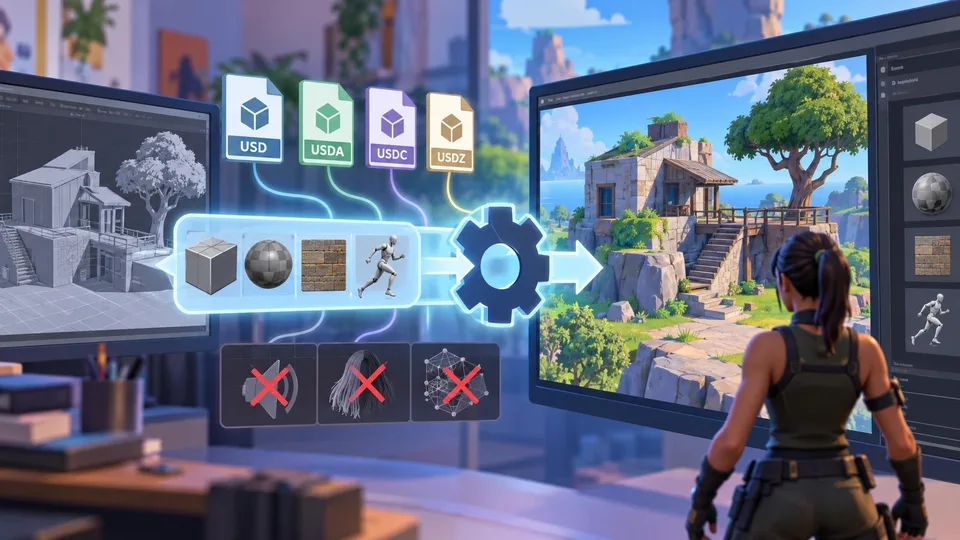
Epic Outlines USD Scene Import for Unreal Editor for Fortnite
A new Epic roadmap entry describes a USD import workflow for UEFN using the Interchange pipeline. It names several supported USD formats and asset types, while explicitly excluding USD export and some scene data.

UEFN Roadmap Describes Asset-Level Memory Snapshots and Spatial Analysis
Epic has outlined planned updates to memory reporting in UEFN, including engine memory, asset links and spatial calculations. The October 30 entry has no stated availability date and should be treated as roadmap information.

Rivian Shows How Unreal Engine 5 Powers an Embedded Halloween Experience
Epic has detailed Rivian’s Ghostbusters-themed Halloween Mode, which uses Unreal Engine 5 for real-time visuals in a vehicle interface. The automotive case study illustrates an embedded 3D workflow rather than a new game-engine feature.
Comments