
FaceCue Brings Baked and Live Facial Performance Tools to Unity
FirecrestRoost introduced FaceCue, a Unity facial-performance product that combines lip synchronization with expressive movement. The developer describes offline baking and optional live-audio workflows, but production suitability still needs project-level testing.
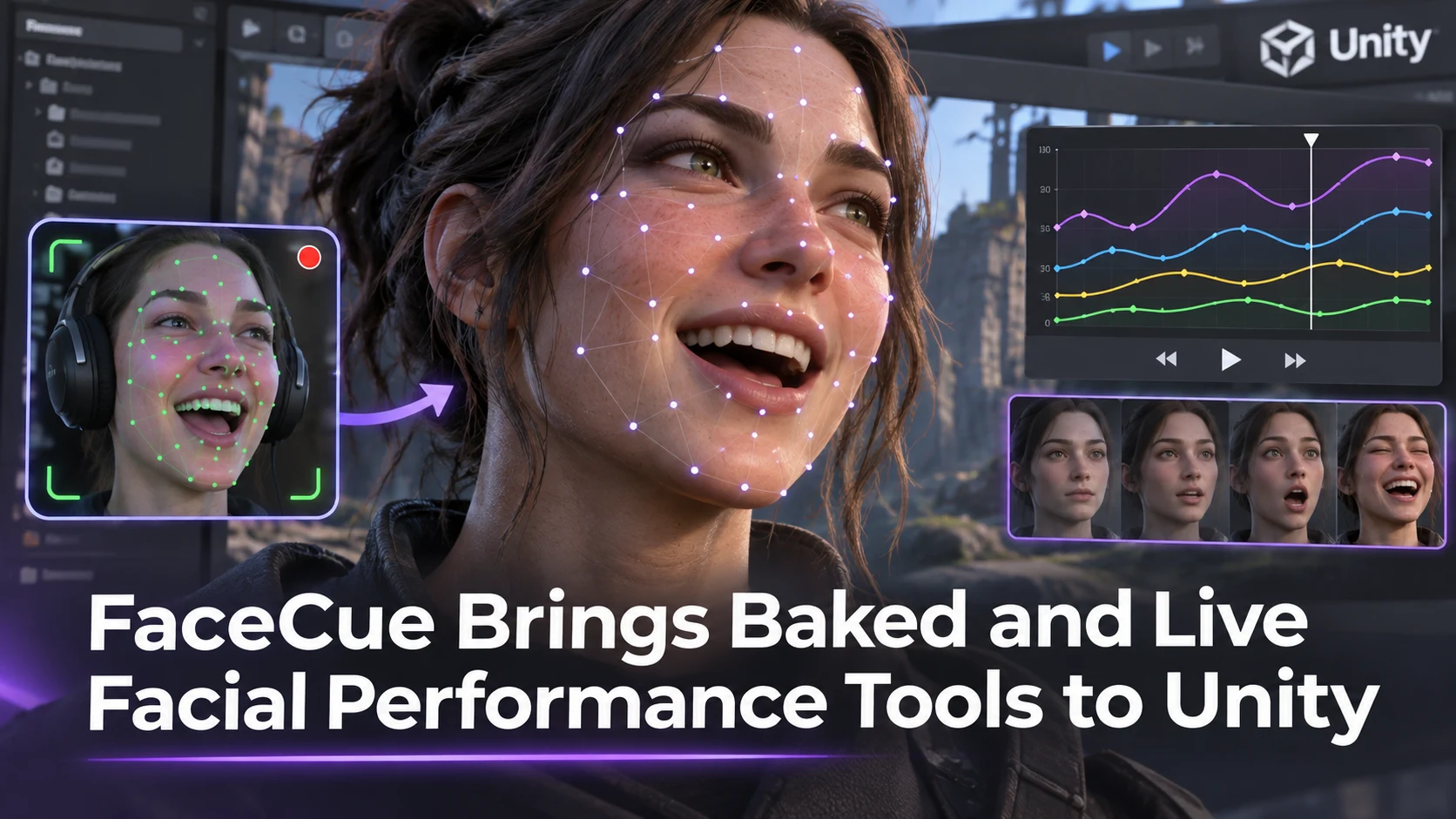
A November 11 Unity Discussions announcement introduces FaceCue, a third-party package for lip synchronization and facial performance. The developer, FirecrestRoost, positions the tool as a way to combine speech-driven mouth movement with broader character expression. The release announcement is useful for teams developing dialogue-heavy games, but its feature descriptions come from the seller and do not constitute independent animation-quality measurements.
Mouth motion is only one component of believable speech. Facial performance also involves eyes, head posture, breathing and expressive timing. FaceCue's developer describes systems for these elements alongside approaches that can work from prepared dialogue audio or from live input. The distinction between baking and runtime processing matters: a cinematic with a fixed recorded line can often be prepared and inspected in advance, while a conversational NPC may need to react to audio that is not known until the game runs.
A baked performance can be attractive for story scenes because the artist has a repeatable result to review and revise. Live processing may be useful for experiments with dynamic conversations, but the trade-offs include latency, supported platforms and the stability of the audio input chain. The developer notes Windows-focused constraints for parts of the authoring workflow, which should be verified against the current documentation before planning a cross-platform production. An associated MetaHuman export workflow should also not be mistaken for a fully supported Unreal runtime version of FaceCue.
These tools sit at the intersection of animation and audio. Their usefulness depends partly on the existing character rig and how facial channels are mapped. A character with a small set of blend shapes may not express the same range as a richly authored face. Speech language, recording quality and exaggerated character proportions can also affect the perceived result. A short demo may show what is possible without proving universal compatibility.
One sensible evaluation would use two different character rigs and one identical recorded sentence. Prepare a baked version, then test a live-audio mode where available. Compare lip timing, unnatural jaw movement, eye focus and head motion at close camera distance. Check whether the result can be reviewed and edited without rebuilding the entire pipeline. That produces meaningful evidence for dialogue games or AI-driven NPC prototypes before a studio commits to a full character cast.
Rate this story
What did you think of this article?
Log in to rate this story, comment and like replies.
Log inNo comments yet. Be the first to share your thoughts.
More stories
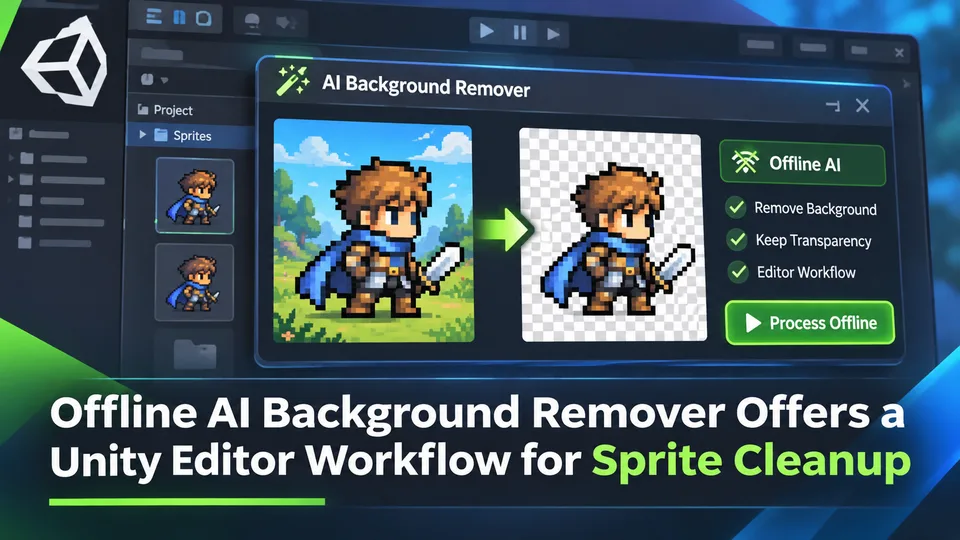
Offline AI Background Remover Offers a Unity Editor Workflow for Sprite Cleanup
A third-party Unity developer introduced an offline AI background remover for preparing transparent sprite images in the editor. It is a local content-authoring tool, not a runtime background-removal feature built into Unity.
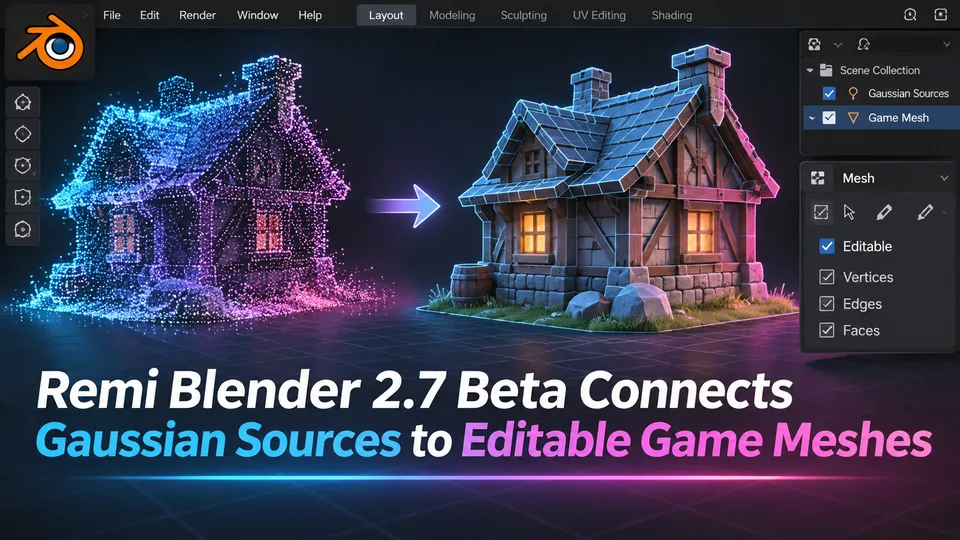
Remi Blender 2.7 Beta Connects Gaussian Sources to Editable Game Meshes
Remi Blender 2.7.0-beta.7 adds an Asset Board for image, Gaussian and mesh workflows, including texture transfer and native Blender editing. The prerelease has strict Windows and Blender requirements and relies on external AI components.
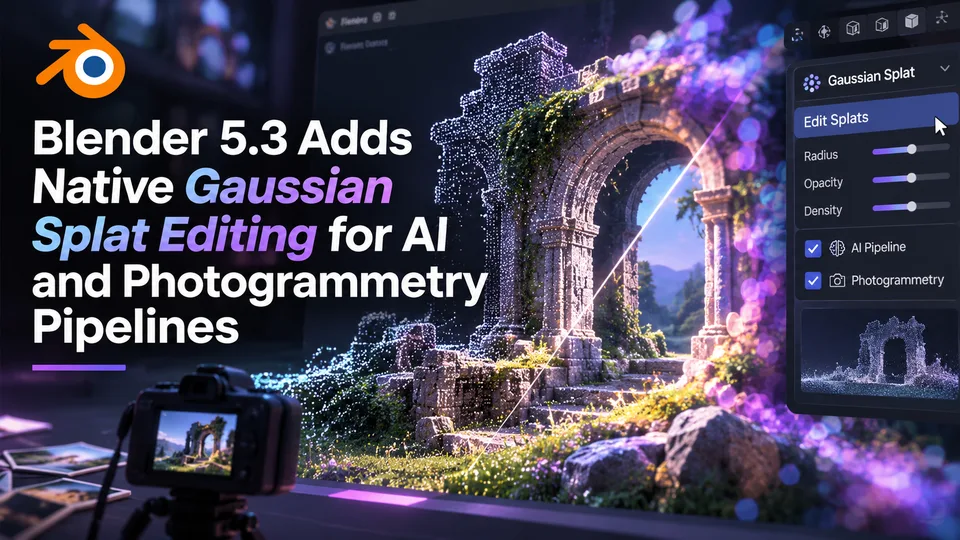
Blender 5.3 Adds Native Gaussian Splat Editing for AI and Photogrammetry Pipelines
Blender 5.3 was released on November 10 with native 3D Gaussian Splat importing, editing and rendering. The technology expands scene-capture workflows, but a splat is not automatically a game-ready polygon mesh.
Comments