
Easy Node Dialogue System with MCP Reaches Version 2.0.1 on Unity Asset Store
The free third-party Easy Node Dialogue System with MCP lists version 2.0.1 as its latest November 6 release. It combines node-based narrative authoring with advertised automation support.
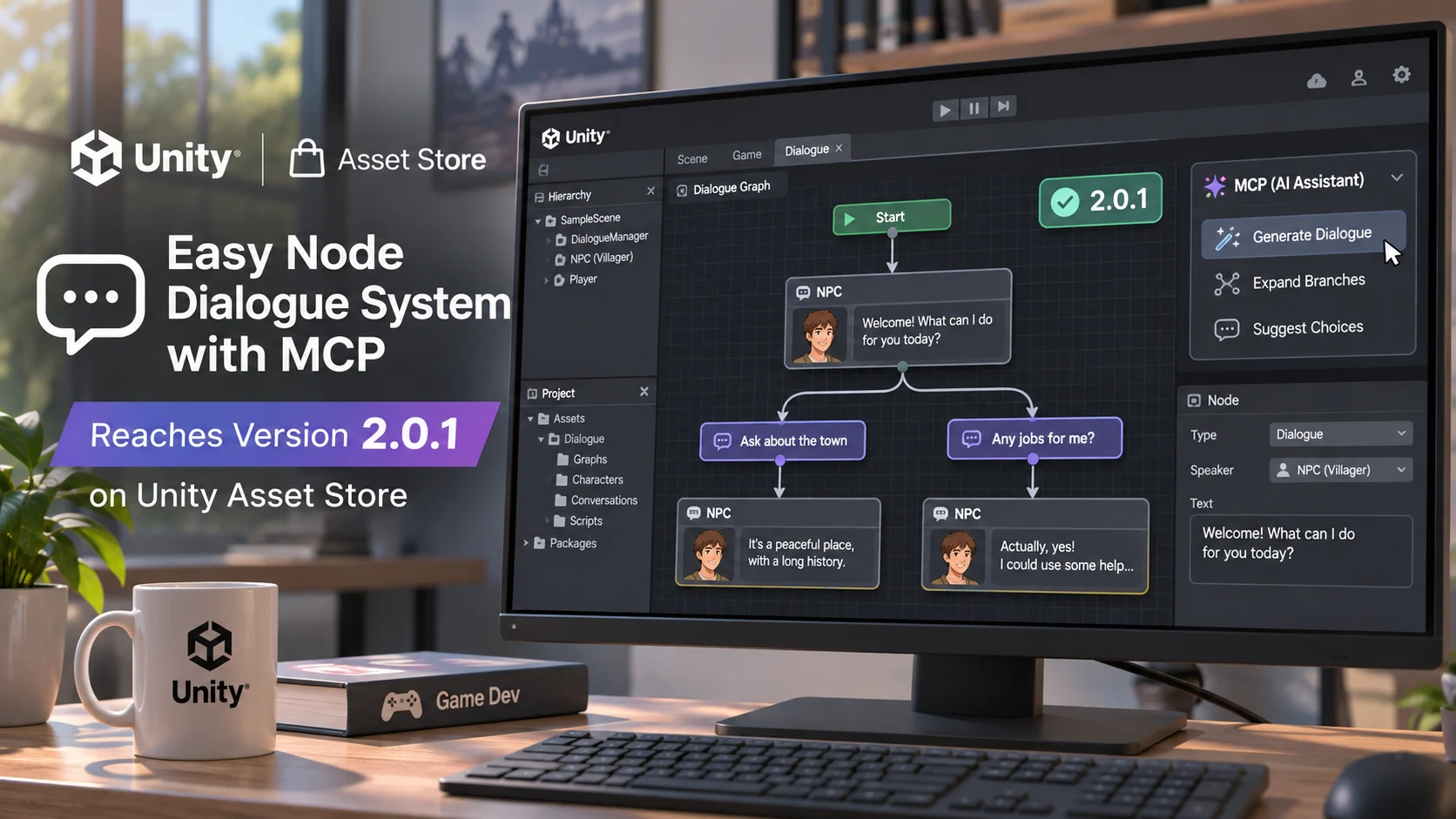
A Unity Asset Store listing for Easy Node Dialogue System with MCP, also known as ENDS, now shows version 2.0.1 with a November 6 release date. The extension is distributed by an independent publisher as a free Asset Store package under the Standard Unity Asset Store EULA. Its listing identifies Unity 6000.4.0 as the original editor version, a detail developers should check when evaluating it for newer or older projects.
Dialogue systems are often more involved than a simple sequence of subtitles. A branching conversation may need conditions, choices, persistent variables, localization and triggers for quests or character behavior. Node-based editing can make relationships between dialogue entries easier to understand, particularly for narrative designers who do not want to manage every branch inside a long C# method. A reusable graph may also reduce the amount of custom editor code needed at the beginning of a story-driven project.
The package's positioning adds an AI automation angle by mentioning MCP support. Model Context Protocol integrations can let external coding tools work with structured editor or project data, but the exact commands and safety boundaries depend on the extension. The listing is not evidence that any coding agent can safely rewrite an entire game's story without review. In particular, modifying a graph is different from proving that a branch runs correctly at runtime or that a localized line fits the final interface.
The November 6 version record confirms that the package was updated, but the accessible store listing does not, by itself, establish that every described feature was introduced specifically in 2.0.1. It would be misleading to attribute all functionality to that patch without a detailed version diff. Users should review the publisher's documentation, sample assets and compatibility information before putting it into a production workflow.
A practical comparison would build a four-character test conversation with three branches, one conditional choice and one saved decision. First, author the graph manually and test the runtime result. Then, if the package documents suitable MCP commands, ask a development agent to make one narrow change and review the generated graph by hand. The important success criteria are accurate branching, reliable persistence, readable localization and predictable rollback. This is a third-party narrative editor asset, not a newly added Unity engine feature or a general-purpose conversational NPC service.
Rate this story
What did you think of this article?
Log in to rate this story, comment and like replies.
Log inNo comments yet. Be the first to share your thoughts.
More stories
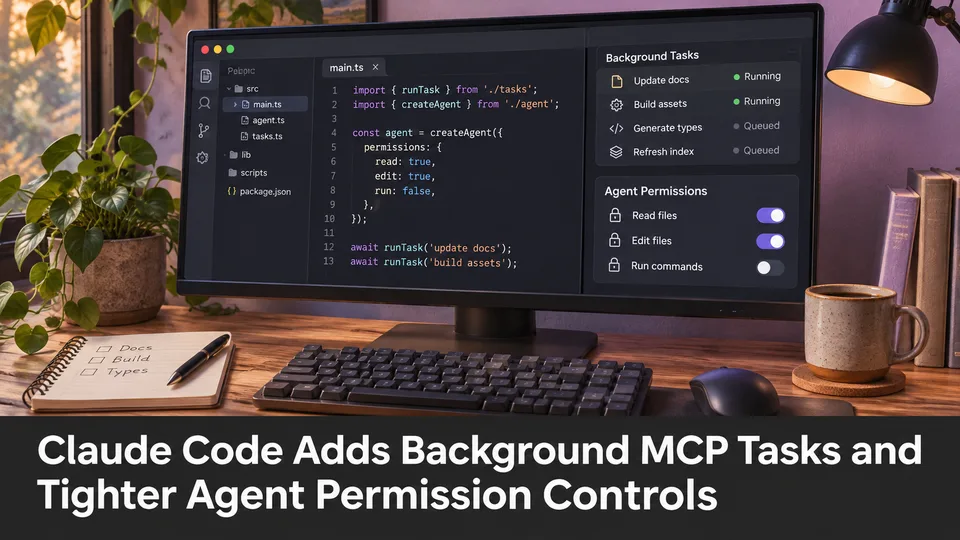
Claude Code Adds Background MCP Tasks and Tighter Agent Permission Controls
Anthropic’s Claude Code 2.1.319 introduced asynchronous MCP tasks and new permission controls. These features may help game developers manage long-running Unreal or Unity tool operations without blocking every agent step.
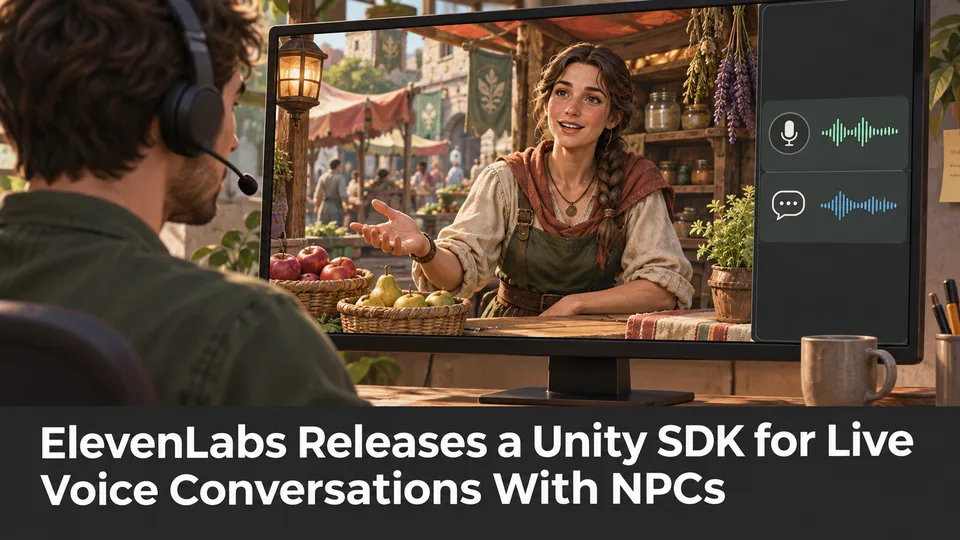
ElevenLabs Releases a Unity SDK for Live Voice Conversations With NPCs
ElevenLabs has published a Unity SDK connecting scene characters to conversational voice agents. The developer documentation distinguishes supported desktop and WebGL targets from beta mobile and XR integration.
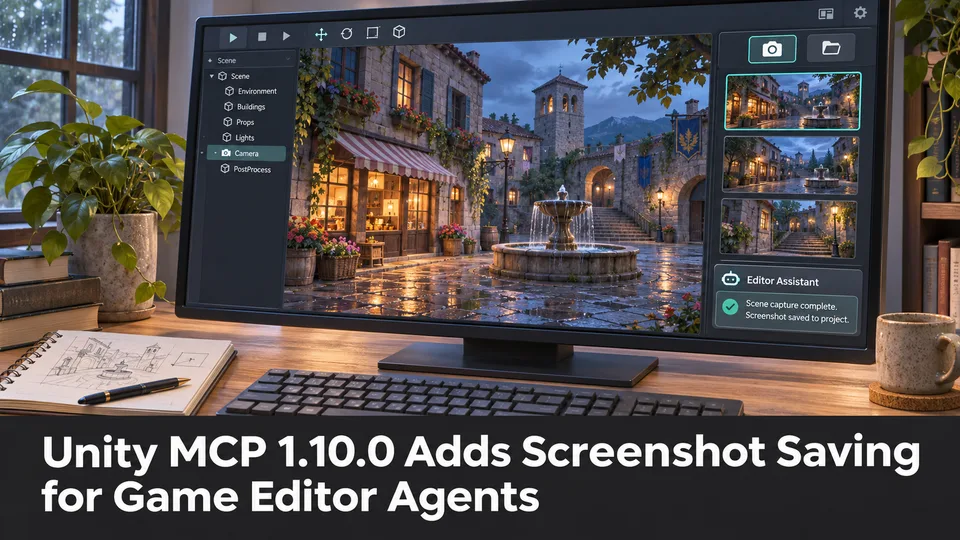
Unity MCP 1.10.0 Adds Screenshot Saving for Game Editor Agents
A community-maintained Unity MCP bridge has released version 1.10.0, adding an option for screenshot tools to save PNGs inside a project. The feature can support reviewable visual feedback when AI agents work on scenes.
Comments