
ElevenLabs Releases a Unity SDK for Live Voice Conversations With NPCs
ElevenLabs has published a Unity SDK connecting scene characters to conversational voice agents. The developer documentation distinguishes supported desktop and WebGL targets from beta mobile and XR integration.
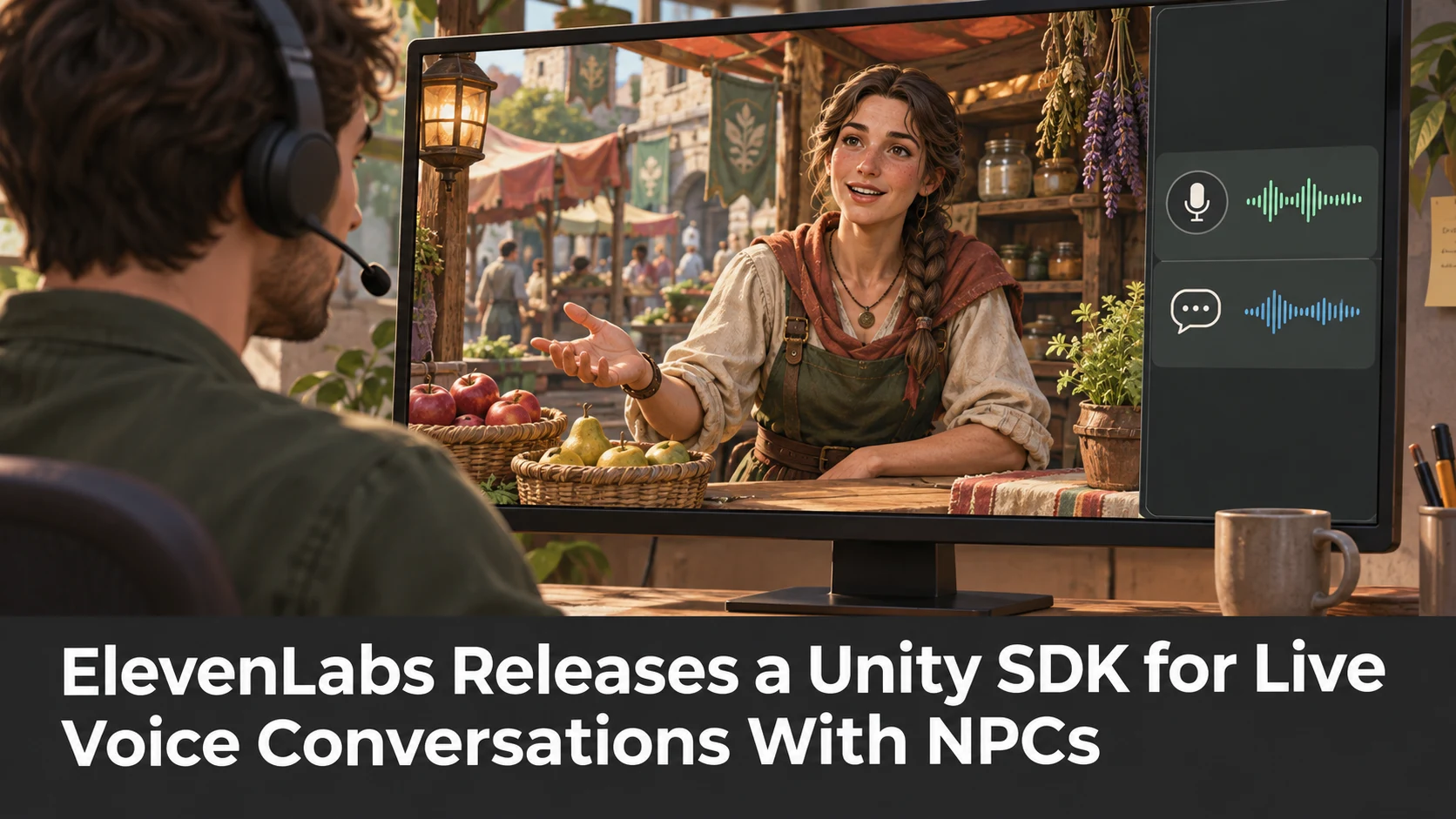
ElevenLabs published a Unity integration announcement on November 5, updated November 6, introducing an SDK that lets players talk with an AI voice agent from a game scene. This is a concrete game-development integration rather than a general announcement about speech synthesis, and it targets one of the more complicated aspects of conversational NPC design: managing live input, output and game context together.
According to the company's guide, the SDK listens through the player's microphone, plays responses through a Unity AudioSource and manages the session with a Conversation API. Its introductory sample uses a trigger collider so a conversation begins when a player approaches an object and ends when the player walks away. This provides a simple structure for prototyping a non-player character without writing an entire voice-networking layer from scratch.
The package includes controls that matter for game feel. Developers can assign a character-specific output audio source to create spatialized voices, send contextual updates when the player's world state changes and register client tools that request in-game actions. One example is telling the agent that a player acquired a key; another is allowing a validated game handler to operate a door. Such tools must still be guarded by normal game-state and authorization rules.
The official support table lists Editor and desktop builds as supported, along with WebGL using WebSocket or WebRTC pathways. iOS, Android and XR are marked beta. The documentation also identifies browser audio limitations and says WebGL requires a WebAssembly.Table publishing setting. These are platform-specific details; a feature running inside a Windows Editor cannot automatically be assumed to work unchanged on a standalone VR headset.
The published install guide pins an early SDK tag, v0.1.0. That is an early integration version, so a production evaluation should include reconnects, microphone permissions, network interruption, transcription accuracy, latency and billing. The demo is a starting point, not evidence that a commercial game's NPC architecture is complete.
Security is important. ElevenLabs explicitly warns developers not to place their secret API key inside a distributed build. While a quick test can use a dashboard agent ID, a shipped game should use authenticated sessions and short-lived signed URLs obtained through the developer's own server.
A useful experiment would place one conversational character in a small Unity level, expose only a harmless interaction tool and time how long it takes from speech input to spoken reply. Test with noisy input and a disconnection as well. That evidence would help decide whether the system suits in-game dialogue instead of relying on a promotional demonstration.
Rate this story
What did you think of this article?
Log in to rate this story, comment and like replies.
Log inNo comments yet. Be the first to share your thoughts.
More stories
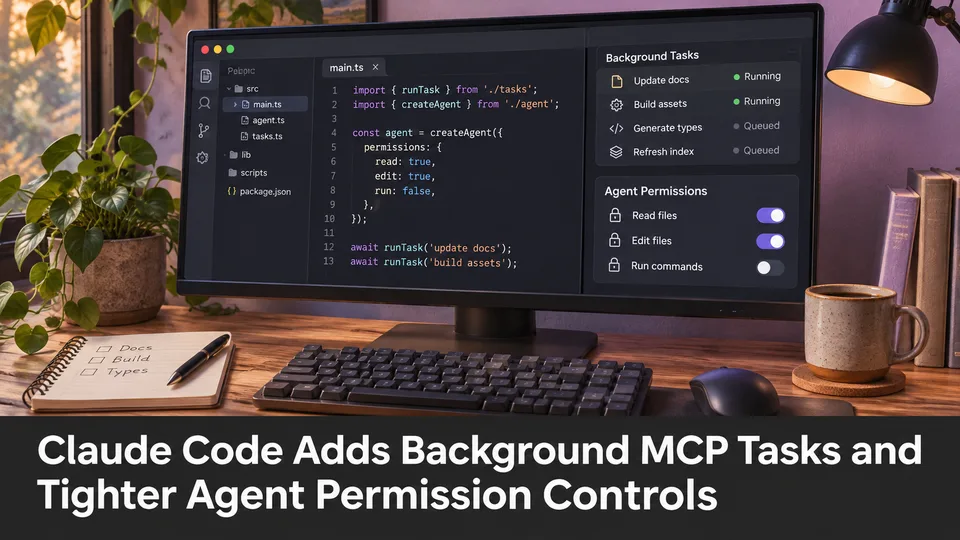
Claude Code Adds Background MCP Tasks and Tighter Agent Permission Controls
Anthropic’s Claude Code 2.1.319 introduced asynchronous MCP tasks and new permission controls. These features may help game developers manage long-running Unreal or Unity tool operations without blocking every agent step.
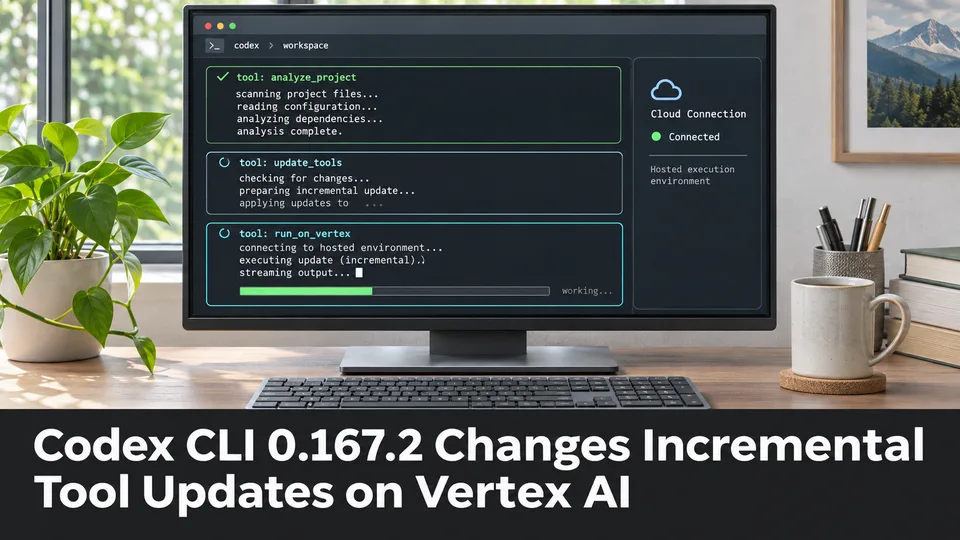
Codex CLI 0.167.2 Changes Incremental Tool Updates on Vertex AI
OpenAI released Codex CLI 0.167.2 with incremental tool updates enabled by default for Google Cloud Vertex AI. The change is relevant to teams using that backend, but it is not a general Unreal or Unity agent feature.
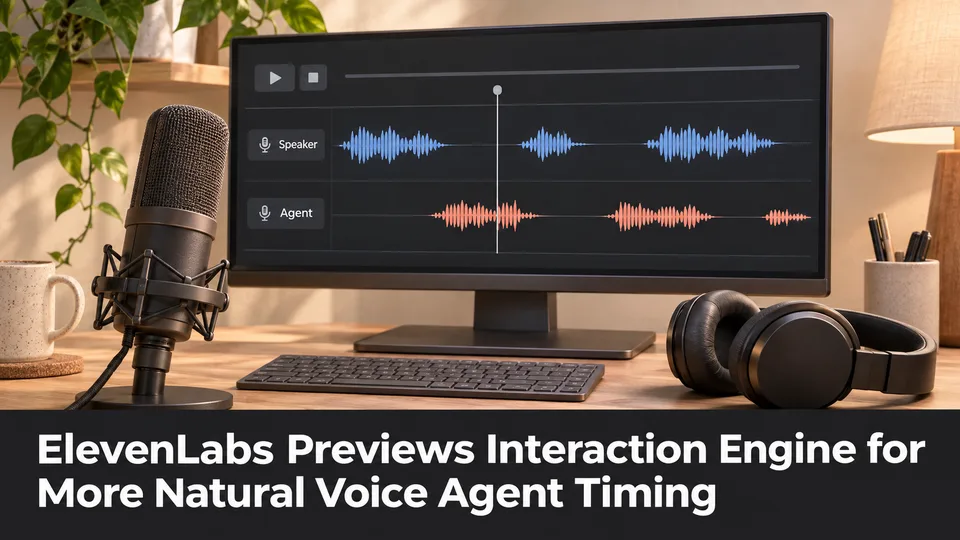
ElevenLabs Previews Interaction Engine for More Natural Voice Agent Timing
At its New York summit, ElevenLabs previewed an Interaction Engine that manages turn-taking, interruptions and model selection in conversations. Real-time game NPC use remains a proposed application, not a shipped game integration.
Comments