
Claude Code 2.1.323 Adds Experimental Code Mode and Plugin Checks
Anthropic released Claude Code 2.1.323 on November 12 with an opt-in experimental Code Mode and changes to plugin compatibility and permissions. These are agent workflow controls, not automatically generated Unreal or Unity gameplay features.
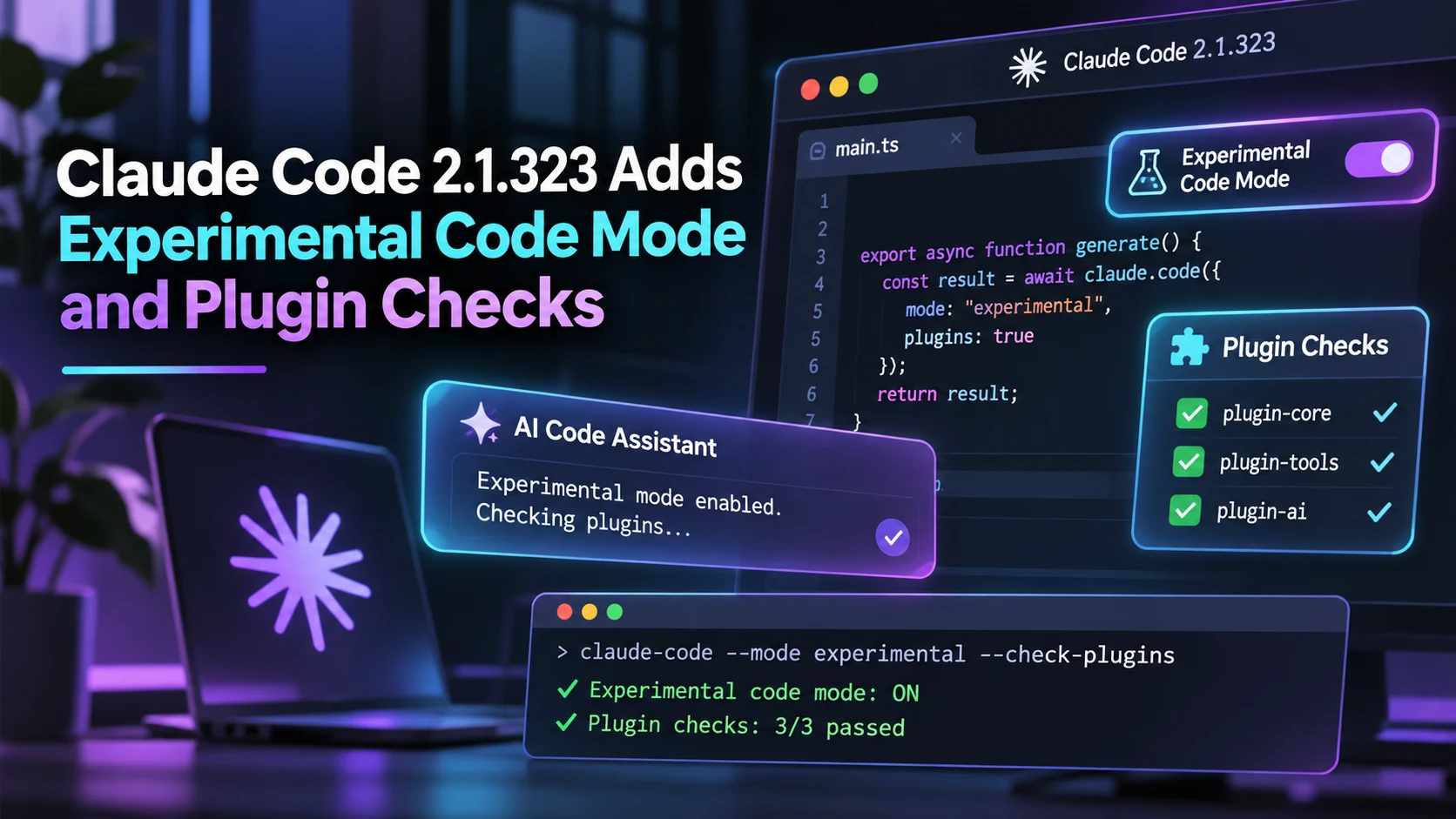
Anthropic published Claude Code version 2.1.323 on November 12, introducing an experimental Code Mode alongside plugin-management and reliability changes. The official GitHub release notes describe an opt-in approach that allows the agent to orchestrate certain tool operations using JavaScript. For developers working across Unity C#, Unreal C++ and editor automation, the update is relevant to how an agent organizes tasks, rather than a new feature in either game engine.
Agent-assisted development often involves a chain of small operations: inspect the repository, search for a symbol, read a file, edit a component, run tests and review failures. Code Mode is intended to provide another way to coordinate those operations. That may reduce the friction of some structured tasks, but experimental availability matters. Teams should check their active Claude Code configuration and organization policy before assuming the feature is enabled or available to every account.
The release also includes changes intended to make plugin behavior easier to validate, such as more explicit version requirements. Version boundaries matter for projects where local tools expose specialized operations to an agent. An MCP integration that can open an Unreal asset or inspect a Unity scene may depend on specific tool behavior. A mismatch between a client release and a plugin can make automation unreliable even when ordinary code editing still works.
Security and permissions remain important. An agent asked to alter a game project may be able to invoke external processes, access source files or interact with development services. A more convenient orchestration mode does not eliminate the need for restrictive tool access, readable logs and protected production credentials. The changelog includes further fixes in areas such as authorization and sandbox handling; those should be understood as individual corrections rather than a guarantee that arbitrary untrusted code is safe to execute.
A practical assessment would use a disposable repository containing a small Unity C# component or Unreal C++ module. Ask the agent to identify one unused method, propose a minimal change and run an available local test. Compare its plan and tool log with a previous version, without giving it access to deployment credentials or live production servers. Record any approval prompts, unexpected file changes and plugin failures. This is a meaningful way to evaluate an agent release while keeping the limits of experimental tool orchestration visible.
Rate this story
What did you think of this article?
Log in to rate this story, comment and like replies.
Log inNo comments yet. Be the first to share your thoughts.
More stories

Offline AI Background Remover Offers a Unity Editor Workflow for Sprite Cleanup
A third-party Unity developer introduced an offline AI background remover for preparing transparent sprite images in the editor. It is a local content-authoring tool, not a runtime background-removal feature built into Unity.
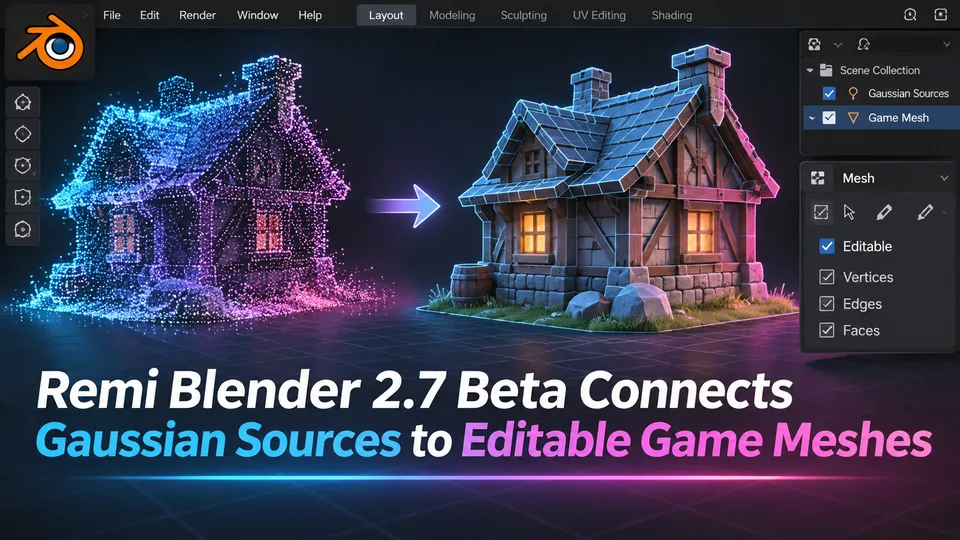
Remi Blender 2.7 Beta Connects Gaussian Sources to Editable Game Meshes
Remi Blender 2.7.0-beta.7 adds an Asset Board for image, Gaussian and mesh workflows, including texture transfer and native Blender editing. The prerelease has strict Windows and Blender requirements and relies on external AI components.
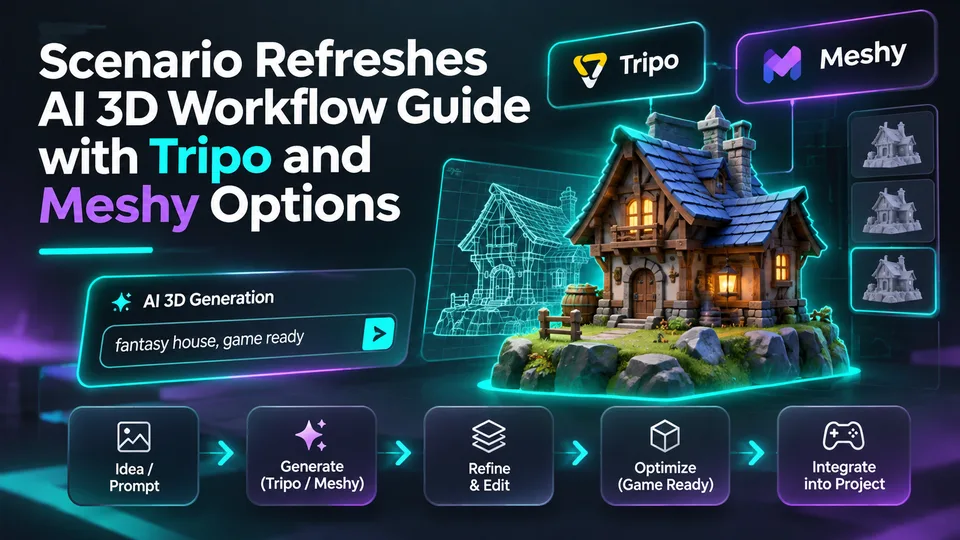
Scenario Refreshes AI 3D Workflow Guide with Tripo and Meshy Options
Scenario updated its 3D-generation guidance on November 10, describing choices for image-to-3D, rigging and mesh processing across tools including Tripo and Meshy. The change concerns documentation, not a newly launched 3D model.
Comments