
Unity ML-Agents 4.2.0 Improves Sensor Handling and CoreCLR Trainer Connections
Unity ML-Agents 4.2.0 updates the reinforcement-learning toolkit with sensor fixes, Linux CoreCLR trainer connectivity corrections and PPO-related training changes. The package also adjusts an embedded certificate trust list.
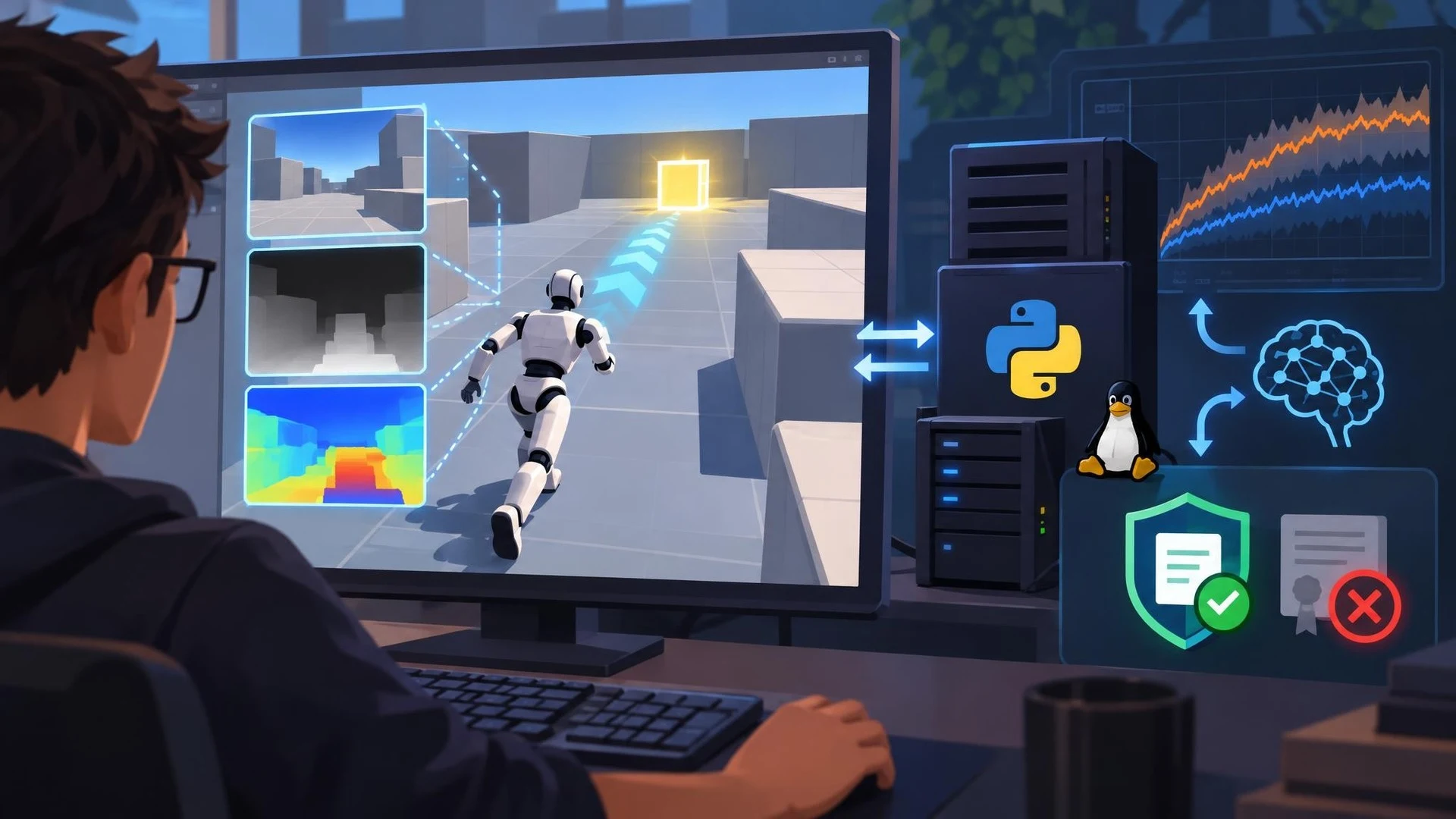
Unity's machine-learning toolkit has a new release relevant to developers who train game agents rather than writing all their behavior by hand. The official package registry lists ML-Agents 4.2.0, updated on October 30, 2026, with changes to sensors, CoreCLR compatibility, training logic and security-related certificate data.
ML-Agents allows a Unity scene to act as a training environment. A simulated character receives observations, chooses actions and can learn from rewards or demonstrations through a connected Python training process. It is used for research, automated tests and experiments with game character behavior. The framework does not automatically convert every NPC into a conversational generative-AI character; its training and inference workflows are separate from language-model chat systems.
Several fixes address the quality of observations entering the learning process. The 4.2.0 changelog notes that the BehaviorParameters editor creates new sensors only when needed, and it fixes management of CameraSensorComponent and RenderTextureSensorComponent. These details can matter when experiments depend on visual input, because an unintended sensor arrangement may change what an agent observes.
The release also addresses connections between Linux players or editors using CoreCLR and the trainer, where gRPC could fail to load a required library. Another CoreCLR issue involved a tensor-related finalizer throwing an unhandled null-reference exception. Developers testing a newer scripting runtime on Linux should pay particular attention to those corrections.
On the training side, Unity describes changes to PPO and POCA value estimation in the training buffer. The aim is to avoid overwriting original value predictions with returns in a way that interferes with the intended clipping behavior. These are algorithm-implementation corrections rather than a public claim that every trained agent will learn faster or perform better.
The update also removes a certificate authority root from the trust list embedded in the gRPC library following an eMudhra intermediate certificate authority compromise. Teams running distributed training should review their trust configuration and dependencies as part of ordinary maintenance. This item does not mean every Unity game build was exposed to the same threat.
For a controlled experiment, a developer could train a simple agent that navigates toward a target with visual observations. Pin the package, Python dependencies and training configuration, then compare connection stability and training logs across versions. A meaningful comparison also requires matching random seeds and evaluation conditions; otherwise differences may be caused by normal training variance.
ML-Agents 4.2.0 is a maintenance release with multiple improvements to the reliability of the development workflow. Its significance is strongest for teams actively using learning-based NPCs or simulation-driven automated testing.
Rate this story
What did you think of this article?
Log in to rate this story, comment and like replies.
Log inNo comments yet. Be the first to share your thoughts.
More stories

Unreal Engine 5.9 Preview Is Planned for Next Week, With Web Targeting on the Agenda
Epic has confirmed plans for an Unreal Engine 5.9 Preview in the week following November 3. Its initial outline mentions AI workflows, web targeting, rendering and animation, but detailed release notes and general availability are still pending.

Epic Publishes UEFN MCP and Verse Insights Profiling Walkthroughs
Epic has released two educational videos for diagnosing slow Fortnite islands using UEFN MCP and Verse Insights. They explain agent-assisted profiling and server-side Verse costs; they are not new features for standard Unreal Engine games.

Unity 6000.6.8f1 Addresses 2D Shadow Memory, Navigation and Reflection Probe Issues
Unity released 6000.6.8f1 on November 3 with fixes for leaking ShadowCaster2D meshes, flickering 2D shadows and NavMesh portal data. It also changes how certain reflection probes are baked, requiring migration checks.
Comments