
Pixel Streaming Frontend Patch Closes a Browser Overlay Injection Route
Epic Games released a Pixel Streaming frontend UI package update that escapes user-controlled text before showing it in the player page. The patch concerns browser-side presentation, not native game rendering or VR tracking.
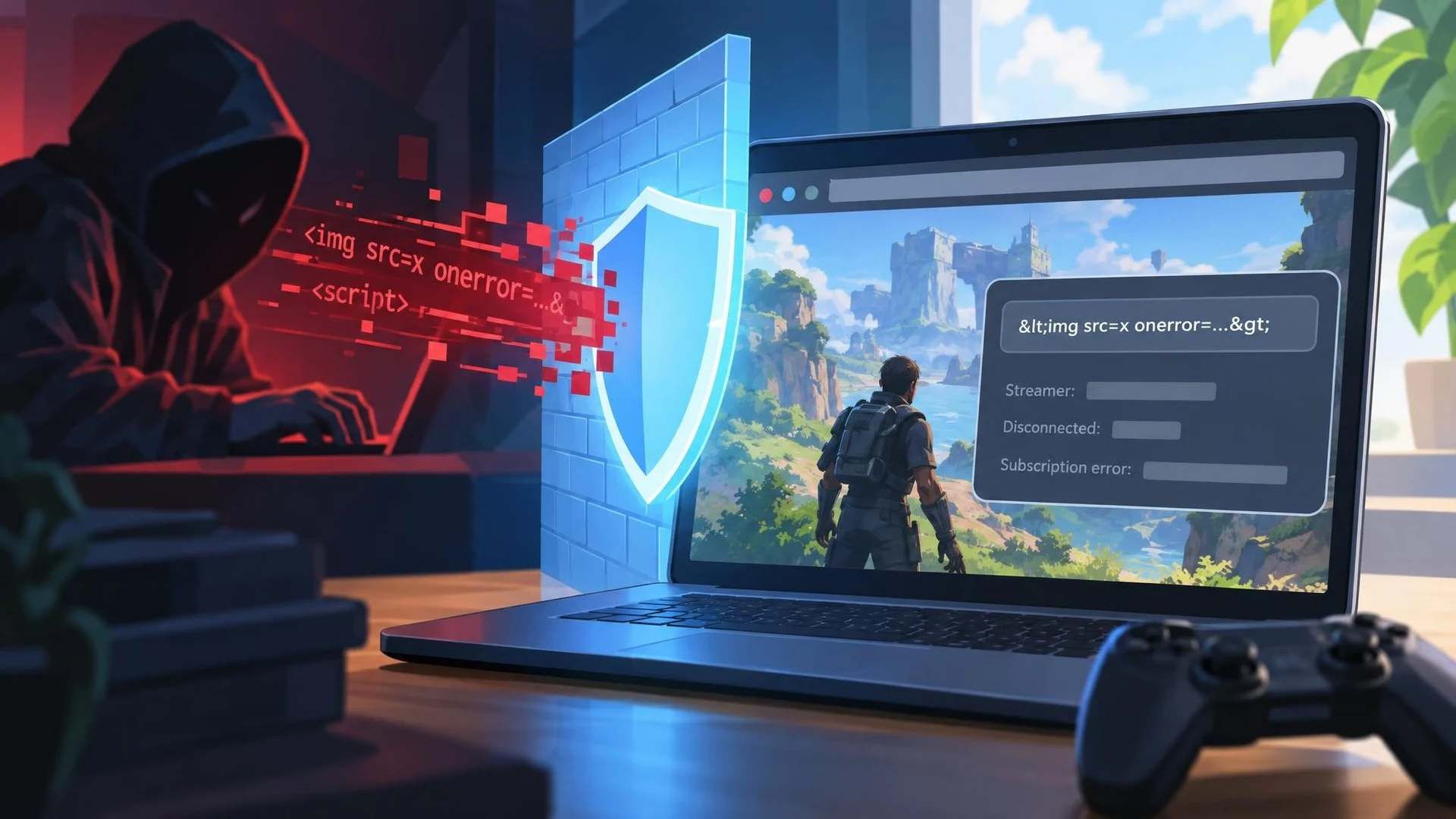
Epic Games published an update to the Pixel Streaming Infrastructure frontend UI packages on November 4, 2026. The release notes for the UE5.8-oriented frontend UI package identify a focused security correction: values such as a streamer's identifier, disconnect reason and subscription failure message are escaped before being displayed in browser overlays.
The change addresses an important boundary between an Unreal application and the web page used to view it. Pixel Streaming allows a game or interactive application to render remotely and deliver a video feed and controls through a browser. The browser remains a separate software environment, and text originating from connection parameters or signaling messages must be handled like other untrusted web input.
According to the release notes, crafted StreamerId URL parameters could previously inject HTML into the player page. The patched frontend treats the relevant strings as text rather than allowing them to be interpreted as page markup. That is a web security issue, not evidence that an attacker could directly run arbitrary C++ inside Unreal Engine. It also does not describe a new streaming codec or rendering feature.
Teams running public Pixel Streaming demonstrations should review exactly which frontend package and branch they deploy. The GitHub release list contains separately versioned components for different Unreal generations. Updating the wrong npm package or copying a partial bundle may leave the production player on an older frontend despite a successful Unreal executable build.
A practical verification plan is to deploy the patched frontend to a staging page, exercise normal join and disconnect flows, and check that stream identifiers containing special characters appear as harmless text. Test keyboard, mouse and controller forwarding as a regression check. This should be done with a controlled test environment, not by injecting potentially harmful strings into a public third-party service.
For game creators evaluating remote demos, this is a reminder that shipping an interactive Unreal experience through a browser also means maintaining a web application. HTTP configuration, authentication, connection limits and frontend updates remain separate operational responsibilities. The November release is small, but its scope is concrete and relevant to anyone exposing Pixel Streaming players to external users.
Rate this story
What did you think of this article?
Log in to rate this story, comment and like replies.
Log inNo comments yet. Be the first to share your thoughts.
More stories

Official Unreal MCP Documentation Shows How AI Agents Can Control the Editor
Epic documentation describes an experimental Unreal MCP server running inside the editor, with tools for actors, lighting, materials and automated tests. It turns an earlier event announcement into a concrete setup workflow, with clear safety limitations.

Unity 6.7 Beta 8 Improves Build Asset Traceability and Profiling
Unity 6000.7.0b8 adds a reference tree to Build Analysis and improves memory attribution in profiling tools. It is a beta editor update and should be tested outside production branches.

Unity CLI Beta 17 Adds Headless Linux Editor Installation and Dependency-Aware Plugins
Unity CLI 1.0.0-beta.17 follows the earlier beta.16 with headless Linux editor installation, managed plugin dependencies and more predictable scripting errors. The changes matter to build automation, not runtime game features.
Comments