
Unity 6.7 Beta 8 Improves Build Asset Traceability and Profiling
Unity 6000.7.0b8 adds a reference tree to Build Analysis and improves memory attribution in profiling tools. It is a beta editor update and should be tested outside production branches.
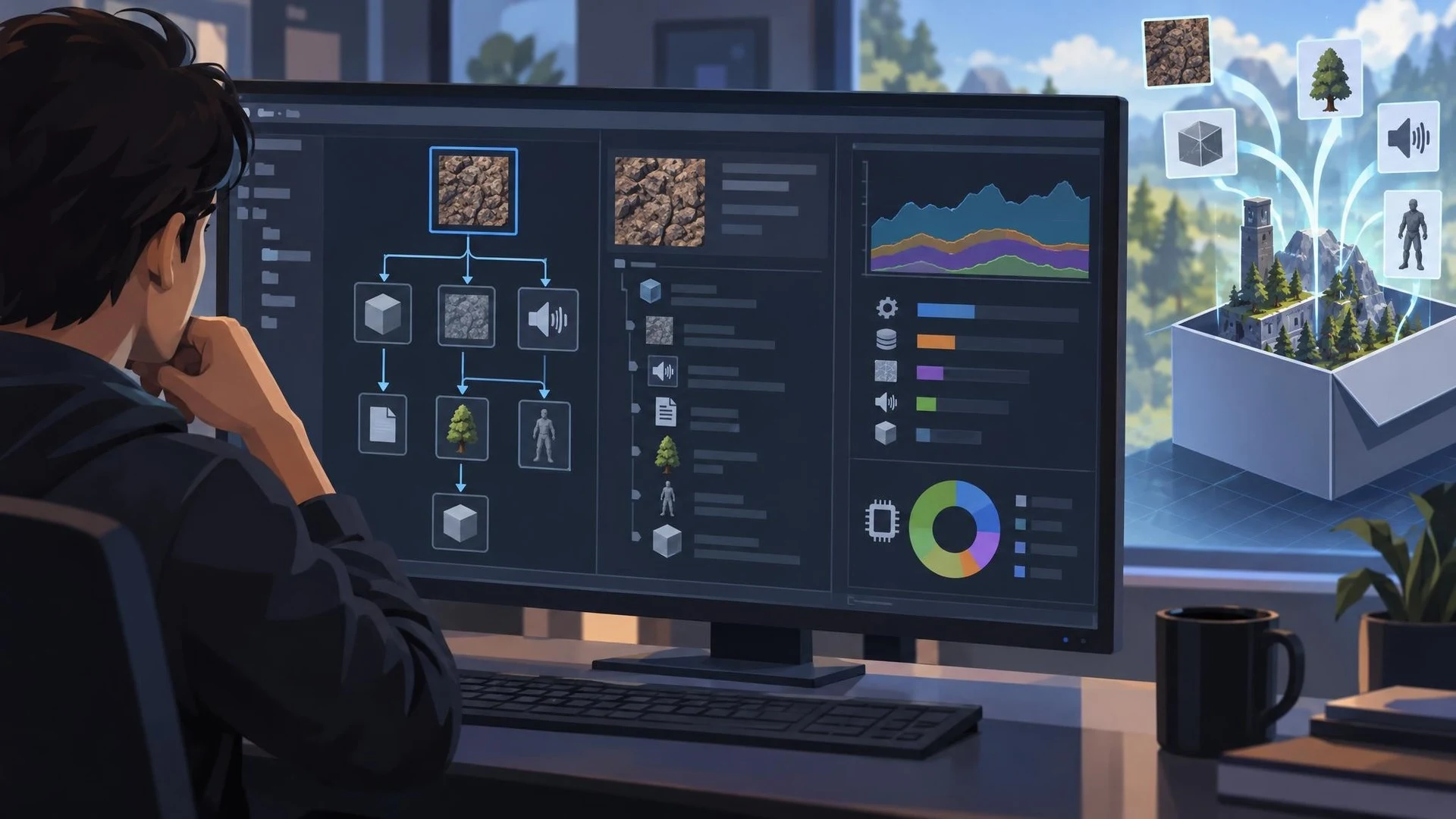
Unity released editor build 6000.7.0b8 on November 5, 2026. Among the noteworthy entries in the official beta release notes is a new asset reference tree in the Build Analysis inspector. It shows which assets refer to a selected asset and traces those dependencies back toward loadable roots included in a build.
This is a practical improvement for a familiar problem: a relatively small game can become unexpectedly large because textures, models or audio files are pulled into the build by indirect references. A developer may remove an object from the main scene and still find its resources packaged through an addressable collection, prefab dependency or another asset. A visible reference path is more useful than a simple size table when deciding what can actually be removed.
The beta also improves attribution of native memory used by the Asset Database in Memory Profiler reports. Instead of appearing only as an unrooted allocation, some memory can be associated with named AssetDatabase roots. That refinement may help developers distinguish engine bookkeeping from game asset problems, though memory profiler labels should not be interpreted as automatic evidence of a leak.
Additional notes cover import pipeline overhead and profiling details. Release notes can contain many cumulative changes, so it is important to read the subsection identifying changes since beta 7 before attributing an older feature to beta 8. The new Build Analysis reference tree is the clearest isolated feature in this particular increment.
An effective trial would take a copy of an existing Unity game, record its build size and capture its Build Analysis report. Select an unexpectedly large texture or animation and inspect the reference paths. Then remove or break a deliberate test dependency, rebuild and compare both the report and the final build. This establishes whether the tree helps answer a specific production question without risking original project assets.
Beta releases are not recommended as silent upgrades to shipping branches. Unity warns that prerelease editor builds may have stability limitations and known issues. Teams using a supported LTS version should treat beta 8 as a research environment until a desired capability arrives in a tested production release. The announcement concerns development visibility and diagnostics, not a guarantee of a smaller or faster final game.
Rate this story
What did you think of this article?
Log in to rate this story, comment and like replies.
Log inNo comments yet. Be the first to share your thoughts.
More stories

Official Unreal MCP Documentation Shows How AI Agents Can Control the Editor
Epic documentation describes an experimental Unreal MCP server running inside the editor, with tools for actors, lighting, materials and automated tests. It turns an earlier event announcement into a concrete setup workflow, with clear safety limitations.

Unity CLI Beta 17 Adds Headless Linux Editor Installation and Dependency-Aware Plugins
Unity CLI 1.0.0-beta.17 follows the earlier beta.16 with headless Linux editor installation, managed plugin dependencies and more predictable scripting errors. The changes matter to build automation, not runtime game features.

MetaHuman Creator Web Access Reaches Its November Shutdown Deadline
Epic scheduled the end of the standalone MetaHuman Creator website for November 5, with a further 90-day window to retrieve existing gallery characters. Character authoring inside newer Unreal Engine releases is a separate workflow.
Comments