
Parameter Identity Repair Targets Hidden Material GUID Collisions in UE5.8
A newly announced Unreal Engine 5.8 editor plugin scans material parameter identifiers and can attempt targeted repairs. The author describes safeguards and cases that still require manual review.
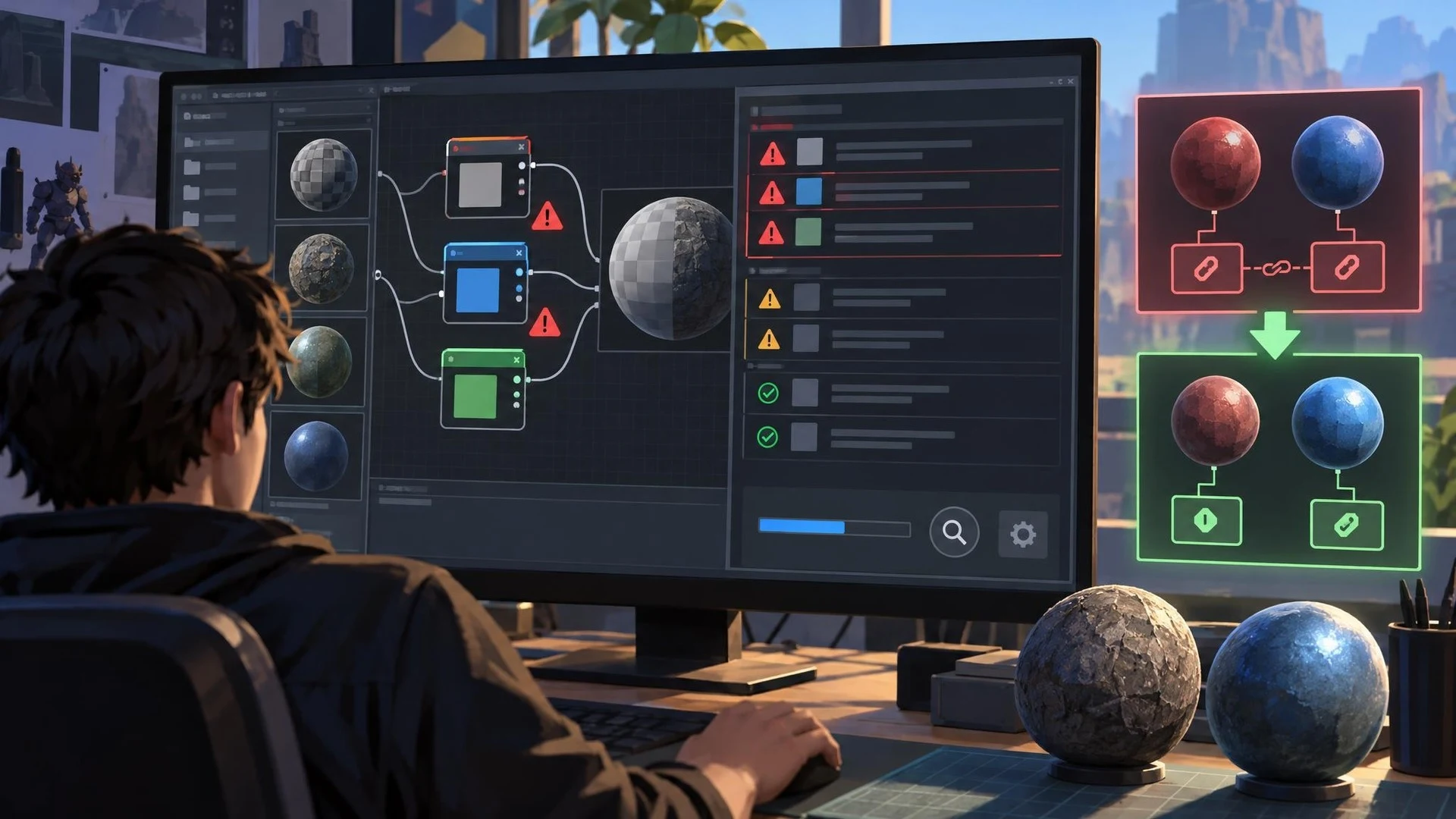
Material instances rely on more than the names shown in Unreal Engine's Material Editor. Parameters also carry internal identities used when overrides are maintained and migrated. An independent developer introduced Parameter Identity Repair on November 6 as a UE 5.8 editor plugin intended to find cases where distinct material parameters share an ExpressionGUID and produce confusing instance behavior.
According to the author, duplicating a material function can preserve parameter GUIDs. If copies later diverge, two parameters that should be independent may retain the same identifier. This can complicate renames, create ambiguity about which override belongs to which parameter, or cause unexpected values in material instances. The post distinguishes this from simply pasting a node, which it says follows different identifier handling in UE 5.8.
The plugin is designed around an inspection-first workflow. Its scan command does not modify assets. Instead, it produces an HTML report grouping collisions by severity and showing relevant materials and instance overrides. A separate apply mode attempts to address selected groups, retaining an identity where the most instance overrides exist and assigning new identifiers to other holders. The author describes additional checks and an undo journal intended to make changes traceable.
This kind of utility is most relevant to projects with large material-function libraries, substantial material instance inheritance, or content that has moved between engine versions. A subtle identity problem can be more expensive than an obvious missing texture because it may only appear when a parameter changes later. However, repairing identifiers is a potentially consequential operation. Teams should inspect the report, retain a clean source-control commit and verify their existing material instances before and after any automated fix.
The publisher describes the product as a version 1.0.0 Unreal Engine 5.8 Windows editor extension and documents limitations, including parameter cases that may require manual attention. Those are developer claims, not evidence that the tool has been independently tested against every material arrangement. A sensible trial would intentionally create a duplicated-function test case, run the non-destructive scan and compare the result with a known-good material setup. The plugin is not a new Epic engine update, and its editor functions should not be confused with runtime rendering features.
Rate this story
What did you think of this article?
Log in to rate this story, comment and like replies.
Log inNo comments yet. Be the first to share your thoughts.
More stories

ElevenLabs Releases a Unity SDK for Live Voice Conversations With NPCs
ElevenLabs has published a Unity SDK connecting scene characters to conversational voice agents. The developer documentation distinguishes supported desktop and WebGL targets from beta mobile and XR integration.

Gridworks Adds a Modular Low-Poly Industry and City Builder Kit for Unity
Gridworks has appeared on Unity Asset Store as a modular industrial environment kit with city-builder-oriented assets. The listing specifies supported URP and HDRP configurations but does not constitute an engine update.
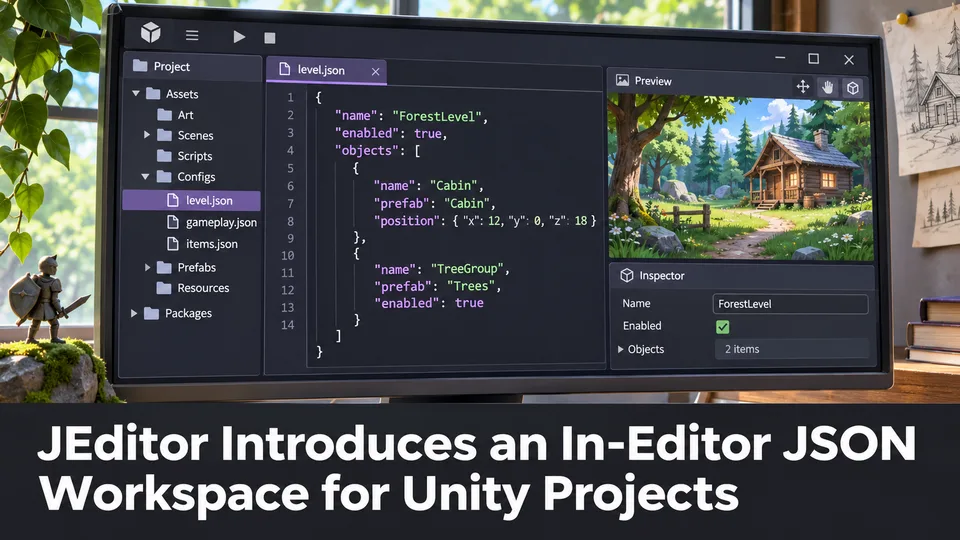
JEditor Introduces an In-Editor JSON Workspace for Unity Projects
JEditor 1.0.0 has been listed on Unity Asset Store as a JSON-focused editor utility. Its stated focus on inspection, comparison and validation makes it relevant to configuration-heavy Unity projects.
Comments