
OpenXR Roadmap Adds Spatial Anchors and Experimental Controller Models
Epic describes beta support for persistent spatial anchors and an experimental OpenXR Render Model plugin. The additions concern XR projects using the appropriate runtime, and the roadmap does not guarantee support for every headset or standalone device.
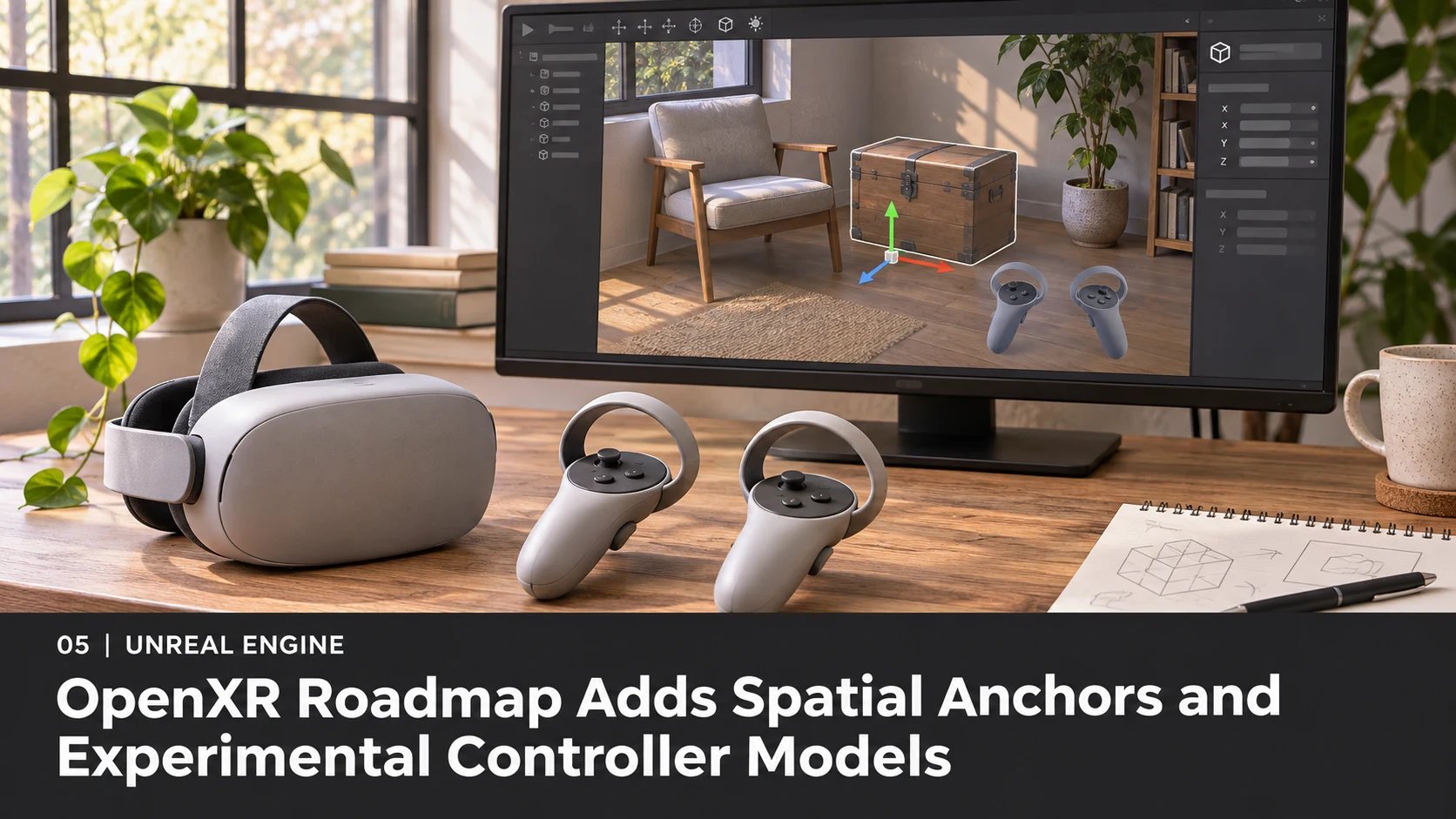
Epic Games has outlined two OpenXR-related features in its November 9 Unreal Engine roadmap: persistent spatial anchors in beta and a new experimental plugin for displaying controller models at runtime. They address different needs in extended-reality development, particularly in mixed reality and controller-based interaction.
A spatial anchor connects virtual content to a position in the real world, allowing an application to try to preserve that relationship across time. Epic describes its beta work as enabling mixed-reality experiences with persistent anchors through OpenXR. This is not the same as ordinary in-level coordinates, which exist inside the game world and do not necessarily correspond to a recognized physical room or surface.
The experimental OpenXR Render Model plugin has a narrower job. It is intended to display three-dimensional controller models during runtime, improving the match between the physical controller a person holds and the virtual device represented on screen. For instructional VR interfaces and hand-held tools, a recognizable model can reduce confusion over button placement or controller orientation.
Neither statement should be interpreted as a promise that every extension works on every headset. OpenXR is a common interface, but runtimes and hardware can expose different capabilities. A Windows PCVR application connected to a Quest headset is also a different target from an Android application running entirely on the headset. Build requirements, extension availability and performance need to be tested on the actual deployment target.
A small test could contain one floating marker tied to a spatial anchor and one controller visualized using the render-model path. Revisit the same physical space after restarting the session and check whether the anchor behaves as intended. Record which OpenXR runtime, headset connection method and engine build are involved, rather than assuming results transfer to another device.
For production teams, this roadmap item is best viewed as a more consistent foundation for XR interaction experiments. Because the features are identified as beta and experimental, backup projects and device-specific validation remain important before adding them to customer-facing experiences.
Rate this story
What did you think of this article?
Log in to rate this story, comment and like replies.
Log inNo comments yet. Be the first to share your thoughts.
More stories
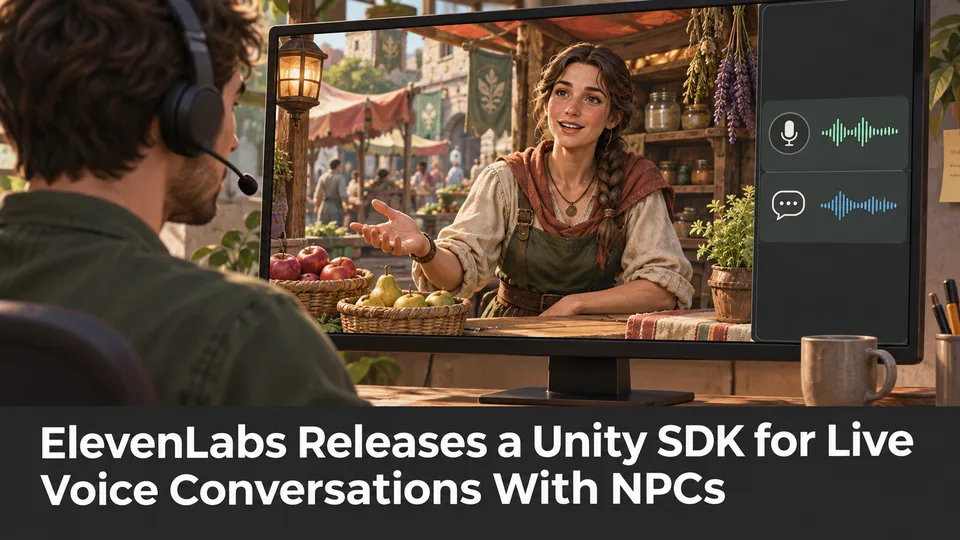
ElevenLabs Releases a Unity SDK for Live Voice Conversations With NPCs
ElevenLabs has published a Unity SDK connecting scene characters to conversational voice agents. The developer documentation distinguishes supported desktop and WebGL targets from beta mobile and XR integration.

Gridworks Adds a Modular Low-Poly Industry and City Builder Kit for Unity
Gridworks has appeared on Unity Asset Store as a modular industrial environment kit with city-builder-oriented assets. The listing specifies supported URP and HDRP configurations but does not constitute an engine update.
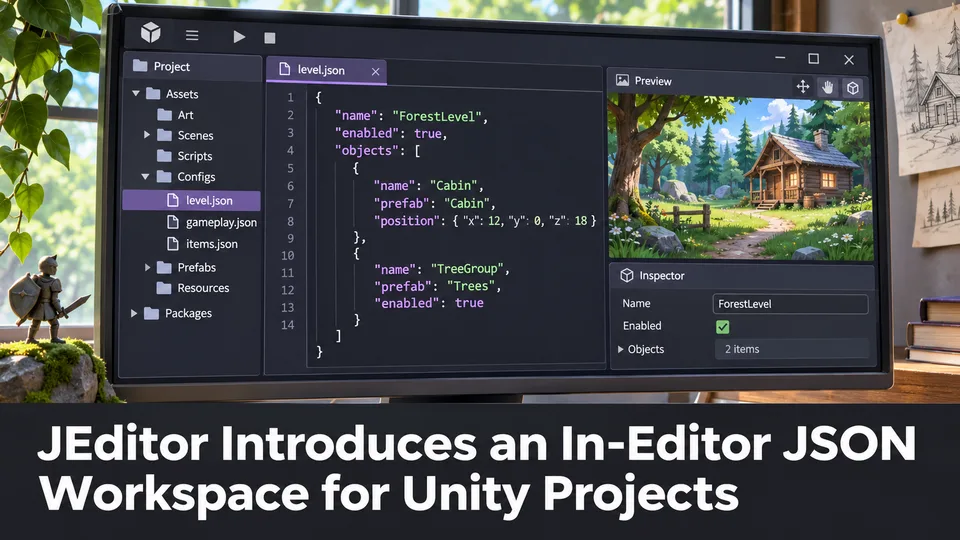
JEditor Introduces an In-Editor JSON Workspace for Unity Projects
JEditor 1.0.0 has been listed on Unity Asset Store as a JSON-focused editor utility. Its stated focus on inspection, comparison and validation makes it relevant to configuration-heavy Unity projects.
Comments