
New Niagara Ghost Particle Lesson Combines Motion Forces and Dynamic Lights
A new community tutorial shows how a single Niagara emitter can layer ghostly sprites, curl-noise movement, spring forces and light rendering. It is a practical VFX lesson for UE5.7 and 5.8.
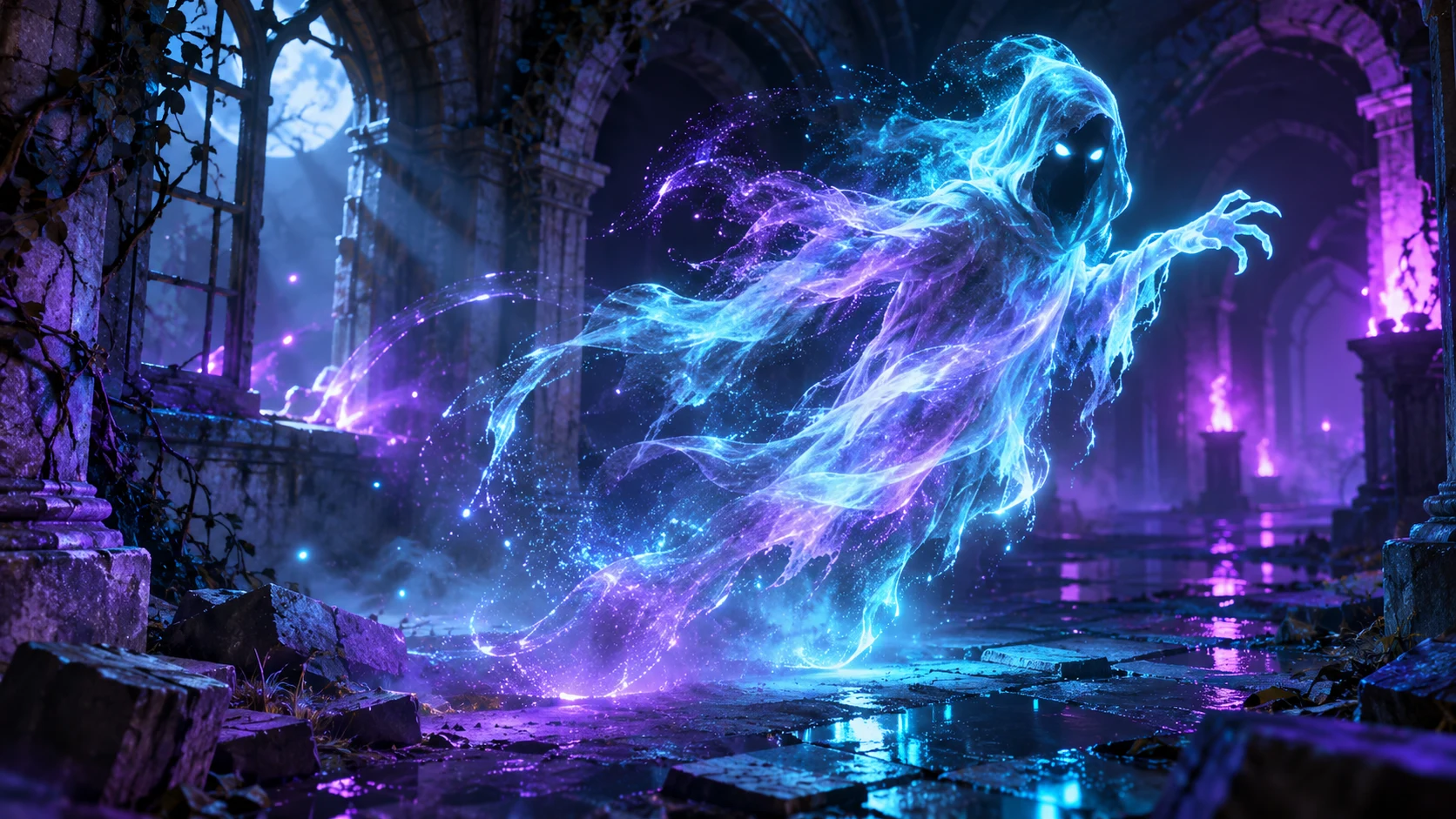
Stylized supernatural effects often combine several visual layers: a dark outer shape, a bright center, irregular motion and light that responds to the moving particle. A November 8 tutorial by Ashif Ali presents a Niagara workflow for constructing that combination in Unreal Engine 5.
The Epic Developer Community lesson describes a single-emitter setup rather than a collection of separately controlled effects. It begins with a translucent radial material and custom parameters for color and two-dimensional sprite size. Multiple sprite renderers are then used to combine a darker surrounding layer with a brighter internal element.
Motion is another part of the demonstration. Curl Noise supplies an irregular floating trajectory, while spring forces help keep the motion connected to a central location. Size curves modify the effect over time. Finally, the lesson adds a Niagara Light Renderer and binds it to the illuminated part of the effect. The page labels Unreal Engine versions 5.7 and 5.8, but it does not announce a new engine capability.
There are two reasons this workflow is relevant to game VFX production. First, it shows that changing how particles are layered can be as important as adding more particles. Second, it offers an example of how motion and illumination can be coordinated instead of designed as unrelated pieces. Those ideas can transfer to ambient wisps, magical pickups and environmental warning effects without copying the appearance of a ghost.
A production test should separate visual quality from runtime cost. Build a single emitter using the lesson's parameter concepts, then compare the result with a version that disables particle lighting. Check whether the effect remains readable at long distances, in bright environments and against moving backgrounds. Profile it with several identical effects on screen, not just one hero shot.
The publication is a community lesson that explains familiar Niagara building blocks in a focused composition. Developers should treat its setup as a reference to adapt and profile, not as proof that one emitter is always faster or that dynamic particle lights are inexpensive.
Rate this story
What did you think of this article?
Log in to rate this story, comment and like replies.
Log inNo comments yet. Be the first to share your thoughts.
More stories
Unity Pipeline 1.0.0-pre.1 Adds CLI Profiler Analysis and Scene Previews
Unity promoted a prerelease of its Pipeline package with saved Profiler analysis, scene-preview archives and clearer command effects. This is an official pre-1.0 tool update with compatibility changes.
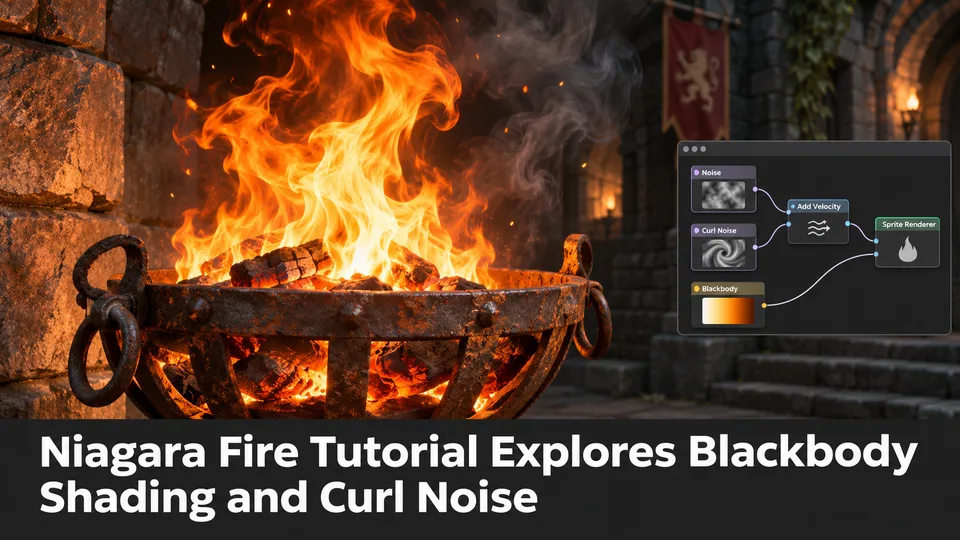
Niagara Fire Tutorial Explores Blackbody Shading and Curl Noise
A newly published community lesson builds a stylized Unreal Engine fire effect from material nodes and Niagara particles. It explains familiar techniques rather than introducing new UE5.8 functionality.
New Community Walkthrough Covers Avatar Image Optimization for Unreal Services
A recent Unreal community tutorial demonstrates resampling avatar images, converting textures to WebP and moving files through Blueprint-backed cloud workflows. It is a third-party tutorial, not an Epic engine feature.
Comments