
DCC-MCP Unreal Adapter Offers Typed AI Tools for Blueprints and Game Tests
The actively maintained DCC-MCP Unreal repository describes an open-source bridge from coding agents to Unreal Editor operations, including assets, Blueprints and validation. November 1 repository activity is not evidence of a new official Epic feature release.

An AI assistant can write C++ source without knowing what is currently happening inside Unreal Editor. Editing the visual scene, inspecting a Blueprint, or confirming that gameplay works requires a different kind of connection. The independently maintained DCC-MCP Unreal adapter is one attempt to provide that connection through Model Context Protocol tools.
The project's public documentation, inspected alongside repository activity through November 1, 2026, describes an embedded Python server or a standalone sidecar connected through a shared DCC-MCP core. Its purpose is to expose typed operations for examining Unreal scenes, authoring assets and Blueprints, working with cinematics, and running validation through Play In Editor or Unreal Automation. Rather than letting an agent guess about success, a controlled workflow can request an operation and inspect its result.
The adapter is separate from Epic Games' own experimental MCP tooling. The wider DCC-MCP ecosystem also describes ways to bridge certain official Epic toolsets when installed, without redistributing them as part of its own package. That distinction matters for compatibility, licensing and support. A third-party adapter can use an official editor interface without becoming an official Unreal Engine feature.
An attractive use case is a small actor-authoring task. An assistant could inspect an empty test level, create a primitive actor, set one exposed property, and verify the resulting scene state. Another experiment could check an existing Blueprint's structure, then run a targeted test. In either case, source control and an explicit checkpoint make it easier to review what actually changed rather than accepting a text-only success message.
There are limitations. The tool requires a correctly configured editor, local process permissions, compatible runtime components and appropriate installation. The public project documentation is not independent proof that every advertised operation has been tested across every Unreal Engine release. Its repository being updated on November 1 should also not be confused with a versioned product launch on that day.
For teams interested in adopting AI-assisted editor automation, a reliable first step is to test read-only discovery, inspect the available tool schemas, and grant write access only for one disposable level. A useful acceptance test should verify changes using the editor's own object hierarchy and a Play In Editor result. The adapter's strongest idea is structured, inspectable interaction with a real editor, not autonomous game creation without oversight.
Rate this story
What did you think of this article?
Log in to rate this story, comment and like replies.
Log inNo comments yet. Be the first to share your thoughts.
More stories
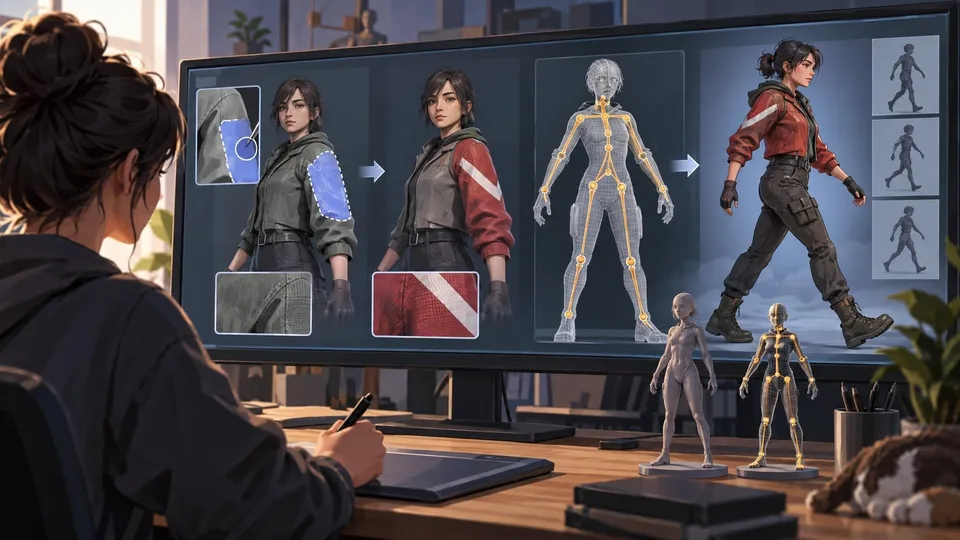
StableGen 0.4.0 Adds Masked Texture Edits and Automatic Blender Rigging
An October 28 release of the Blender-based StableGen workflow adds masked local texture editing, automatic rigging, and new image architectures. Several integrated models carry non-commercial licenses that game creators must check before using them in products.

Construct 1.0 Turns Agent-Written Scenes into Named 3D Exports
The open-source Construct 1.0 release adds glTF and OBJ export from structured scenes, including named parts, animation and Blender integration. The author reports validation in Godot, while Unreal and Unity import quality still requires separate testing.

DCC-MCP Unity Adapter Connects AI Agents to Scene and Build Operations
An independent DCC-MCP Unity integration offers typed scene, project, build and diagnostic tools via a Unity Editor bridge. The repository was active on November 1, but there is no independently established new Unity engine feature or dated major release.
Comments