
Construct 1.0 Turns Agent-Written Scenes into Named 3D Exports
The open-source Construct 1.0 release adds glTF and OBJ export from structured scenes, including named parts, animation and Blender integration. The author reports validation in Godot, while Unreal and Unity import quality still requires separate testing.

One of the difficulties with generative 3D content is the difference between a convincing preview and an editable asset. A single rendered image may look like a machine or vehicle, yet offer no separate doors, joints or usable scene hierarchy. Construct 1.0.0, an independent open-source release dated October 27, 2026, attempts to preserve more structure when an AI agent describes and builds a three-dimensional object.
The project uses a scene representation that can be authored through an agent and assembled deterministically by its underlying tooling. The new release extends those scenes beyond its earlier hologram-style presentations by exporting glTF 2.0 or OBJ models. According to the author's release notes, parts retain names and organizational information, joints can be represented through an opening animation, and periodic movements can appear as an idle animation.
Construct also includes material definitions for surfaces such as painted metal, glass, wood and rubber. An export option can merge non-moving parts by material to reduce the number of draw operations. The developer cites a demonstration model in which this consolidation reduces an approximate draw-call count while preserving a moving component. These are author-reported examples, not independent performance measurements for a finished game.
A Blender add-on lets users inspect and adjust exported constructs. The project's licensing is split: the core is described as Apache-2.0 while the Blender add-on follows a GPL license. Developers should review the license obligations of each part they redistribute and verify the origin of any source material or generated design.
For Unreal Engine and Unity creators, the most appealing possibility is a structured early blockout of a prop whose moving parts remain separate. However, the release notes describe explicit checks in Godot and use of the Khronos glTF validator. They do not establish that every generated joint, material or animation works identically after import into Unreal or Unity. Engine-specific behavior still needs testing.
A sensible experiment would describe a simple cabinet with a hinged door, export it as GLB, inspect part names and animations in Blender, then import a copy into the target engine. Measure whether pivots, material assignments, collision and animation tracks survive. If the result requires extensive repair, that effort belongs in the production cost calculation.
The significance of Construct 1.0 is its focus on editable, named geometry rather than visual novelty alone. It remains a tool to evaluate, not a replacement for environment art review or engine integration.
Rate this story
What did you think of this article?
Log in to rate this story, comment and like replies.
Log inNo comments yet. Be the first to share your thoughts.
More stories

BlueprintReview Adds Timeline Navigation for Unreal Blueprint Changes
BlueprintReview gained a time-lapse view for Blueprint revision histories on November 1. The independent beta aims to make visual scripting changes easier to inspect without opening the Unreal Editor, including for teams using Git or Perforce.
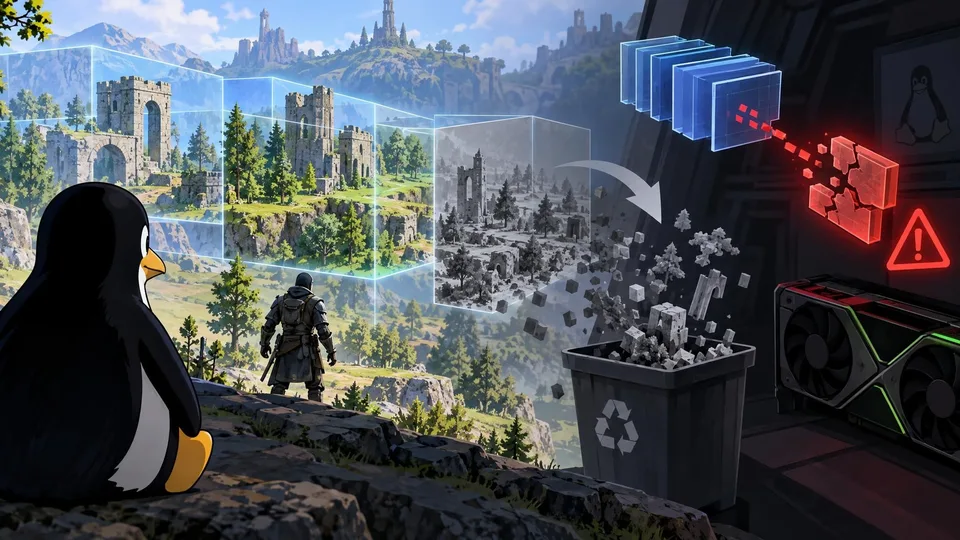
Linux Vulkan Crash Report Links Runtime PCG Cleanup to GPU Resources
A detailed November 1 report describes a Vulkan crash during garbage collection in an Unreal Engine 5.8.3 Linux game using runtime-generated PCG and World Partition. The suspected uniform-buffer lifetime issue is not yet an officially verified root cause.

Mac Unreal Metal Memory Leak Report Gains Another Independent Reproduction
A third developer reproduced an apparent Metal drawable retention problem in a packaged Unreal Engine 5.8.4 Mac game on October 31. Community members report successful source-level repairs, but Epic has not announced an official hotfix.
Comments