
Claude Code 2.1.316 Adds Subagent Effort Controls and Shell Process Fixes
Anthropic released Claude Code 2.1.316 on October 31 with a configurable default effort level for subagents and fixes for commands left running after certain exits. The changes address supervision of automated workflows rather than gameplay features.
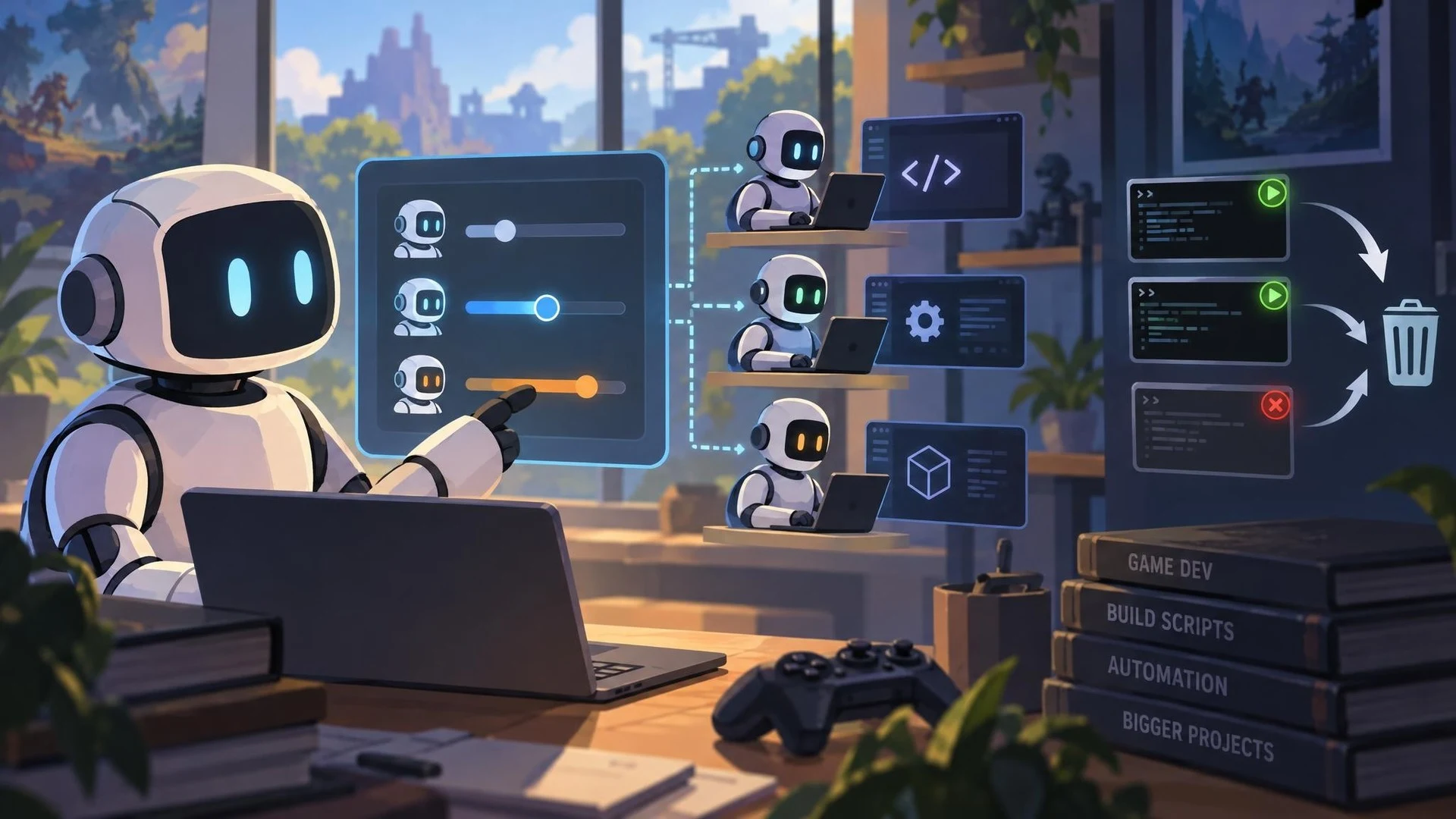
Coding agents can delegate work to smaller agents, run shell commands, and continue through complicated changes in a repository. That makes configuration and cleanup behavior important for developers who use them on large game projects. Anthropic released Claude Code 2.1.316 on October 31, 2026 with updates affecting subagent settings, process handling, and several environment-specific behaviors.
A new environment setting lets developers define the effort level used by subagents when the individual task does not provide its own setting. Previously, according to the release notes, subagents could inherit the parent session's effort level. This offers another way to decide how much work delegated tasks should perform by default. Whether it changes cost or task quality in a particular setup should be measured rather than assumed.
The update also fixes a practical cleanup issue on macOS and Linux. In some cases, shell commands could remain running after Claude Code exited by itself, such as when credentials were rejected or a cloud session was archived. That matters if an agent has started a local build, long-running script, or test process. Unexpected orphaned processes can consume resources and complicate the next attempt to use the same environment.
Additional fixes address network requests whose compressed responses were truncated, shell command interpretation, and PowerShell hook behavior under certain syntactic conditions. There are also changes for enterprise gateways and model availability handling across cloud providers. Not every improvement will affect a standard local installation, so teams should review which issues match their own deployment.
Game repositories make a useful example of why these details matter. An Unreal C++ build can generate large intermediate files and run several compiler processes. A Unity automation may enter batch mode, export reports, and update assets in sequence. If a supervising agent loses track of a process, the resulting partial outputs can look like a project failure rather than an orchestration problem.
For a small evaluation, create a disposable repository and run a harmless script through the supported agent workflow. Test how the process is reported when the session exits normally and when an operation is denied. If the environment uses subagents, assign a clearly bounded inspection task and confirm which effort setting the subagent receives. Avoid testing destructive commands or using a production project as the first experiment.
This is a newer release than the prior 2.1.314 update, which addressed a different set of permission and agent problems. The October 31 changes should be assessed on their own terms, not treated as a repeat announcement about the earlier working-directory write restriction.
The main takeaway is operational. Coding assistants become more useful when delegated work, background processes, and errors are predictable. Claude Code's update addresses some of those controls, but developers remain responsible for checking generated edits and the behavior of any tools the assistant is allowed to run.
Rate this story
What did you think of this article?
Log in to rate this story, comment and like replies.
Log inNo comments yet. Be the first to share your thoughts.
More stories

Community Unreal Engine 5.8 WebGPU Fork Shows Browser-to-Native Multiplayer
A community developer has demonstrated a modified Unreal Engine 5.8 build running through WebGPU in a browser alongside a native macOS multiplayer client. The project remains experimental, and its author explicitly says it is not yet production-ready.
UStudio Brings Unreal Blueprint Inspection and Local MCP Tools to VS Code
The developer of UStudio has introduced a VS Code and Cursor extension with Unreal-specific C++ inspection, Blueprint viewing, live execution feedback, and a local MCP server. These capabilities are product claims that still require independent project testing.
Unity 6.3 LTS Patch 6000.3.27f2 Fixes Security and Import Problems
Unity published editor build 6000.3.27f2 on October 30, addressing a Brotli decoder vulnerability alongside model-import, rendering and stability issues. Studios should assess the security fixes while testing the patch against their own projects before broad deployment.
Comments