
Atelico Opens Early Access to Local AI Engine for Game Characters
Atelico has opened early access to an on-device AI engine that advertises integrations with Unreal Engine, Unity and Godot. It aims to support dialogue, memory, speech and generated content without per-token cloud calls, but its performance claims need testing.
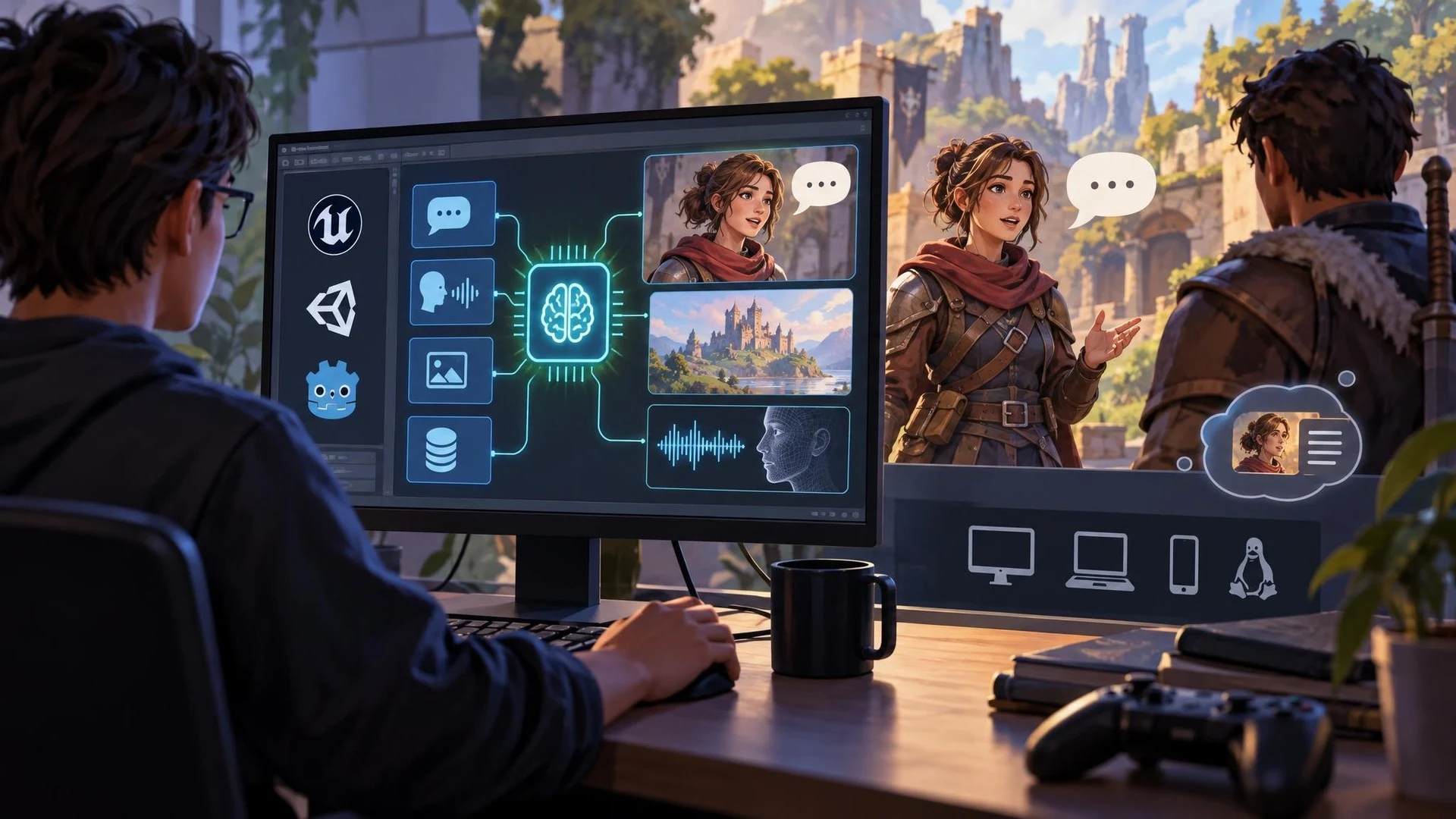
Many proposed AI-powered games face the same design problem: conversational characters and personalized content may require a server connection, recurring API fees, and delays that interfere with the player's experience. Atelico announced early access to its AI Engine on October 29, 2026, offering a different approach based on processing AI workloads on the player's device.
The company says its technology operates in-process alongside the game and provides native integrations for Unreal Engine, Unity, and Godot. The announcement lists support for Windows, macOS, iOS, and Linux, with execution on CPU or GPU. These are vendor-described capabilities; actual compatibility depends on the selected model, hardware, engine version, and game requirements.
Atelico describes a broad set of features. Language models can generate dialogue and narrative responses, with structured outputs intended to fit application code. Image generation can produce content in adapted styles. Speech-to-text, text-to-speech, audio-driven lip synchronization, and embeddings are proposed as building blocks for characters that remember conversations or respond to player choices.
The company's own game, Bobium Brawlers, is presented as an example of creating playable material from a player's description. That offers a useful demonstration of a possible design direction, but it does not establish that every supported game engine can deliver the same results at the same performance level. A complex real-time game has different resource demands from a lightweight prototype.
The on-device architecture carries both advantages and trade-offs. Processing locally may reduce reliance on cloud services and make some personal data easier to keep on the device. It also means the game may need to share memory and computing resources with graphics, animation, and physics. Generating a response during an intense scene could produce unacceptable frame-time spikes unless tasks are scheduled carefully.
There are also product and safety considerations. A language model can produce unpredictable content, and dialogue needs boundaries that fit a game's tone, age rating, and story. Persistent character memory must be designed so that it remains coherent and does not expose unrelated personal data. An offline design does not automatically solve all privacy or moderation problems.
For a responsible experiment, developers could build a single non-player character with a small, explicit memory store. Test short conversations while monitoring frame time, total memory consumption, response latency, and battery or thermal effects on supported devices. The first goal should be a stable interaction, not a promise of unlimited character intelligence.
Atelico's announcement is an early-access product introduction, not a generally available Unreal or Unity feature. Its importance is the opportunity to evaluate whether local inference can become a reliable gameplay component rather than an external service attached to a conventional NPC.
Rate this story
What did you think of this article?
Log in to rate this story, comment and like replies.
Log inNo comments yet. Be the first to share your thoughts.
More stories

Community Unreal Engine 5.8 WebGPU Fork Shows Browser-to-Native Multiplayer
A community developer has demonstrated a modified Unreal Engine 5.8 build running through WebGPU in a browser alongside a native macOS multiplayer client. The project remains experimental, and its author explicitly says it is not yet production-ready.
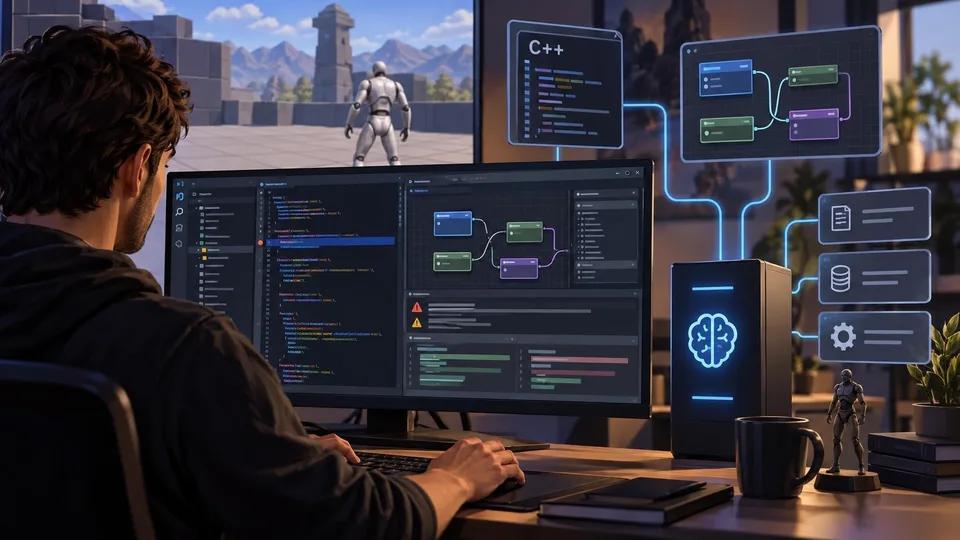
UStudio Brings Unreal Blueprint Inspection and Local MCP Tools to VS Code
The developer of UStudio has introduced a VS Code and Cursor extension with Unreal-specific C++ inspection, Blueprint viewing, live execution feedback, and a local MCP server. These capabilities are product claims that still require independent project testing.
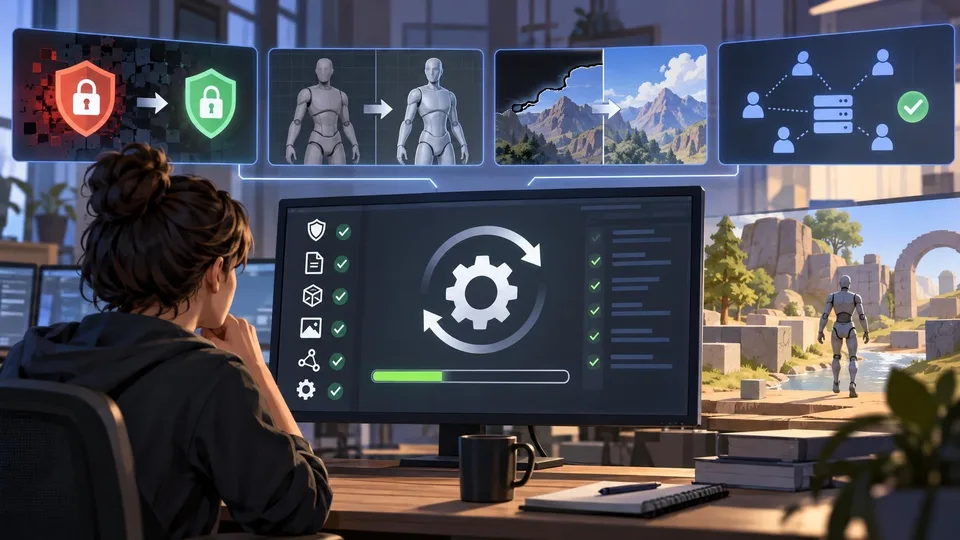
Unity 6.3 LTS Patch 6000.3.27f2 Fixes Security and Import Problems
Unity published editor build 6000.3.27f2 on October 30, addressing a Brotli decoder vulnerability alongside model-import, rendering and stability issues. Studios should assess the security fixes while testing the patch against their own projects before broad deployment.
Comments