
Unreal Assistant Preview Opens Editor Workflows to Codex, Claude Code and Cursor
Epic says its experimental Unreal Assistant can connect external coding agents through the Agent Client Protocol. The approach brings existing agent tools closer to the editor, but available capabilities depend on integration checks and enabled toolsets.
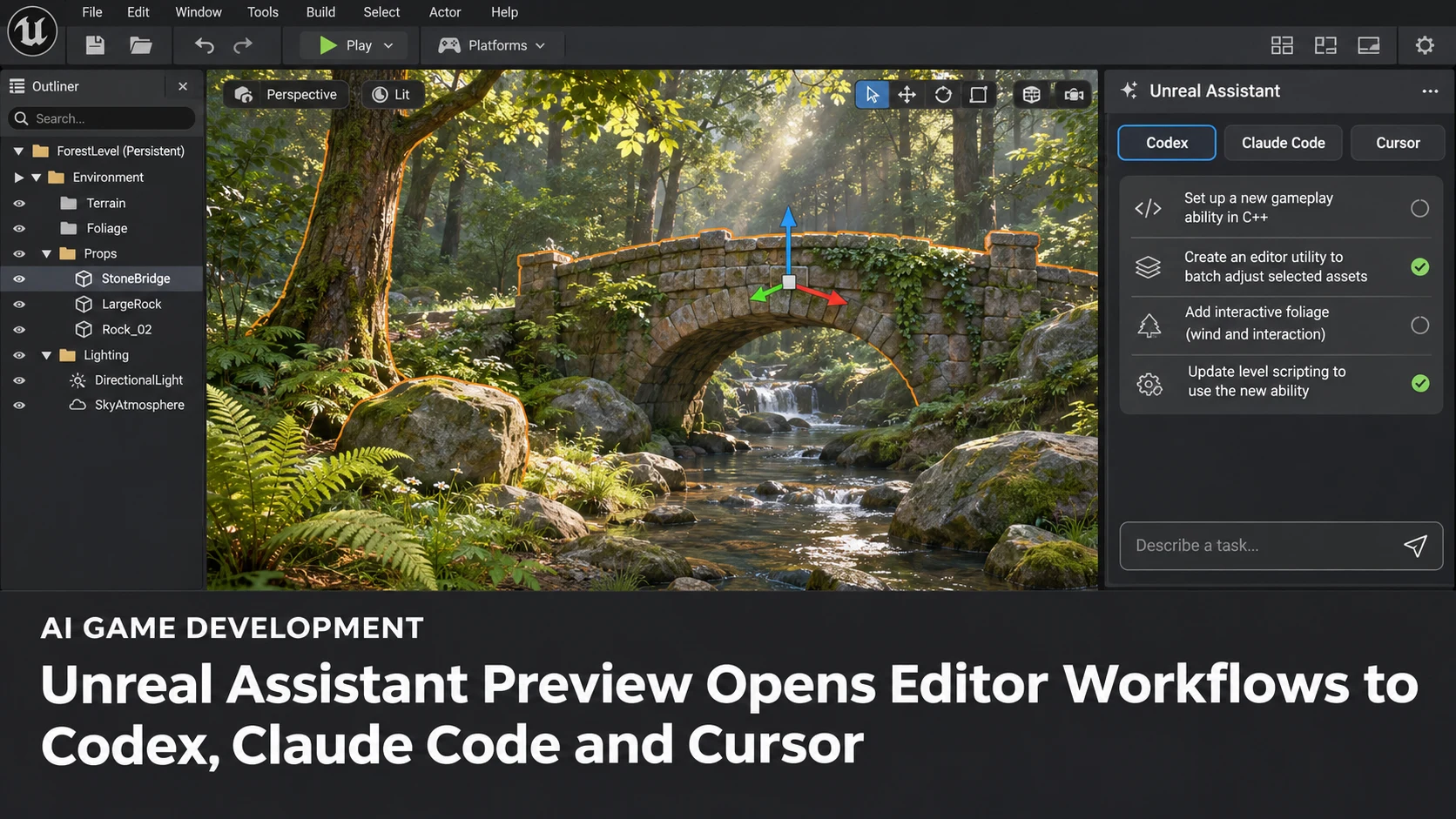
An Unreal Engine coding assistant does not necessarily need to be built into the engine. Epic's November 9 roadmap describes an experimental option for connecting external agents to Unreal Assistant through the Agent Client Protocol. The accompanying 5.9 MegaJam Preview announcement explicitly names Codex, Claude Code, Cursor and OpenCode as examples of assistants developers can use in this workflow.
The central idea is a bridge between the editor's interface and an agent the developer already uses. Rather than copying every file name and error message into another window, the assistant can work within an integrated experience and connect to supported Unreal MCP tools. That could be useful for tasks involving scene inspection, project changes and code analysis, but the workflow is not equivalent to an unrestricted agent that can reliably operate every part of Unreal.
Epic says this experimental mode is disabled by default and is configured in Editor Preferences. Integrations are supported after passing a protocol test suite, and capabilities vary according to the agent implementation. The roadmap specifically cautions that functions such as image replay are not available in every harness. Developers therefore should not assume two agents expose identical operations simply because both support the protocol.
There is also an important setup limitation in the preview's known-issues section. Epic reports that newly created projects may start with the Unreal MCP server enabled while its actual toolset plugins are disabled. An assistant can appear connected but have no practical actor, level, asset or Blueprint tools. Epic describes enabling the relevant toolsets and restarting the editor as a workaround. This highlights why connection status alone is insufficient evidence of operational access.
A good test would use a disposable scene with a single actor and material, then connect a chosen coding agent through the supported mechanism. Ask it to list available toolsets, inspect an asset, propose one reversible edit and explain the resulting diff. Repeat with a second agent only if it has passed the required integration conditions. Record any operations that depend on manually enabled plugins or editor permissions.
The announcement is significant because it moves AI assistance closer to the actual authoring environment. It remains an experimental preview, however, and the practical measure of progress is controlled, repeatable editor work under human review, not whether the assistant can merely describe what a developer should click.
Rate this story
What did you think of this article?
Log in to rate this story, comment and like replies.
Log inNo comments yet. Be the first to share your thoughts.
More stories
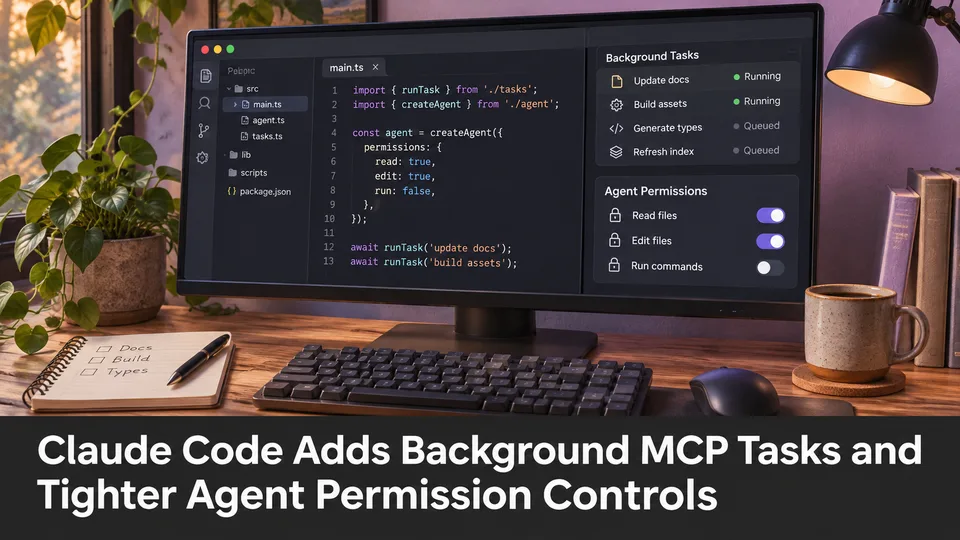
Claude Code Adds Background MCP Tasks and Tighter Agent Permission Controls
Anthropic’s Claude Code 2.1.319 introduced asynchronous MCP tasks and new permission controls. These features may help game developers manage long-running Unreal or Unity tool operations without blocking every agent step.
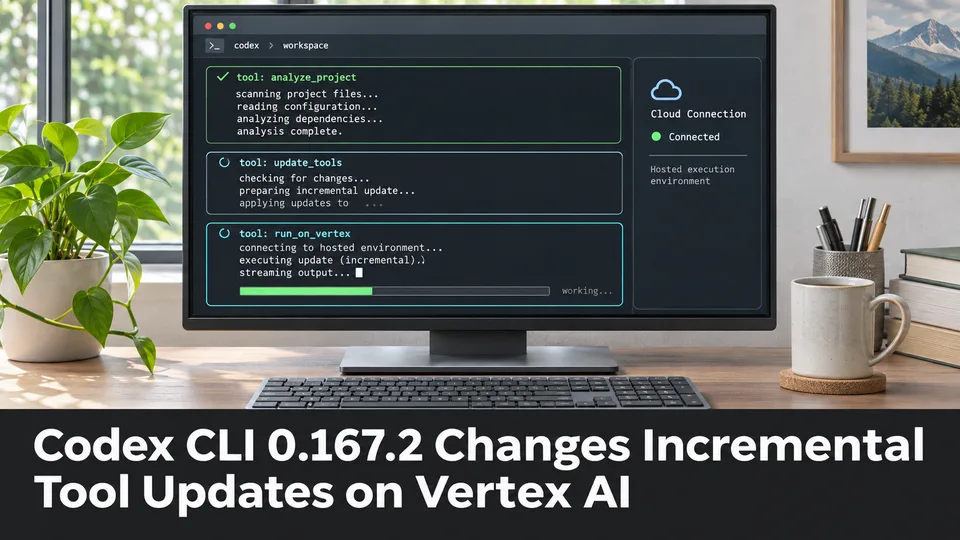
Codex CLI 0.167.2 Changes Incremental Tool Updates on Vertex AI
OpenAI released Codex CLI 0.167.2 with incremental tool updates enabled by default for Google Cloud Vertex AI. The change is relevant to teams using that backend, but it is not a general Unreal or Unity agent feature.
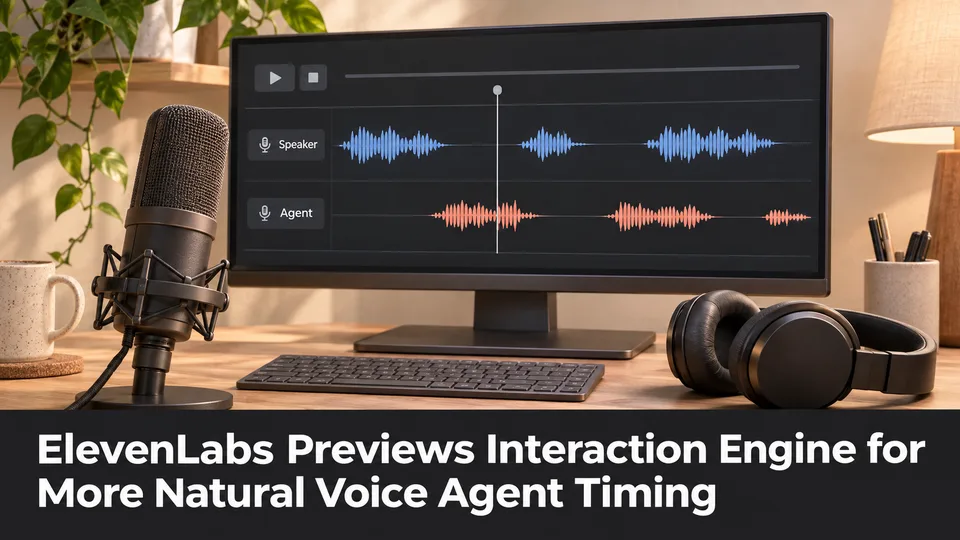
ElevenLabs Previews Interaction Engine for More Natural Voice Agent Timing
At its New York summit, ElevenLabs previewed an Interaction Engine that manages turn-taking, interruptions and model selection in conversations. Real-time game NPC use remains a proposed application, not a shipped game integration.
Comments