
Unity BVH Hitbox Demo Claims Accurate Shooting Against Hundreds of Bots
A Unity developer published a browser demonstration of dynamic, bone-tracking hitboxes on October 30, reporting high frame rates with hundreds of moving agents. The plugin is still awaiting Asset Store review, and performance claims are the creator’s own.
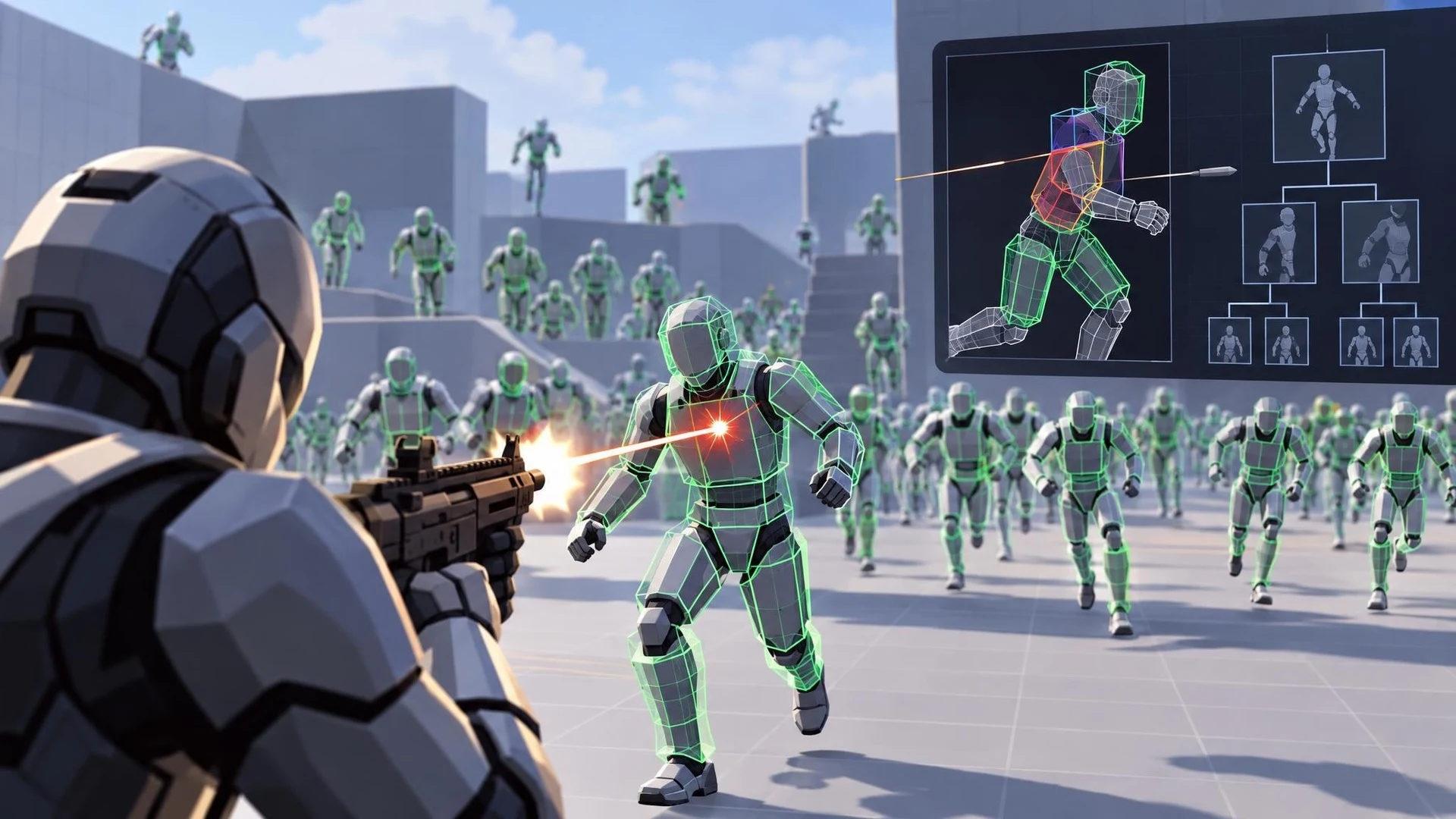
Accurate hit detection becomes expensive when a game has many moving enemies. A shooter may need to distinguish a bullet passing between an arm and torso from a hit on the character, while hundreds of other animated characters are moving through the same scene. A Unity developer shared a technical demonstration on October 30, 2026 aimed at that problem.
The work-in-progress project uses a dynamic bounding volume hierarchy, or BVH, to organize hitbox geometry around moving skeletal joints. Instead of relying only on broad capsule colliders, the proposed system aims to narrow ray queries to geometry near relevant body parts. The developer says it can process large numbers of queries while the characters are animated. A publicly accessible browser demo was provided so visitors could inspect the behavior themselves.
The performance figures in the forum post are not independently verified benchmarks. The author reports about 80 frames per second with 500 moving and firing bots in a single-threaded browser test on a base M1 MacBook Air, and around 30 frames per second with 1,000. A subsequent update on the same day raised the demonstration ceiling to 2,000 animated agents and added repeated bullet ricochets. Those figures apply to the developer's demonstration and cannot be directly treated as measured performance in a production Unity game.
There are several important differences between a hitbox benchmark and a finished shooter. A real game also needs rendering, animation evaluation, navigation, networking, audio, and gameplay rules. CPU time saved in ray queries may be lost elsewhere, and integration details can determine whether a custom collision system is actually practical. The creator says the package was still undergoing Asset Store publishing review when the demonstration was posted.
An appropriate evaluation would reproduce a controlled scenario with a fixed number of animated characters and ray queries. Compare a conventional collider setup against a custom BVH implementation on the same hardware, using identical animation and collision rules. Measure CPU time as well as frame time, and specifically test shots near limb edges where simpler colliders can behave inaccurately.
This is a promising independent experiment, not an official Unity physics replacement. Developers should wait for release details, package requirements and reproducible integration tests before assuming the advertised gains will transfer to their own games.
Rate this story
What did you think of this article?
Log in to rate this story, comment and like replies.
Log inNo comments yet. Be the first to share your thoughts.
More stories
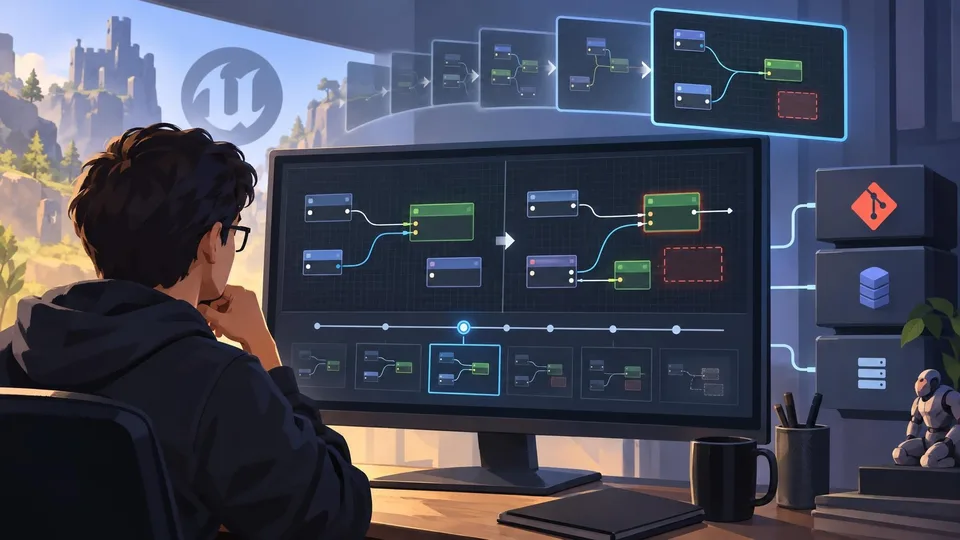
BlueprintReview Adds Timeline Navigation for Unreal Blueprint Changes
BlueprintReview gained a time-lapse view for Blueprint revision histories on November 1. The independent beta aims to make visual scripting changes easier to inspect without opening the Unreal Editor, including for teams using Git or Perforce.
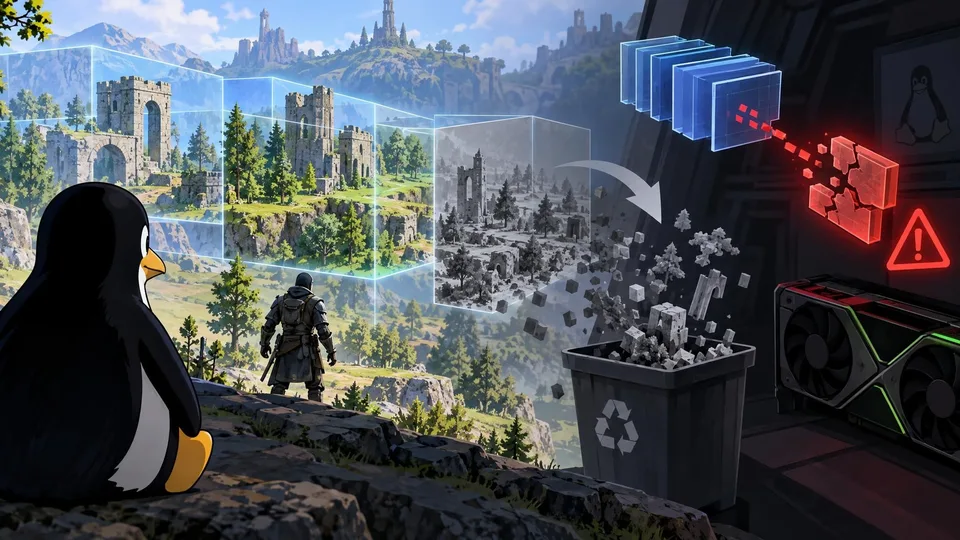
Linux Vulkan Crash Report Links Runtime PCG Cleanup to GPU Resources
A detailed November 1 report describes a Vulkan crash during garbage collection in an Unreal Engine 5.8.3 Linux game using runtime-generated PCG and World Partition. The suspected uniform-buffer lifetime issue is not yet an officially verified root cause.
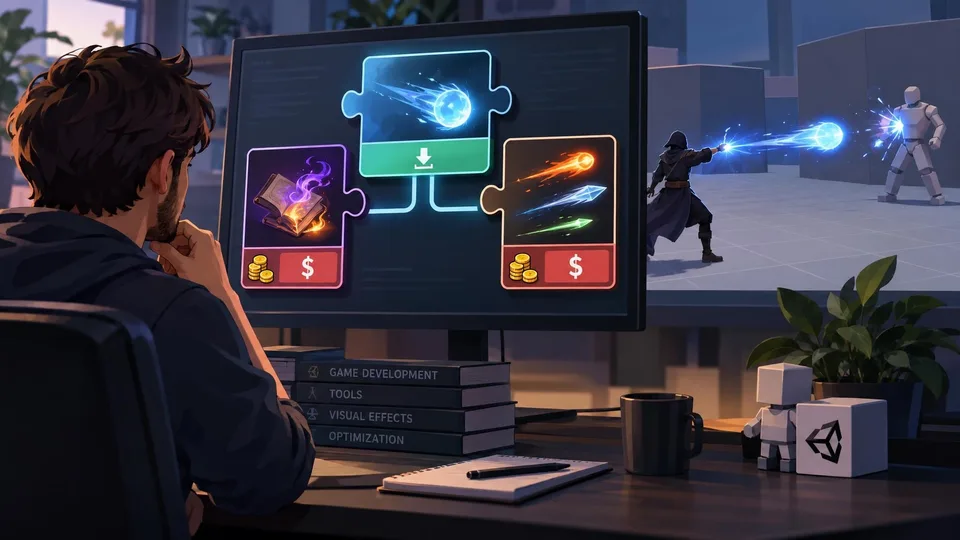
Free Unity Projectile Add-On Requires Two Paid Asset Packages
A new October 31 Unity Asset Store package links Mystic Arsenal spell effects with Projectile Factory. The add-on itself is free, but the store explicitly lists two paid dependencies required for it to function.
Comments