
Free Unity Projectile Add-On Requires Two Paid Asset Packages
A new October 31 Unity Asset Store package links Mystic Arsenal spell effects with Projectile Factory. The add-on itself is free, but the store explicitly lists two paid dependencies required for it to function.
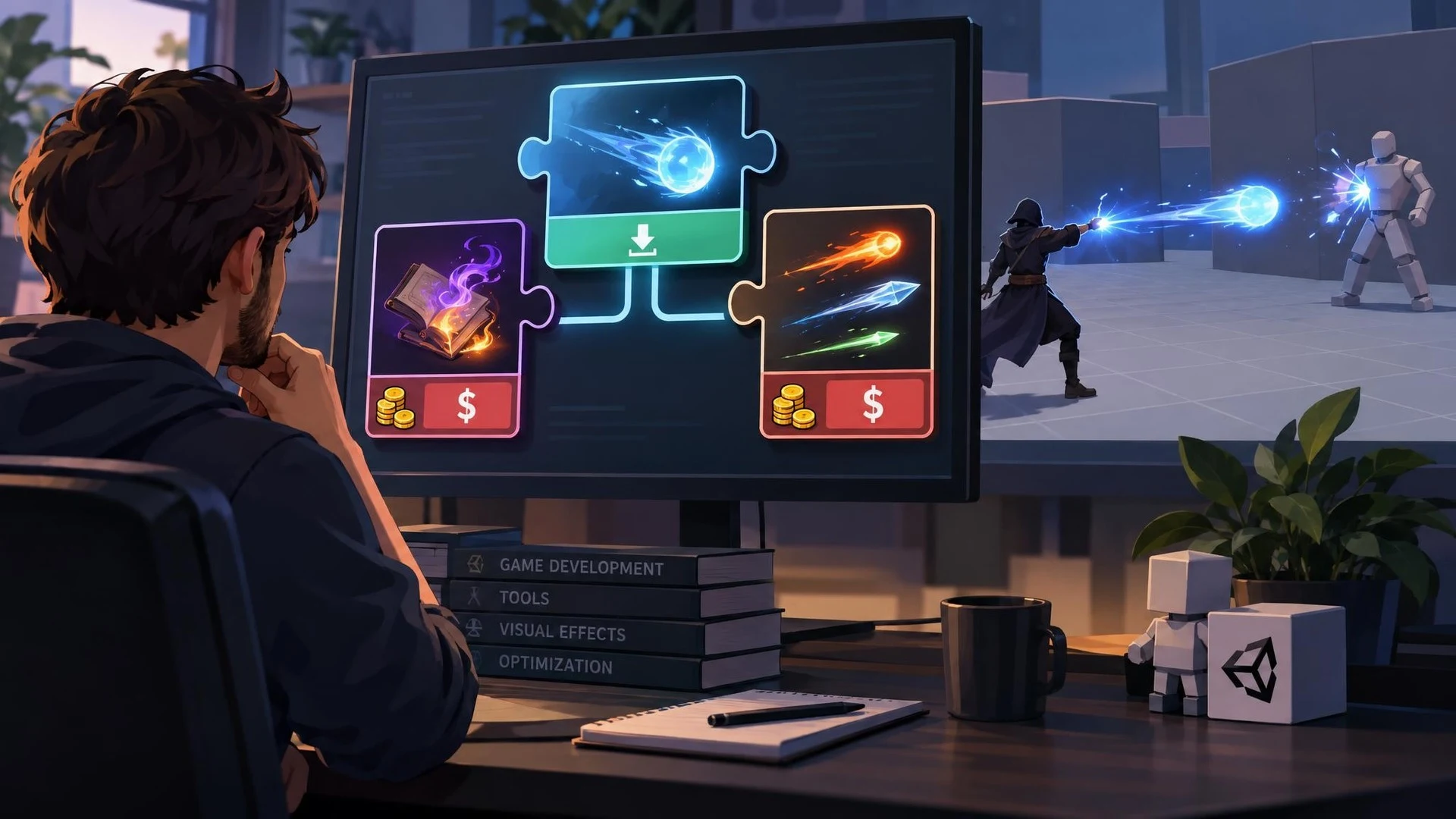
A free Asset Store label does not always mean a feature can be added to a game at no cost. A Unity add-on released on October 31, 2026 illustrates that distinction. Projectile Factory for Mystic Arsenal by Archanor VFX is listed as free, but the product page requires two other packages: Mystic Arsenal and Projectile Factory.
The purpose of the integration is to connect an existing collection of spell effects with a behavior-based projectile system. Rather than supplying a wholly independent combat framework, the package helps developers use content from one product within the logic and workflows provided by another. This kind of adapter can save setup work when a game already depends on both products, particularly if effects and projectile behavior would otherwise need to be connected manually.
The official Asset Store listing identifies version 1.0 with an October 31 release date and a small download size. It also lists the two dependency products and their separate prices. At the time of checking, Mystic Arsenal was listed for $30 and Projectile Factory showed a temporary discounted price, but storefront pricing can change and should be confirmed before any purchase. The free integration should not be described as a stand-alone spell collection or a free complete projectile system.
Render-pipeline compatibility is another detail that requires attention. The store shows separate compatibility entries for Built-in and Universal Render Pipeline contexts, rather than a universal promise covering every Unity configuration. Developers should review the dependency packages and all relevant package-version requirements, particularly when combining projects with older render settings.
For a team already using both systems, the best test would be a small combat sandbox containing one projectile, one target and a simple visual effect. Check whether collision, impact effects, lifetime handling and object cleanup behave as expected. Then repeat with several simultaneous projectiles and inspect the profiler. Integration convenience does not establish that a particular asset is optimized for a finished game.
This is a modest third-party Asset Store release, not a Unity engine update. Its wider lesson is useful: a package's license cost, operating dependencies, render pipeline and technical requirements should all be considered together. A free connector can still be valuable, but only to developers for whom its dependent tools make sense.
Rate this story
What did you think of this article?
Log in to rate this story, comment and like replies.
Log inNo comments yet. Be the first to share your thoughts.
More stories

BlueprintReview Adds Timeline Navigation for Unreal Blueprint Changes
BlueprintReview gained a time-lapse view for Blueprint revision histories on November 1. The independent beta aims to make visual scripting changes easier to inspect without opening the Unreal Editor, including for teams using Git or Perforce.

MetaHuman Markerless Motion Capture Crash Report Highlights DirectML Failure
An Unreal Engine 5.8 user reported repeatable editor crashes while processing markerless MetaHuman body motion capture on an RTX 4090 system. The report identifies a DirectML device error but does not establish a widespread MetaHuman defect.

World Forger 1.0 Brings Seed-Based Procedural Villages to Unity
World Forger 1.0 is a third-party Unity tool for assembling roads, houses and settlement details using editable placement rules. Its developer says generation works both in the Editor and at runtime, with Unity 6.3 LTS or newer required.
Comments