
Placement Forge Debuts as a Unity Editor Tool for 3D Level Design
Placement Forge 1.0.0 appeared on the Unity Asset Store on November 6, offering editor-side prefab placement workflows for three-dimensional scenes across several render pipelines.
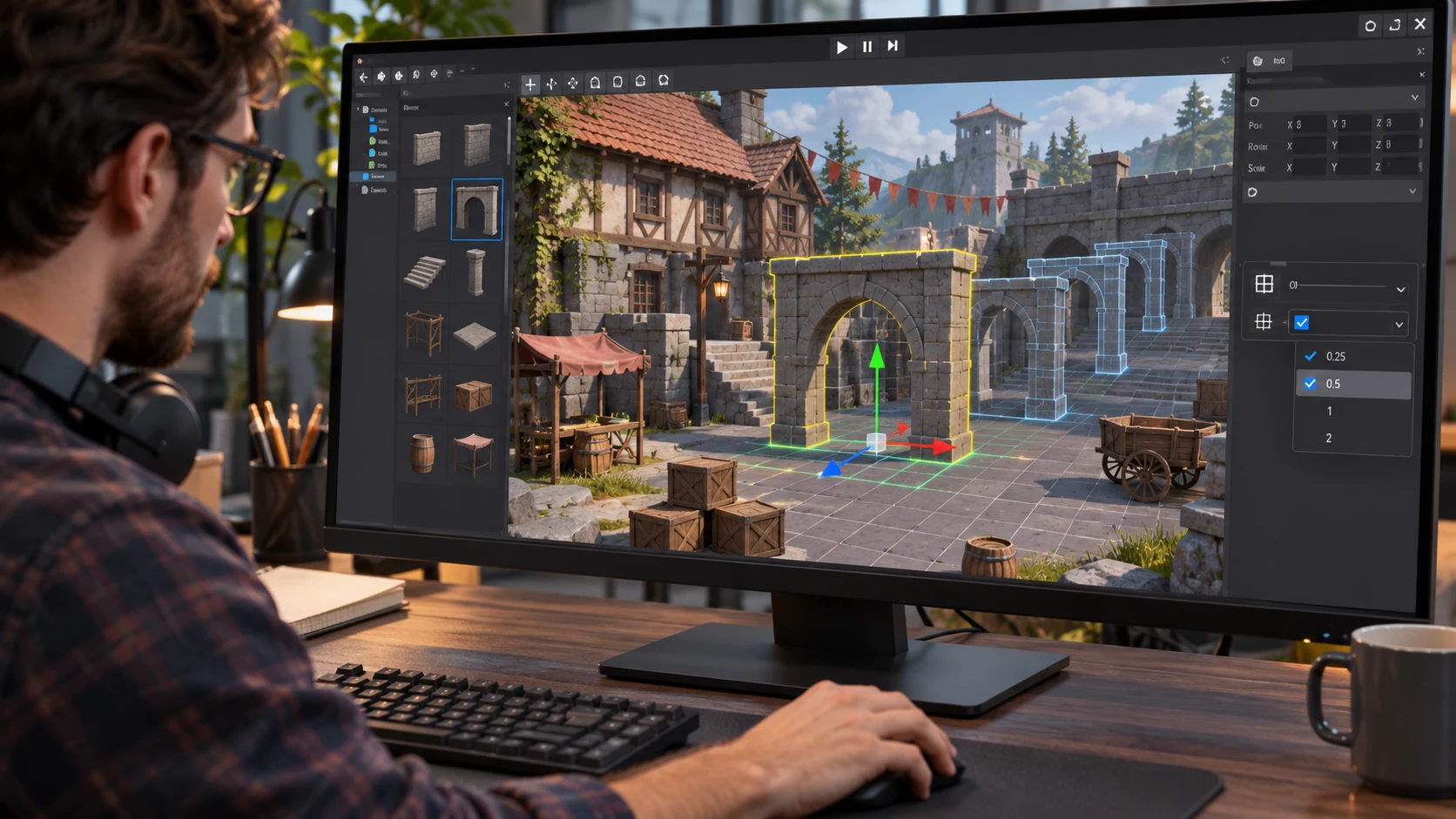
Placement Forge appeared on the Unity Asset Store with a November 6, 2026 release date and version 1.0.0. The third-party tool is designed around three-dimensional level-editing workflows: placing prefabs efficiently while building environments inside the Unity Editor.
The developer's listing distinguishes the package from a runtime gameplay system. Placement Forge operates in Edit mode rather than Play mode and is intended for 3D scenes. Its description says the tools work with Built-in, URP and HDRP projects, while noting that the included demo materials are made for URP. The publisher also documents a way to create a suitable demo scene for the other pipelines.
That scope matters. Many teams need to assemble large numbers of rocks, props, fences, trees or architectural pieces into readable environments. Repetitive manual placement can slow iteration, but a level-design helper must still respect snapping, rotation, colliders, prefab identities and undo behavior. A fast brush that creates badly aligned objects is not necessarily a productivity improvement.
The package lists C# source, example prefabs, a demo scene and documentation. It also includes an AI-development disclosure: the publisher says an AI coding assistant helped produce C# code, documentation and demo content, while the publisher directed, tested and finalized the result. That is the developer's declaration, not an independent code audit or a measure of quality.
A useful test would be to create a compact environment with a road, several buildings and a hillside. Build the same set of repeated props once through standard Unity workflows and once with the tool. Examine whether placement respects surface normals, existing colliders and prefab organization. Then verify undo, scene saving, domain-reload behavior and the absence of unexpected runtime components. Because the package is editor-focused, checking the final build remains separate from checking editor convenience.
Placement Forge is a new marketplace listing, not a Unity engine release. Its relevance is straightforward: it targets the everyday friction of assembling levels. Whether it saves time on a particular project depends on the team's existing level-building methods and the types of assets being placed.
Rate this story
What did you think of this article?
Log in to rate this story, comment and like replies.
Log inNo comments yet. Be the first to share your thoughts.
More stories
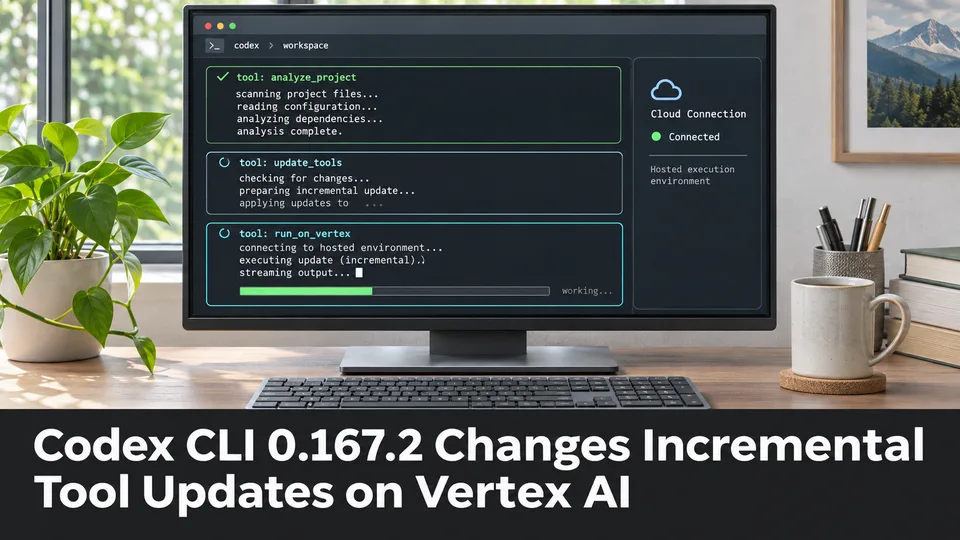
Codex CLI 0.167.2 Changes Incremental Tool Updates on Vertex AI
OpenAI released Codex CLI 0.167.2 with incremental tool updates enabled by default for Google Cloud Vertex AI. The change is relevant to teams using that backend, but it is not a general Unreal or Unity agent feature.
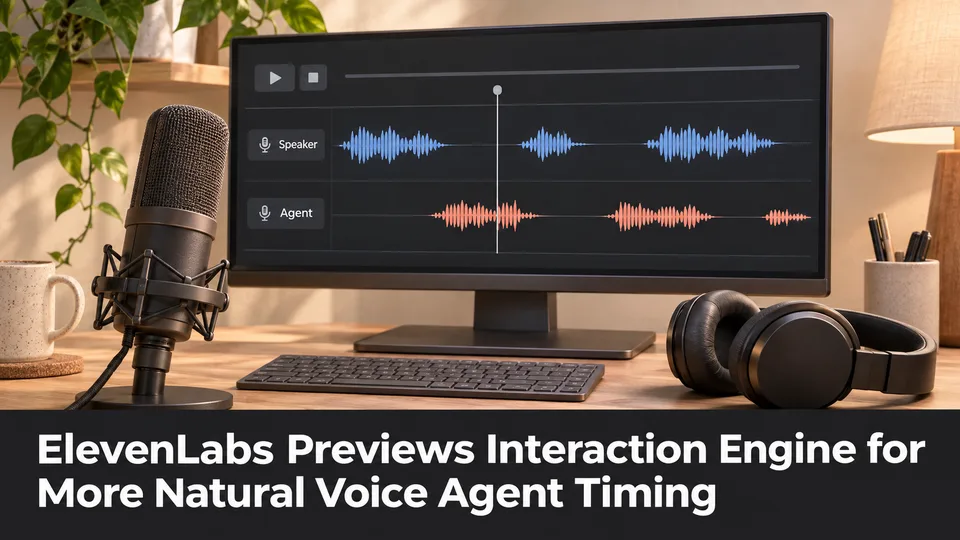
ElevenLabs Previews Interaction Engine for More Natural Voice Agent Timing
At its New York summit, ElevenLabs previewed an Interaction Engine that manages turn-taking, interruptions and model selection in conversations. Real-time game NPC use remains a proposed application, not a shipped game integration.
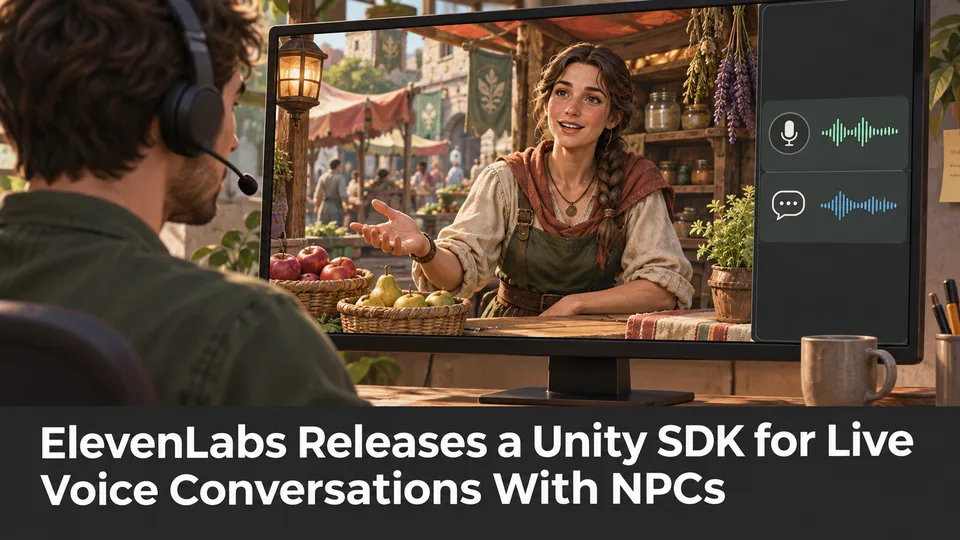
ElevenLabs Releases a Unity SDK for Live Voice Conversations With NPCs
ElevenLabs has published a Unity SDK connecting scene characters to conversational voice agents. The developer documentation distinguishes supported desktop and WebGL targets from beta mobile and XR integration.
Comments