
Opsive Releases Movement Pack for State Designer NPC Behaviors
Opsive has listed a new movement-actions package for Unity State Designer, including patrol, pursuit, cover and wandering behaviors. It is traditional gameplay AI rather than generative AI, and it requires a separate core package.
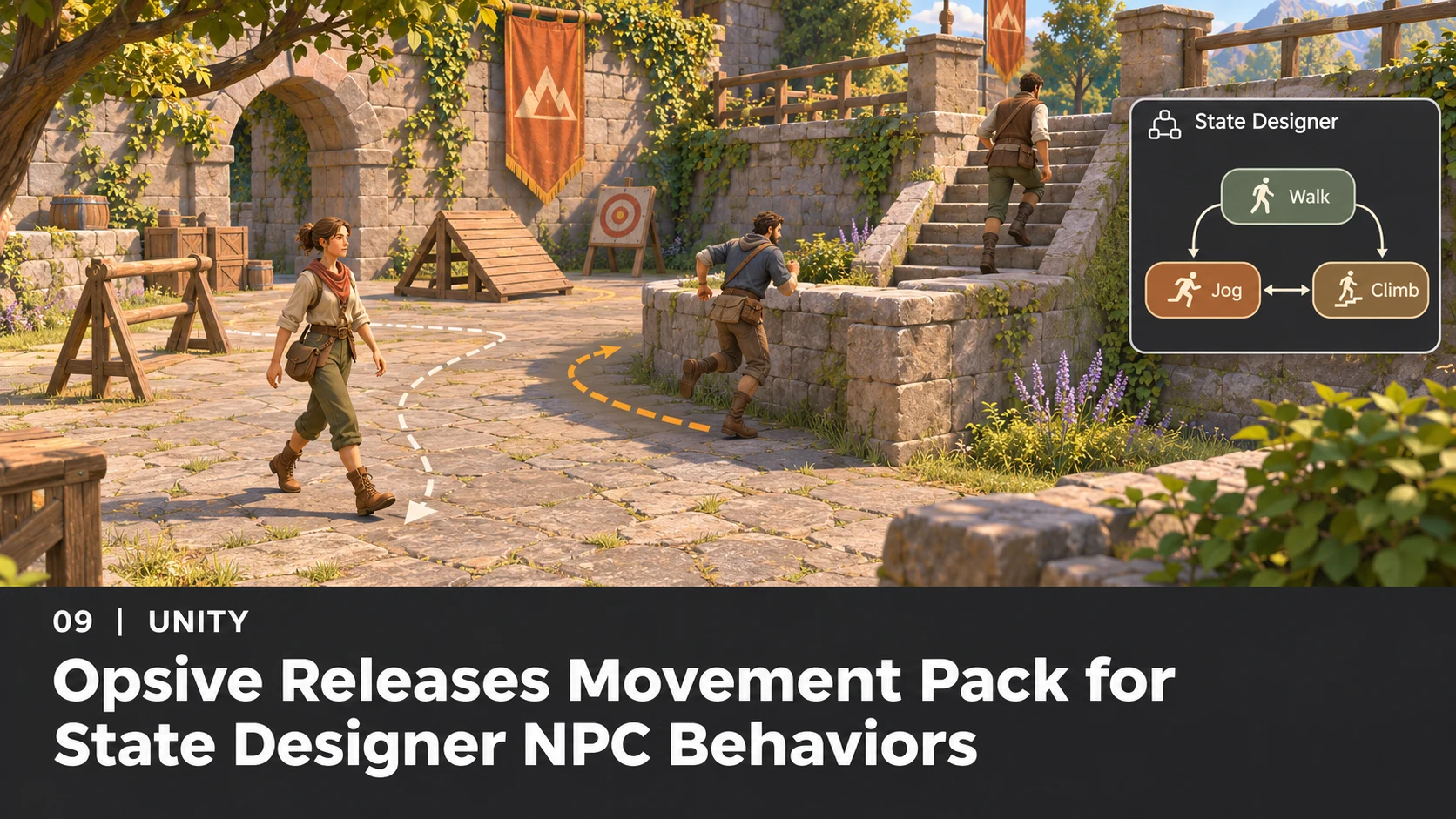
NPC movement can take substantial engineering effort when characters need to patrol, evade threats, find cover or follow other actors. Opsive's new Movement Pack for State Designer, listed on the Unity Asset Store on November 10, 2026, packages several of those reusable actions. The product is a third-party extension for a state-machine workflow, not a feature added to Unity's built-in navigation system.
The publisher describes eight actions: Seek, Flee, Pursue, Evade, Follow, Patrol, Cover and Wander. Their purposes differ. Pursue can account for the movement of a target, while Follow maintains a relationship with an actor and Patrol walks predefined locations. A cover action suggests tactical positioning, but how convincingly a particular NPC uses cover still depends on the game's detection rules, animation and environment markup.
The listing describes integrations with Unity NavMesh and Aron Granberg's A* Pathfinding Project. It also mentions a GameObject-based authoring path, support for two-dimensional and three-dimensional projects and integration with Opsive's Ultimate Character Controller for root-motion movement. Those capabilities should be checked against the actual project versions and the publisher's setup instructions.
One purchasing caveat is essential: the store listing explicitly identifies State Designer - DOTS Powered Finite State Machines as a required separate Asset Store dependency. Buying the movement add-on alone is not equivalent to acquiring a complete state-machine editor. The headline price displayed for the add-on also should not be mistaken for the total cost of a new setup. Prices and discounts can vary over time and region.
For testing, create a small arena with cover objects, a moving target and four waypoints. Configure one NPC to patrol, pursue when alerted, seek cover when threatened and return to patrol afterward. Observe behavior with blocked paths and rapidly moving targets, and record what must be implemented outside the supplied actions, such as perception, attack decisions and transitions.
This release is a useful reminder that the term AI in game development covers more than generative models. These are authored behavior rules for runtime characters. Their value lies in predictable navigation and reusable gameplay logic, not in an NPC understanding arbitrary natural-language commands.
Rate this story
What did you think of this article?
Log in to rate this story, comment and like replies.
Log inNo comments yet. Be the first to share your thoughts.
More stories
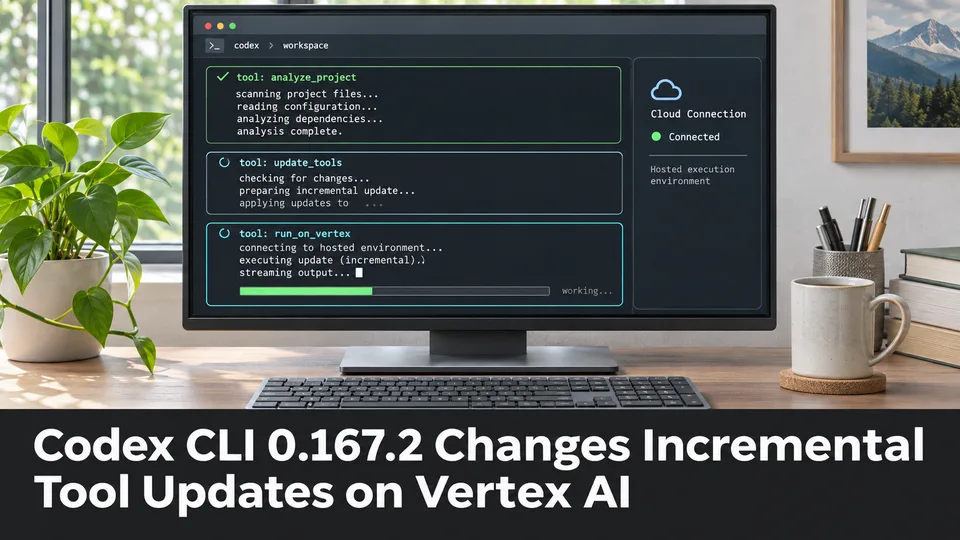
Codex CLI 0.167.2 Changes Incremental Tool Updates on Vertex AI
OpenAI released Codex CLI 0.167.2 with incremental tool updates enabled by default for Google Cloud Vertex AI. The change is relevant to teams using that backend, but it is not a general Unreal or Unity agent feature.
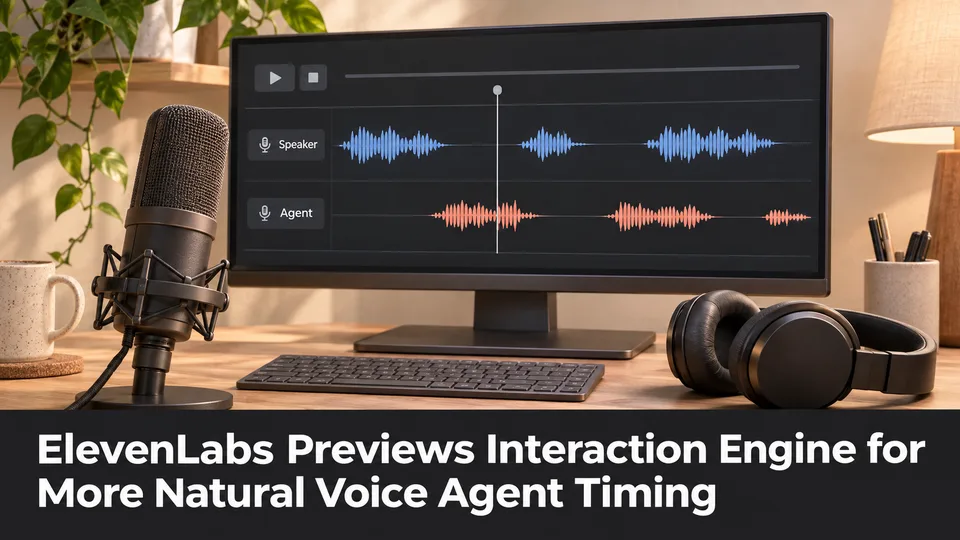
ElevenLabs Previews Interaction Engine for More Natural Voice Agent Timing
At its New York summit, ElevenLabs previewed an Interaction Engine that manages turn-taking, interruptions and model selection in conversations. Real-time game NPC use remains a proposed application, not a shipped game integration.
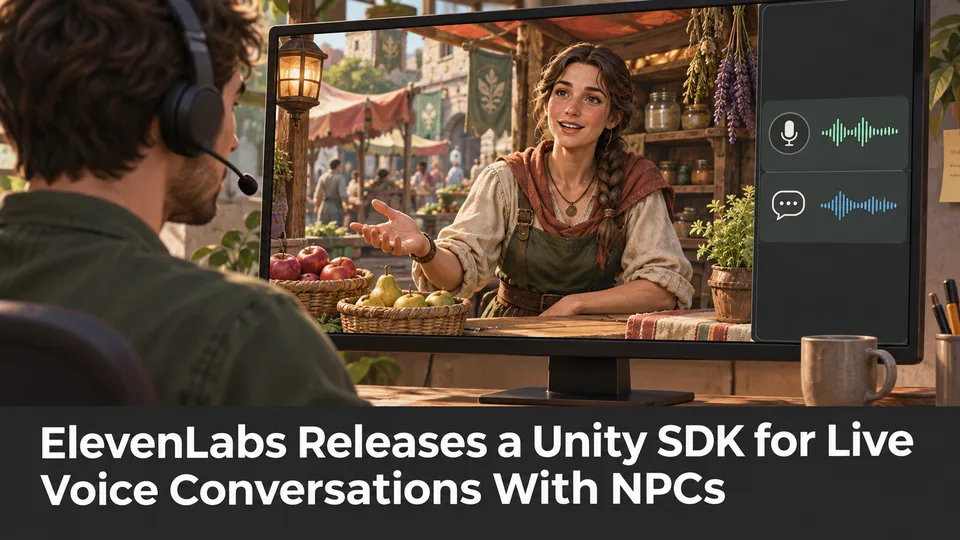
ElevenLabs Releases a Unity SDK for Live Voice Conversations With NPCs
ElevenLabs has published a Unity SDK connecting scene characters to conversational voice agents. The developer documentation distinguishes supported desktop and WebGL targets from beta mobile and XR integration.
Comments