
Meshy API Can Select a Texture Model During Image-to-3D Generation
Meshy has added a texture_model option to its Image-to-3D and Multi-Image-to-3D APIs. Developers can choose supported texture models within the mesh request, with separate texturing charges.
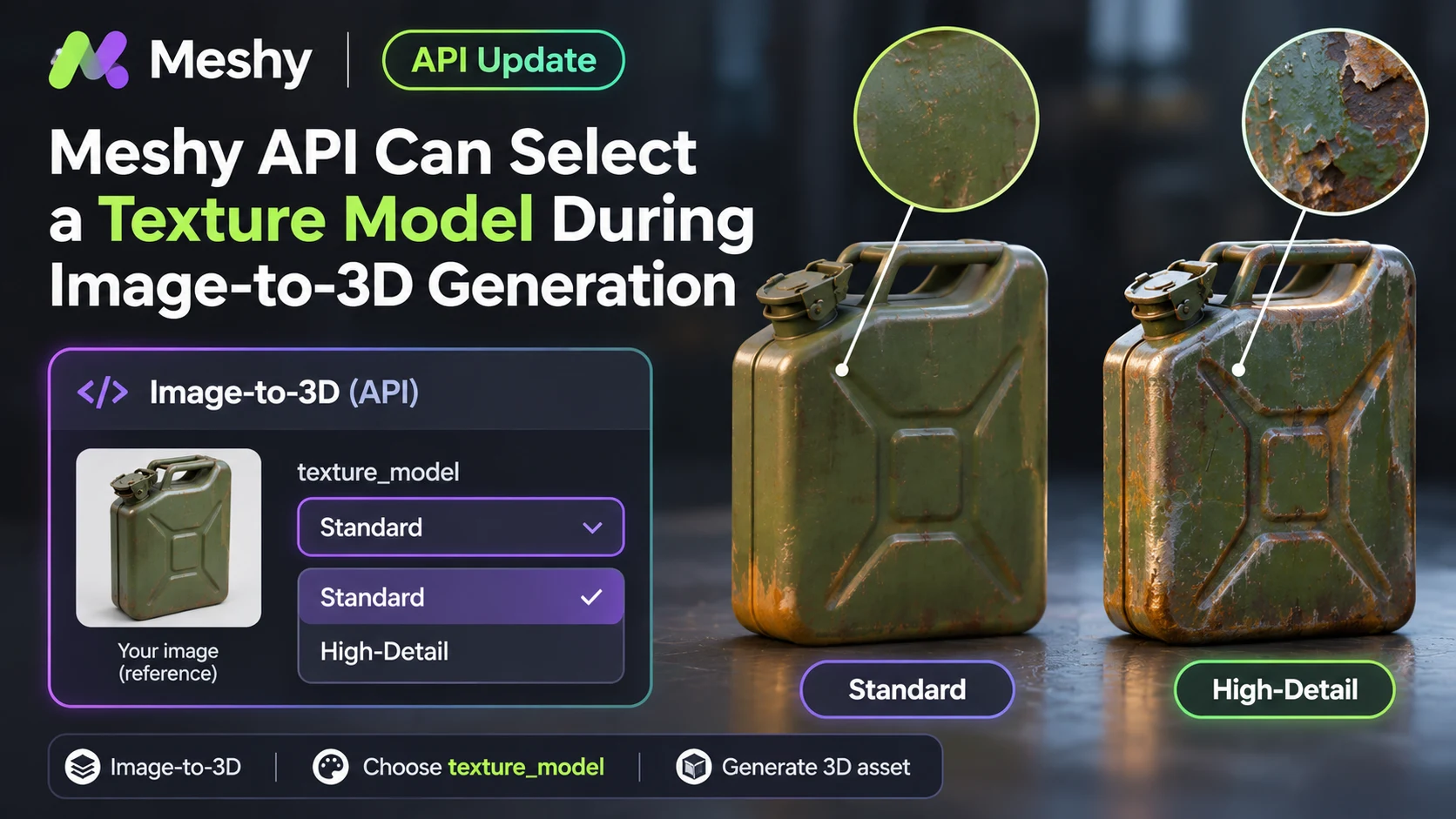
Meshy updated its API changelog on November 3 with a more flexible path from reference images to textured 3D assets. The Image-to-3D and Multi-Image-to-3D endpoints now accept a texture_model parameter, allowing callers to choose a supported texture model during the same overall task that generates geometry. Existing requests without the parameter are documented to behave as before.
For single-image generation, Meshy lists options including meshy-7, meshy-n1 and meshy-6-lite. Multi-image generation uses the supported multiview texture models, Meshy 7 and Meshy N1. This is an API configuration change, not a promise that every texture model works with every geometry model or resolution. Developers should consult the current model compatibility documentation before building automated pipelines around a particular combination.
The billing model is also important. The vendor states that a task with the new selection is charged for mesh generation plus the relevant retexturing operation at the chosen texture resolution. A game studio generating many props needs to account for these two components rather than assuming texture selection is free. Meshy's November notes also discuss N1 in related refining and retexturing workflows, but those are separate API capabilities with their own limits.
An integrated request could be useful for rapid asset evaluation. Consider an environment artist who has four photographs of a fuel container, a toolbox or a small piece of dock equipment. A scripted workflow could submit the images, receive a candidate mesh and textures, then send the asset to a review stage. The artist would still need to inspect shape accuracy, topology, UV quality, baked maps, scale and material response under the target engine's lighting. A model that looks appealing in a preview is not automatically optimized for a playable scene.
A measured trial would generate the same prop with two documented texture choices and compare the resulting files under identical lighting in Unreal Engine or Unity. Record credit usage, time to usable geometry, visible artifacts and any manual repair required. If the resulting asset needs a lower polygon budget, collision mesh or physically based material maps, those steps remain separate responsibilities. The update reduces a point of API orchestration, but it does not eliminate production asset review or establish that AI-generated geometry is ready to ship without further work.
Rate this story
What did you think of this article?
Log in to rate this story, comment and like replies.
Log inNo comments yet. Be the first to share your thoughts.
More stories
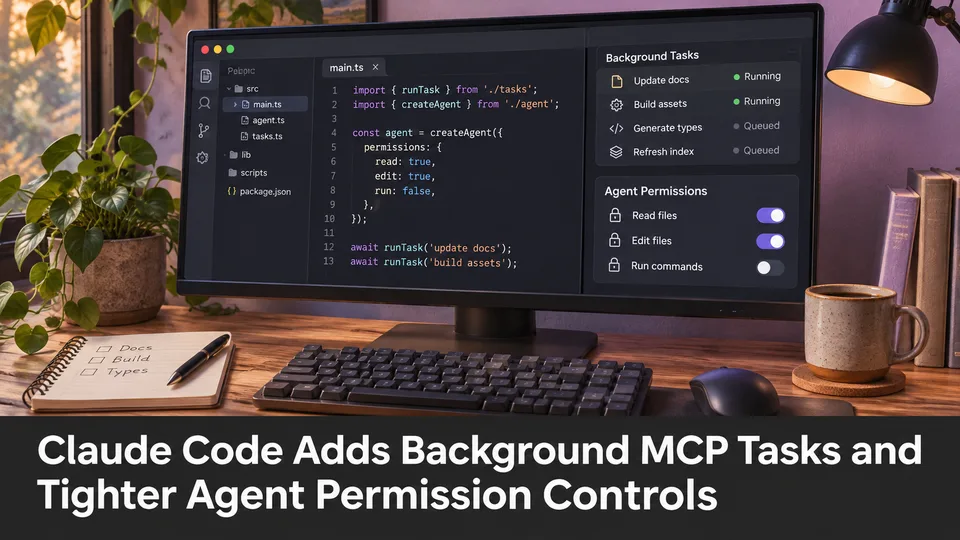
Claude Code Adds Background MCP Tasks and Tighter Agent Permission Controls
Anthropic’s Claude Code 2.1.319 introduced asynchronous MCP tasks and new permission controls. These features may help game developers manage long-running Unreal or Unity tool operations without blocking every agent step.
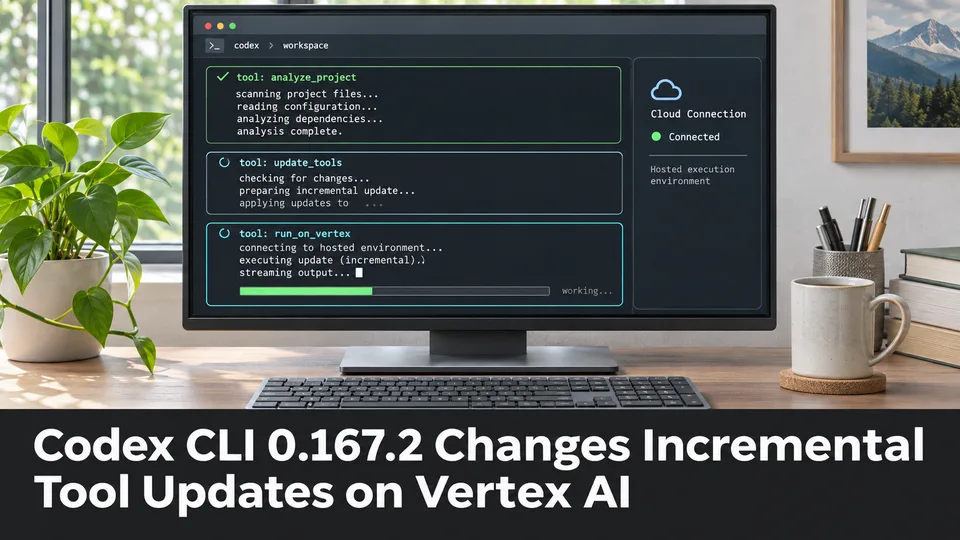
Codex CLI 0.167.2 Changes Incremental Tool Updates on Vertex AI
OpenAI released Codex CLI 0.167.2 with incremental tool updates enabled by default for Google Cloud Vertex AI. The change is relevant to teams using that backend, but it is not a general Unreal or Unity agent feature.

ElevenLabs Previews Interaction Engine for More Natural Voice Agent Timing
At its New York summit, ElevenLabs previewed an Interaction Engine that manages turn-taking, interruptions and model selection in conversations. Real-time game NPC use remains a proposed application, not a shipped game integration.
Comments