
Google DeepMind Unveils Genie 4 for Interactive AI-Generated Worlds
Google DeepMind announced Genie 4 on October 27, demonstrating real-time world simulation with native sound, dialogue and text-based scene changes. The system is a limited research preview, not a ready-to-import Unreal Engine or Unity world generator.

The idea of generating an interactive environment as easily as describing a scene is moving closer to a research demonstration, although it remains far from a replacement for conventional game engines. On October 27, 2026, Google DeepMind introduced Genie 4, a world model intended to simulate visual environments and their changing behavior in real time.
According to Google, Genie 4 can generate an interactive scene together with sounds and dialogue. Participants in the demonstration use ordinary keyboard controls for navigation and camera movement, then issue text instructions to change aspects of the simulation while it is running. The system is described as combining Genie world generation with capabilities from Google's Gemini family.
For game creators, this points toward a new category of prototyping tool. Instead of constructing every object and interaction before experiencing an environment, a designer might eventually use a generated simulation to explore atmosphere, spatial composition, or the feeling of moving through a proposed location. That is a potential application, not an established production workflow supported today.
The distinction is especially important for Unreal Engine and Unity users. The announcement does not establish that Genie 4 exports editable meshes, collision geometry, navigation maps, gameplay code, or a complete scene compatible with either engine. A convincing interactive demonstration is not necessarily a reusable set of game assets.
Google also acknowledges technical limitations. Visual details and object permanence can drift during longer sessions, particularly after complex changes or extended movement through an environment. Precise physics, spatial consistency, audio behavior, and text rendering remain research challenges. Those limitations matter in games where a door must remain in the same location or where a puzzle depends on stable object states.
Access is currently restricted. Genie 4 is rolling out as a research preview to trusted testers, with broader availability planned later for selected Google AI Ultra subscribers through Project Genie and early developer partners using Google AI Studio or the Gemini API. A waitlist is available, but joining it is not equivalent to receiving immediate access.
Developers interested in the technology can already prepare useful evaluation criteria without claiming access. A simple checklist might ask whether a simulated room remains coherent when the camera turns away and returns, whether a movable object behaves consistently, and whether the environment can represent an intentional gameplay rule. The same scenarios could be implemented as conventional Unity or Unreal prototypes for comparison.
Genie 4 is a significant research announcement because it brings interaction, visual generation, and sound into one evolving simulation. Its immediate value to developers is a clearer view of the possibilities and limitations of AI world models, rather than a new export button for an existing game-production pipeline.
Rate this story
What did you think of this article?
Log in to rate this story, comment and like replies.
Log inNo comments yet. Be the first to share your thoughts.
More stories
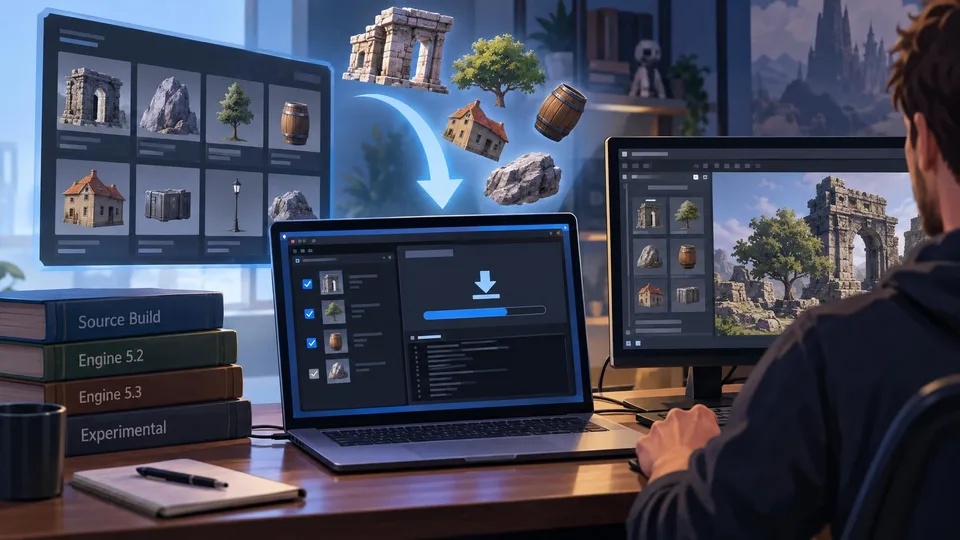
An Open-Source Fab Downloader Targets Custom Unreal Engine Workflows
A new community-built Fab Downloader offers another way to retrieve marketplace assets already owned by a developer. Its Windows and Linux tools avoid requiring an installed Launcher-managed Unreal Engine build, but rely on unofficial endpoints.

Epic Extends a Live Verse Virtual Machine Test for UEFN Islands
Epic started a temporary Verse virtual-machine test on October 29 across public and private UEFN sessions and later extended the window into October 30. The test is limited to Fortnite creation tools, not regular Unreal Engine projects.
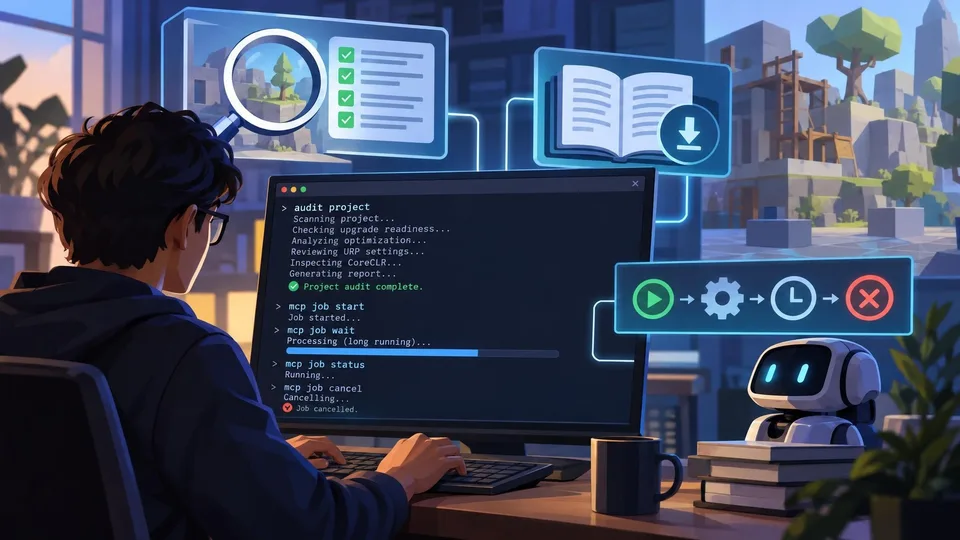
Unity CLI Beta 15 Adds Project Audits and Long-Running MCP Jobs
Unity CLI 1.0.0-beta.15 introduces project auditing, offline documentation access and MCP job controls aimed at automated workflows. The October 29 release also changes command output and removes some earlier commands, requiring script updates.
Comments