
Epic Previews a New Unreal Animation Framework with MetaHuman RigLogic
Epic has outlined an experimental node-based animation runtime called Unreal Animation Framework. Its roadmap description covers Motion Matching, State Tree, Montages, layered animation and MetaHuman facial support, while production suitability remains unproven.
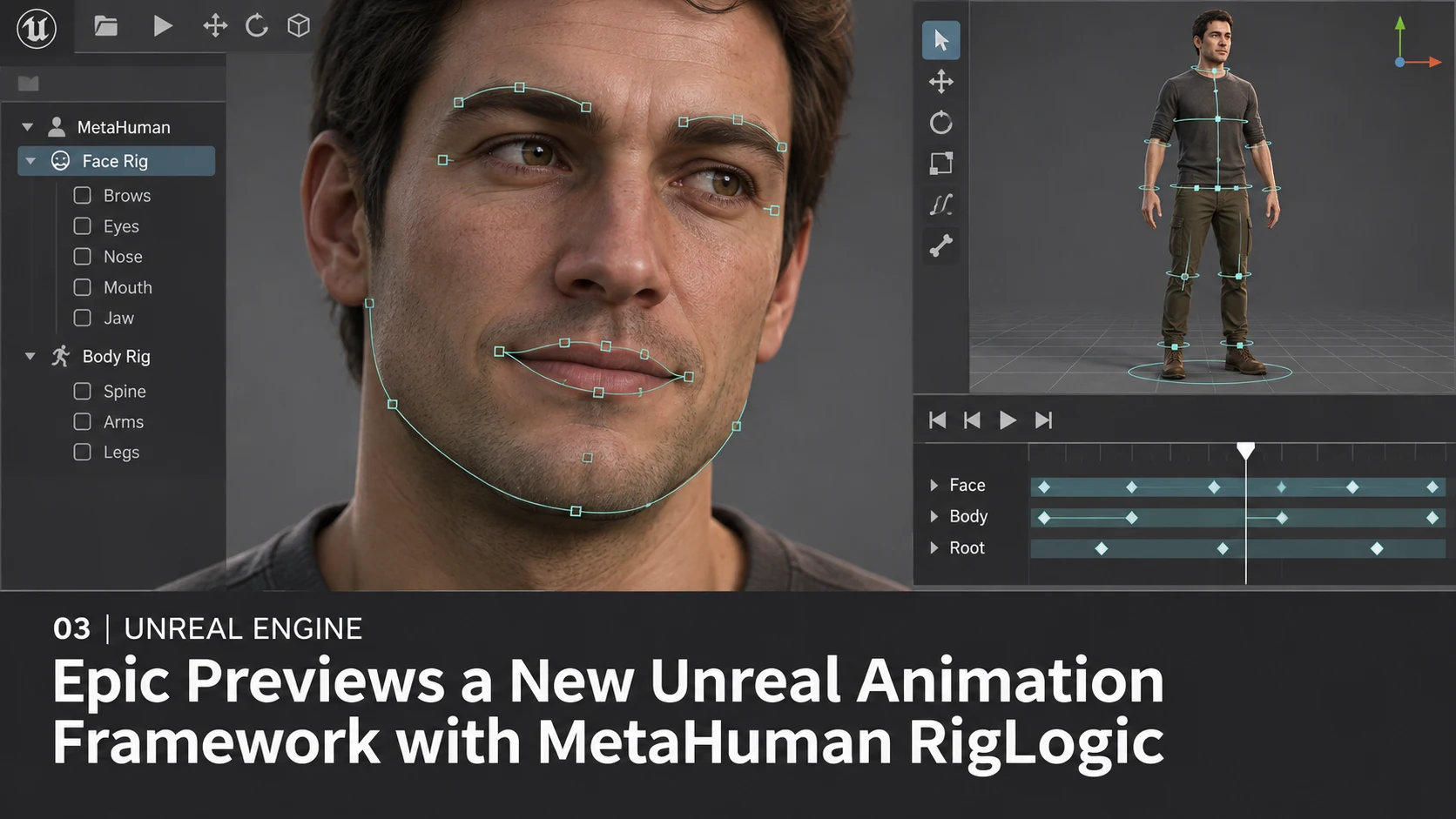
Character animation is one of the headline engineering areas in the Unreal Engine 5.9 MegaJam Preview. On November 9, Epic described an experimental Unreal Animation Framework, or UAF, as a node-based runtime intended to unify several animation systems around a new execution foundation. The roadmap entry is an early technical direction rather than a statement that existing animation projects should migrate immediately.
According to Epic's description, UAF rebuilds components of Motion Matching, Choosers, State Tree, Montages and Layer Stacks on the new runtime. It also adds RigLogic support for MetaHuman facial animation. Those names cover different responsibilities: selecting movement from data, making decisions, arranging sequences and layering motions. A shared framework could eventually make combinations easier to author and debug, but the announcement does not give performance benchmarks or final migration instructions.
The authoring tools receive attention as well. Epic mentions a new Anim Tree editor, deeper integration with Rewind Debugger and a Variable Watch window. For technical animators, visibility into decisions and changing parameters can be as valuable as new motion features. Being able to see why an animation switched is central to correcting transitions that appear fine in a timeline but fail during unpredictable gameplay.
Experimental status should shape any evaluation. Existing Animation Blueprints, gameplay code, retargeted clips and third-party systems may have assumptions that are not yet covered by a new framework. The available roadmap text does not promise seamless compatibility, and an early preview can change substantially before a stable engine release. Developers should avoid converting a production animation graph solely because the new architecture appears on a roadmap.
A useful experiment would use a disposable character test project with a small set of idle, walk, run and turn animations. Rebuild one limited behavior path with available UAF tools, then compare debugging visibility, event timing and authoring complexity against the original setup. If MetaHuman facial animation is relevant, isolate that test from the movement graph to make failures easier to diagnose.
The significance of UAF is architectural. It points toward a more coherent runtime for complex animation decisions, but the next questions are about backward compatibility, tooling maturity and measurable runtime cost, not marketing claims about instant animation quality.
Rate this story
What did you think of this article?
Log in to rate this story, comment and like replies.
Log inNo comments yet. Be the first to share your thoughts.
More stories
Codex CLI 0.167.2 Changes Incremental Tool Updates on Vertex AI
OpenAI released Codex CLI 0.167.2 with incremental tool updates enabled by default for Google Cloud Vertex AI. The change is relevant to teams using that backend, but it is not a general Unreal or Unity agent feature.
ElevenLabs Previews Interaction Engine for More Natural Voice Agent Timing
At its New York summit, ElevenLabs previewed an Interaction Engine that manages turn-taking, interruptions and model selection in conversations. Real-time game NPC use remains a proposed application, not a shipped game integration.

Unity MCP 1.10.0 Adds Screenshot Saving for Game Editor Agents
A community-maintained Unity MCP bridge has released version 1.10.0, adding an option for screenshot tools to save PNGs inside a project. The feature can support reviewable visual feedback when AI agents work on scenes.
Comments