
Cursor Introduces Two-Way Voice Conversations with Coding Agents
Cursor has released realtime voice chat for coding agents in its IDE, agent window, web interface and iOS app. Developers can discuss changes while agents work, but this is an authoring feature, not voice functionality automatically added to games.
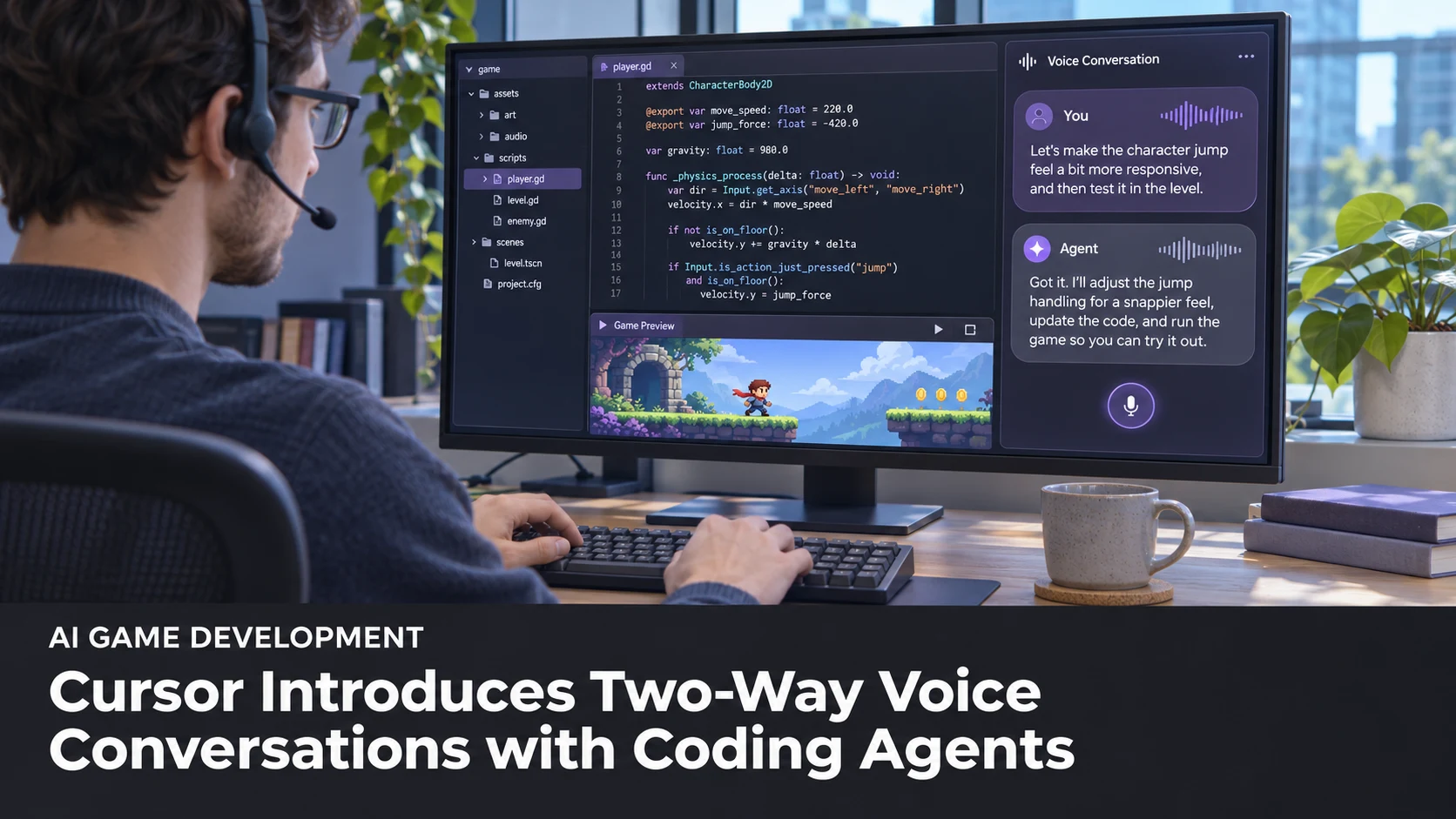
Cursor released a feature called Voice Chat with Agents on November 6, allowing developers to hold two-way spoken conversations with coding assistants. The official changelog says the feature operates in Cursor's Agents Window, integrated development environment, web interface and iOS application. It is separate from simple speech dictation, because the assistant can answer aloud and discuss work while coding tasks continue.
A developer starts a conversation through a waveform control when the agent is idle. Cursor says the voice companion can hand programming requests to the active coding agent and continue answering questions while that agent works. It can also explain code changes, summarize progress or help navigate earlier conversations. For teams juggling several small tasks, hands-free status discussions may change how they monitor work, although the release provides no independent productivity measurements.
The company identifies Grok Voice as the speech system behind the feature and lists several available voice options. It also says Privacy Mode uses zero data retention for voice chat. These are product statements, and developers processing proprietary repositories should still review the provider's current privacy terms and their organization's data policies before enabling a new communications route.
There are plausible game-development applications. An Unreal programmer might ask for a spoken summary of a recently changed C++ gameplay system while checking a live scene. A Unity developer could request an explanation of a C# diff while navigating editor windows. In both cases, the actual file operations still happen through the coding agent and its permissions, not through a generic voice assistant that knows the state of the engine automatically.
A focused evaluation would compare a short issue-fixing session performed with typed messages against the same kind of task using voice chat. Track whether the spoken instructions caused ambiguous modifications, whether the agent accurately described completed work and how often the developer still needed to read the diff. Use a branch where changes are reversible. The point is to test coordination quality rather than assume speaking is always faster.
Cursor's announcement adds another interaction mode to agentic programming, not a new runtime speech SDK for player-facing NPCs. Its practical relevance to game studios is in communication with the tools that build games, with the same code-review and testing obligations that apply to text-based agents.
Rate this story
What did you think of this article?
Log in to rate this story, comment and like replies.
Log inNo comments yet. Be the first to share your thoughts.
More stories
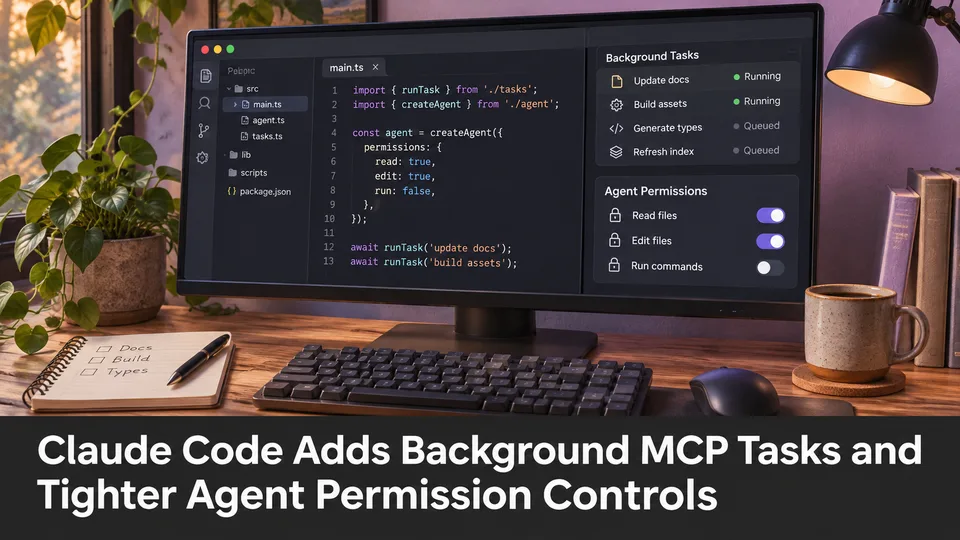
Claude Code Adds Background MCP Tasks and Tighter Agent Permission Controls
Anthropic’s Claude Code 2.1.319 introduced asynchronous MCP tasks and new permission controls. These features may help game developers manage long-running Unreal or Unity tool operations without blocking every agent step.
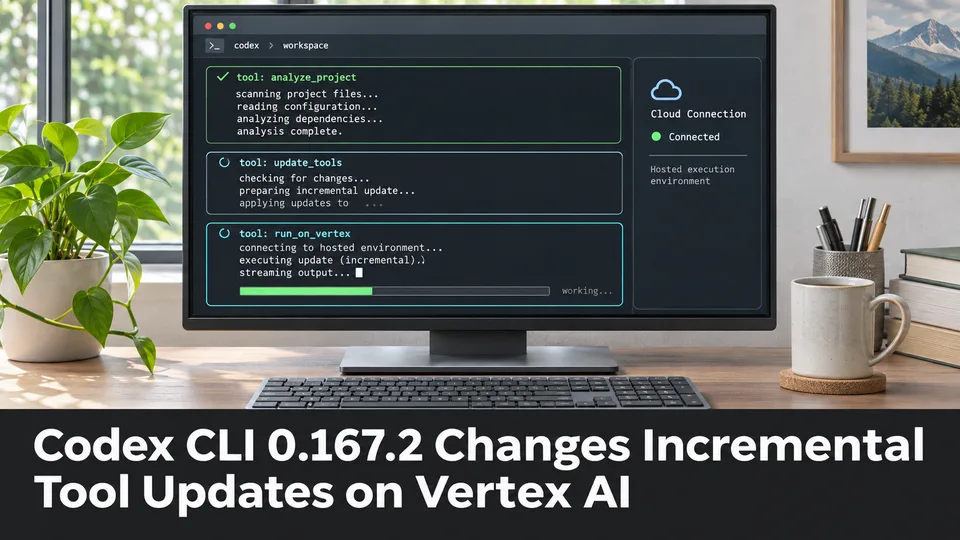
Codex CLI 0.167.2 Changes Incremental Tool Updates on Vertex AI
OpenAI released Codex CLI 0.167.2 with incremental tool updates enabled by default for Google Cloud Vertex AI. The change is relevant to teams using that backend, but it is not a general Unreal or Unity agent feature.
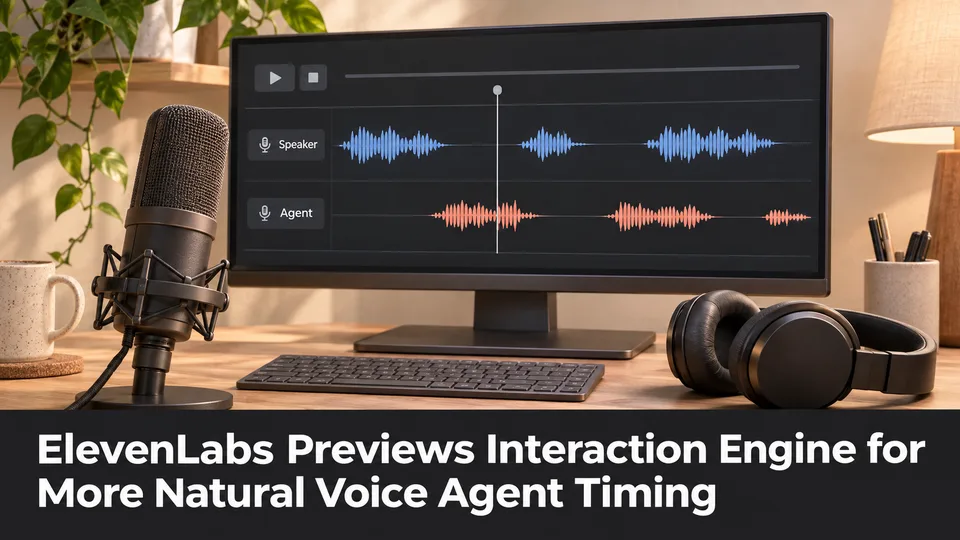
ElevenLabs Previews Interaction Engine for More Natural Voice Agent Timing
At its New York summit, ElevenLabs previewed an Interaction Engine that manages turn-taking, interruptions and model selection in conversations. Real-time game NPC use remains a proposed application, not a shipped game integration.
Comments