
ComfyUI Merges UltraTex Multi-View Texturing and Mesh Texture Rebaking Tools
ComfyUI merged new code for UltraTex support and projecting multi-view images back onto UV textures on November 9. The change directly concerns AI-assisted 3D asset texturing, although a tagged stable release is a separate step.
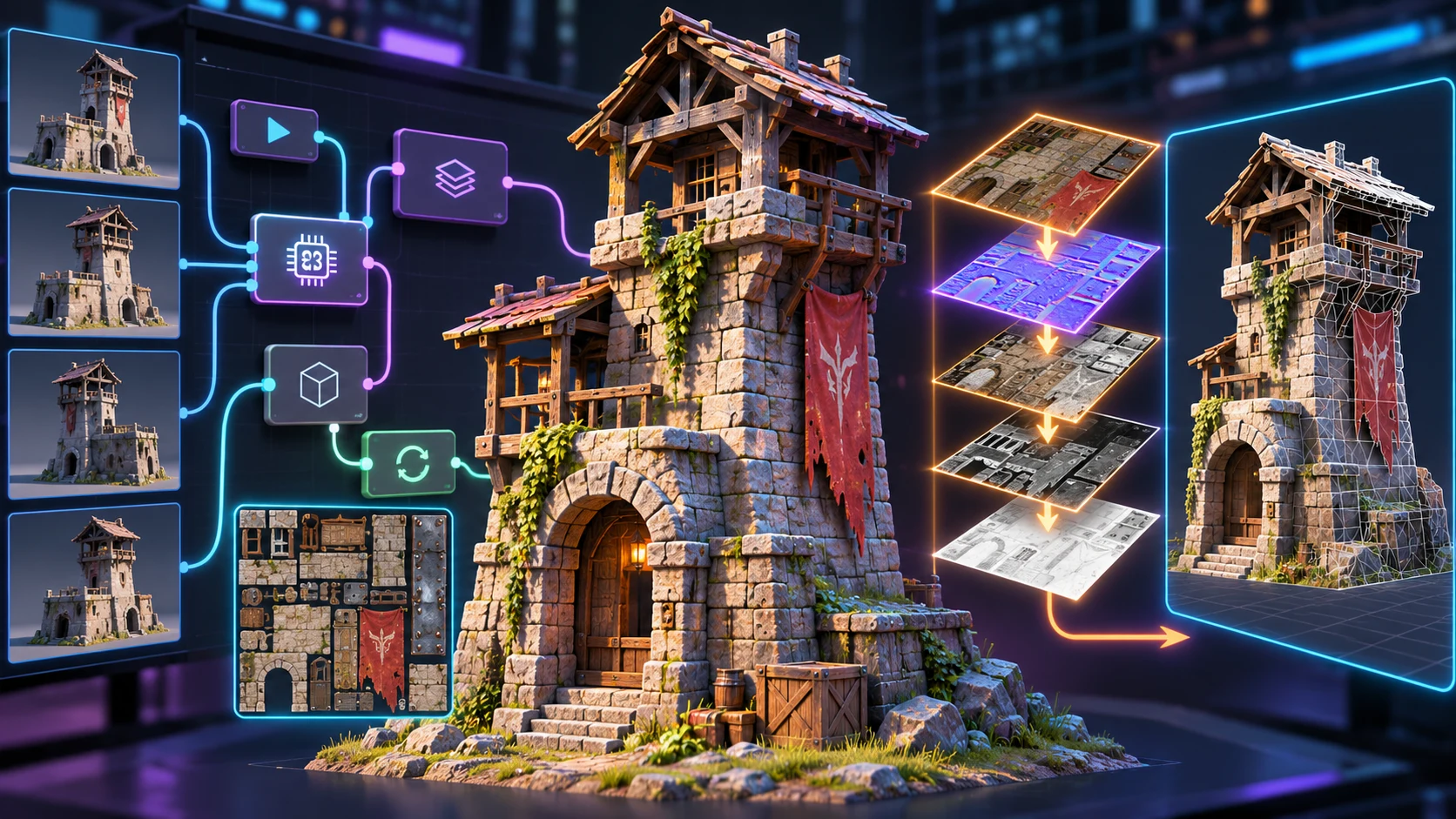
A useful AI-generated 3D model needs more than an attractive render from one camera angle. When an asset is rotated, mismatched colors, visible seams and inconsistent materials can become obvious. On November 9, the ComfyUI project merged a substantial code contribution focused on multi-view texturing and baking the result into a mesh's UV texture.
The merged pull request adds support for UltraTex, described in the contribution as a FLUX.2 Klein 9B LoRA approach that prepares multiple views of a target mesh and uses a reference image to guide its appearance. The implementation arranges a set of views into a grid and supports background-token handling. It also introduces nodes for texturing conditioning, camera orbits and rebaking images back onto a mesh.
The new BakeTextureFromViews node projects edited or generated views onto a UV layout and outputs base-color data together with a confidence mask. The proposal includes depth-edge rejection and an option to fill areas that have not been seen directly. These implementation details matter because they address a common production gap: getting an attractive image from a model is different from obtaining a consistent texture that an engine can actually use on a three-dimensional object.
The GitHub pull request shows a merge into ComfyUI's main branch on November 9. That is a verified source-code integration, not proof that every desktop installation or a previously tagged stable package already includes the nodes. The contributor links model weights and an example workflow, but performance requirements and practical quality depend on mesh topology, UVs, input images, compute hardware and the precise installed version.
A game-art team could test the pipeline on a single low-complexity prop, such as a crate or a stone statue. Prepare a reference image, generate or edit the orbit views and bake them to a UV texture. Then inspect the model in Blender or the target game engine under rotating light. Look for seams, missing areas, incorrect roughness and inconsistent detail between faces, not just whether the front view looks impressive.
This is a more directly relevant development than a simple community-node catalog addition: the merge adds mesh-related functionality in the core codebase. It still needs validation in a real pipeline before developers can treat it as a dependable replacement for conventional texture authoring.
Rate this story
What did you think of this article?
Log in to rate this story, comment and like replies.
Log inNo comments yet. Be the first to share your thoughts.
More stories
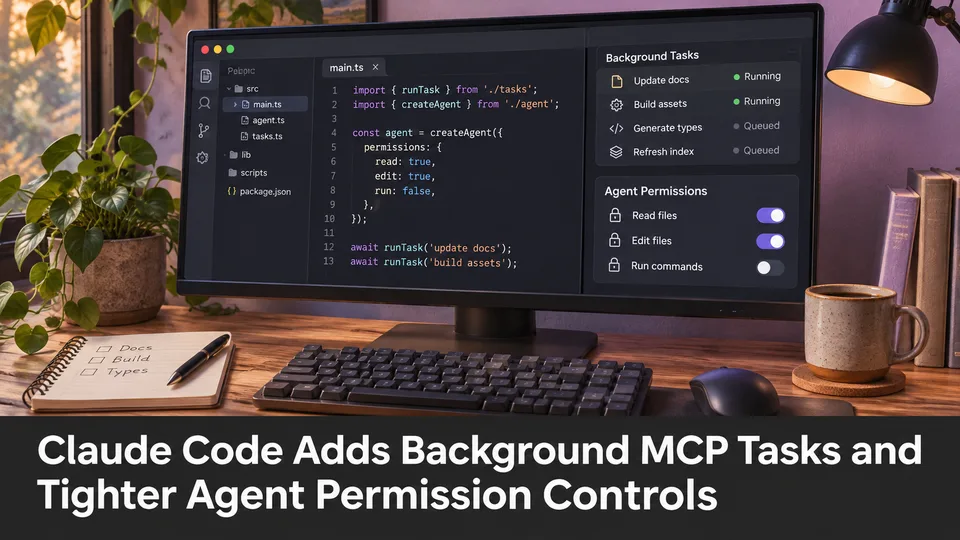
Claude Code Adds Background MCP Tasks and Tighter Agent Permission Controls
Anthropic’s Claude Code 2.1.319 introduced asynchronous MCP tasks and new permission controls. These features may help game developers manage long-running Unreal or Unity tool operations without blocking every agent step.
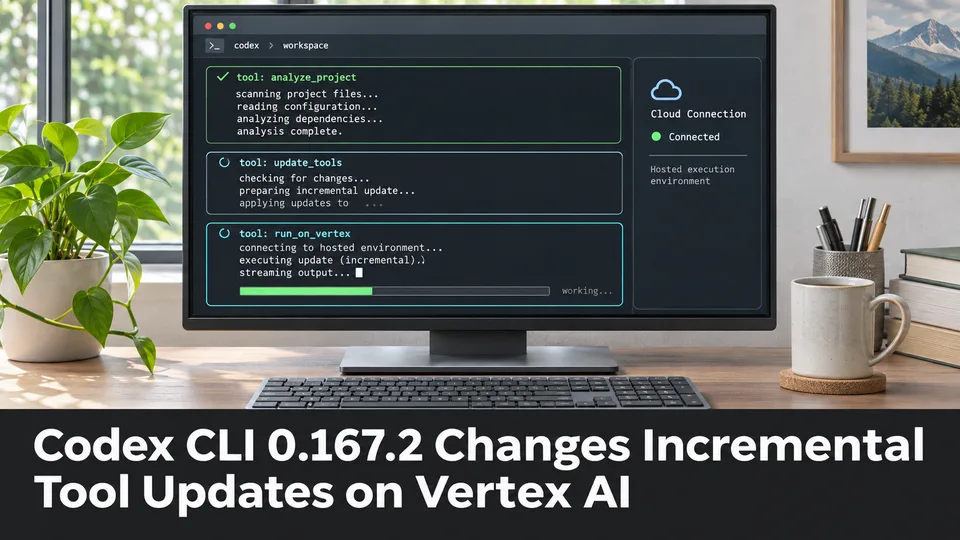
Codex CLI 0.167.2 Changes Incremental Tool Updates on Vertex AI
OpenAI released Codex CLI 0.167.2 with incremental tool updates enabled by default for Google Cloud Vertex AI. The change is relevant to teams using that backend, but it is not a general Unreal or Unity agent feature.

ElevenLabs Previews Interaction Engine for More Natural Voice Agent Timing
At its New York summit, ElevenLabs previewed an Interaction Engine that manages turn-taking, interruptions and model selection in conversations. Real-time game NPC use remains a proposed application, not a shipped game integration.
Comments