
Claude Code 2.1.321 Fixes MCP OAuth Redirect Risks and Agent Permissions
Anthropic released Claude Code 2.1.321 on November 9 with changes to MCP OAuth redirects, sandbox permission checks, remote-control settings and subagent reporting. The fixes are relevant to AI-assisted game development workflows.

Coding agents are increasingly used to edit game scripts, run test commands and inspect project assets. That makes tool permissions and external service connections part of a development team's security perimeter, not just user-interface details. Claude Code version 2.1.321, published on November 9, includes several fixes relevant to teams using agents alongside Unreal Engine or Unity repositories.
Anthropic's release notes report a fix for MCP OAuth requests that could send secrets such as refresh tokens to a different host when an MCP server redirected a request. The company also lists fixes for cases where Bash permission checks did not prompt appropriately, including a read-only command outside a sandbox and file writes assessed relative to the wrong folder. Protection rules for copy and move operations into directories were also adjusted.
The release adds a settings-file option for remote-control sessions and changes how some background subagent reports are preserved when conversation context is compacted. It also includes corrections for plugin updates, project skill discovery and hook behavior. These are release-note claims from the tool's developer; they should not be interpreted as a complete independent security audit.
The connection to game projects is straightforward. Automated C# and C++ workflows may read source code, run build commands, load third-party tools and work with credentials for repositories or build infrastructure. A faulty authorization boundary can matter even when the task itself is ordinary, such as fixing a Blueprint-related C++ helper or updating a Unity editor script.
A reasonable maintenance step is to review the installed Claude Code version and check whether the release addresses an affected workflow. Use disposable project copies for testing shell permissions. If MCP integrations are enabled, review which servers have authorization and ensure secrets are stored through intended mechanisms rather than pasted into prompts or project files. Regression tests should exercise file modifications, not only the agent's final response.
The release also introduces model-related changes, but the permission and OAuth fixes are the clearest news for development teams. No claim is made that adopting this update guarantees secure agent execution in every environment. It is an important maintenance release whose improvements should be combined with normal access controls and code review.
Rate this story
What did you think of this article?
Log in to rate this story, comment and like replies.
Log inNo comments yet. Be the first to share your thoughts.
More stories
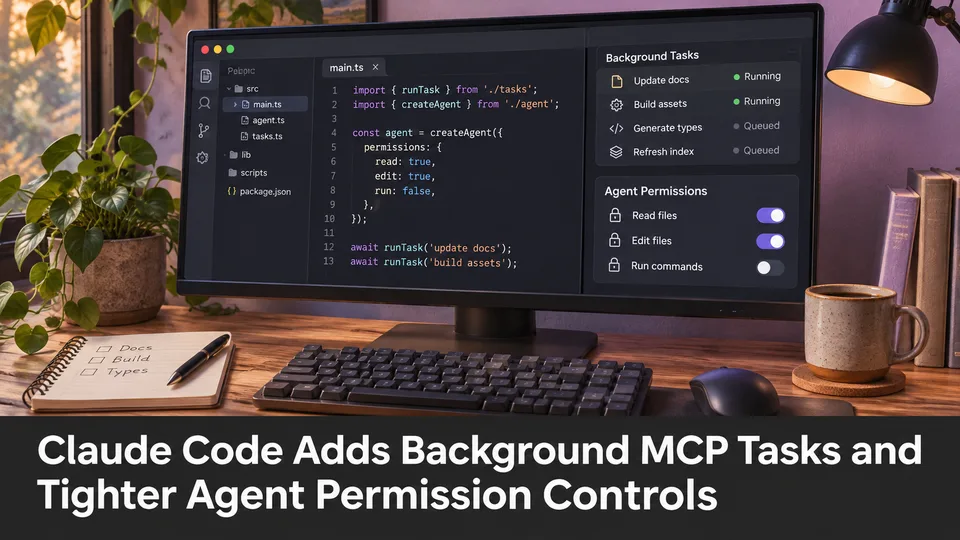
Claude Code Adds Background MCP Tasks and Tighter Agent Permission Controls
Anthropic’s Claude Code 2.1.319 introduced asynchronous MCP tasks and new permission controls. These features may help game developers manage long-running Unreal or Unity tool operations without blocking every agent step.
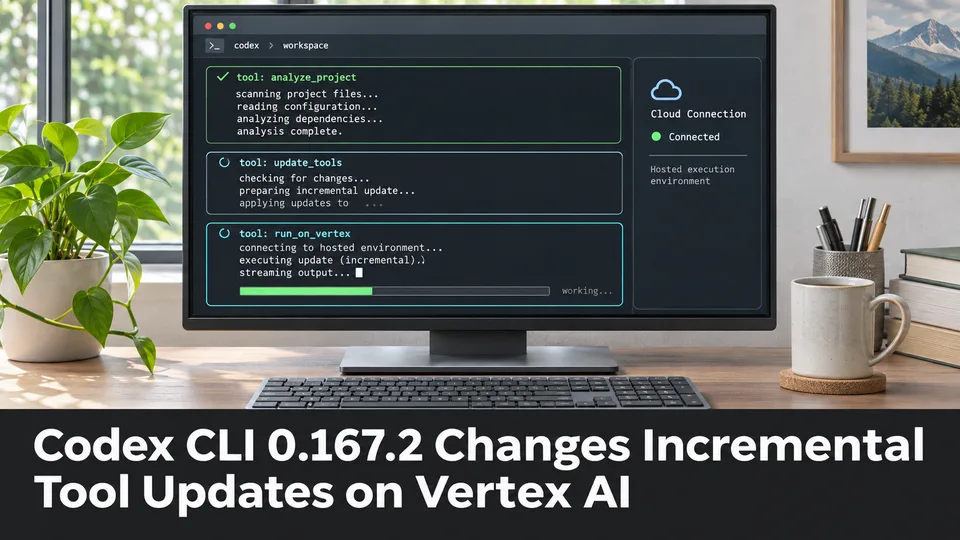
Codex CLI 0.167.2 Changes Incremental Tool Updates on Vertex AI
OpenAI released Codex CLI 0.167.2 with incremental tool updates enabled by default for Google Cloud Vertex AI. The change is relevant to teams using that backend, but it is not a general Unreal or Unity agent feature.

ElevenLabs Previews Interaction Engine for More Natural Voice Agent Timing
At its New York summit, ElevenLabs previewed an Interaction Engine that manages turn-taking, interruptions and model selection in conversations. Real-time game NPC use remains a proposed application, not a shipped game integration.
Comments