
Claude Code 2.1.319 Improves Background MCP Tasks and Permission Handling
Anthropic released Claude Code 2.1.319 with terminal support for background MCP tasks and new controls for prompts in unattended sessions. The changes are relevant to automated engine tooling.
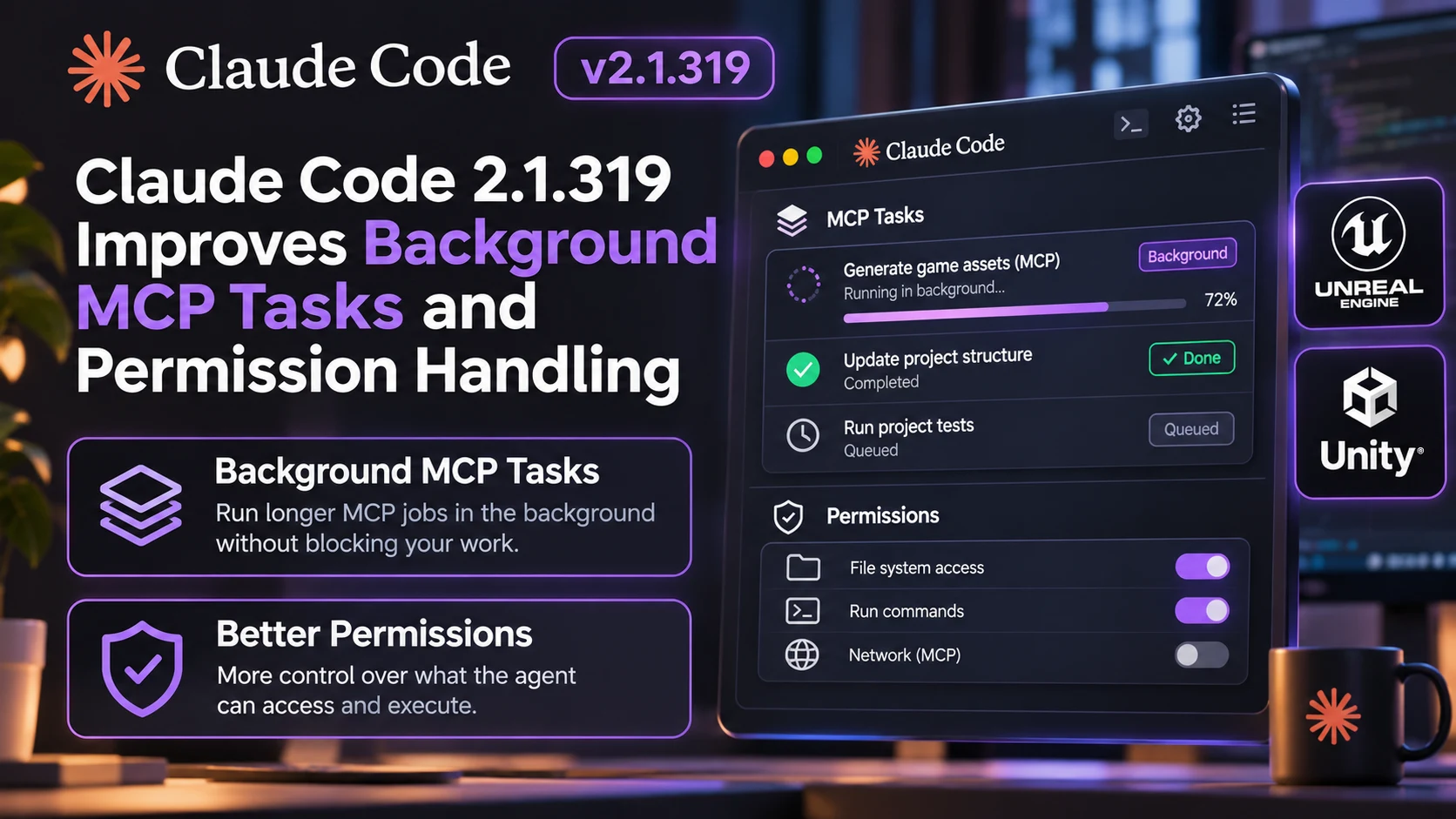
Anthropic published Claude Code version 2.1.319 on November 6, with changes aimed at tool execution and permission behavior in coding workflows. Among the notable additions is support for Model Context Protocol tasks in the terminal: when an MCP server exposes a long-running tool operation as a task, Claude Code can move that operation into the background and notify the agent when it finishes. A configuration option is available for users who need to retain waiting behavior instead.
That distinction can matter in game production. An AI assistant working with Unreal or Unity might request an editor operation that takes longer than a quick file read, such as importing assets, running tests or rebuilding generated content. If the MCP integration supports task-style execution, the agent can potentially continue other work while the server processes the request. However, the release does not mean every Unreal or Unity MCP integration automatically gains background task support; the server must expose compatible operations.
The update also introduces a setting called denyInsteadOfPrompting. It lets a tool call that would otherwise wait for a permission prompt be denied instead, allowing an unattended session to continue without hanging indefinitely. For build automation, that can be preferable to silently granting additional capabilities. A failed or denied action still needs clear reporting, especially if a workflow later generates a seemingly successful result without having completed every requested step.
The release notes include changes to automatic permission handling when certain telemetry, feature flags or gateway configurations are in use. Teams running through organizational proxies should review those details before upgrading. Permission behavior is part of the security boundary for any agent that can edit files, launch processes or interact with external systems. New automation controls should not be interpreted as authorization to bypass review of destructive changes.
For a useful trial, a game studio could connect Claude Code to an isolated test project and an MCP server that supports asynchronous tasks. Ask it to start a non-destructive editor test, perform a separate file inspection and report both outcomes. Then deliberately request an action requiring approval to confirm that the selected permission mode behaves as intended. The value lies in predictable orchestration rather than in a new game-engine feature. Claude Code 2.1.319 is an assistant release, not an Unreal or Unity package update, and any claimed productivity improvement should be measured within the team's actual development process.
Rate this story
What did you think of this article?
Log in to rate this story, comment and like replies.
Log inNo comments yet. Be the first to share your thoughts.
More stories
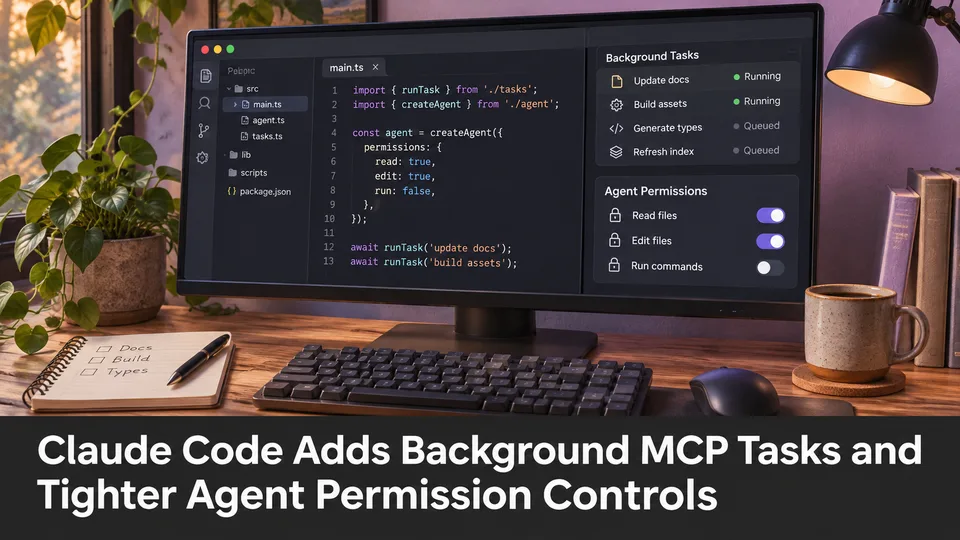
Claude Code Adds Background MCP Tasks and Tighter Agent Permission Controls
Anthropic’s Claude Code 2.1.319 introduced asynchronous MCP tasks and new permission controls. These features may help game developers manage long-running Unreal or Unity tool operations without blocking every agent step.
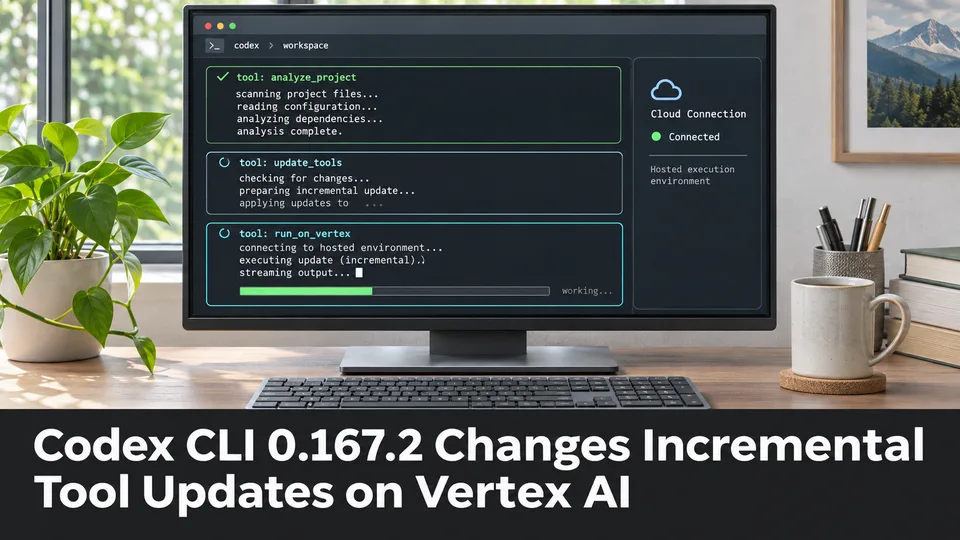
Codex CLI 0.167.2 Changes Incremental Tool Updates on Vertex AI
OpenAI released Codex CLI 0.167.2 with incremental tool updates enabled by default for Google Cloud Vertex AI. The change is relevant to teams using that backend, but it is not a general Unreal or Unity agent feature.
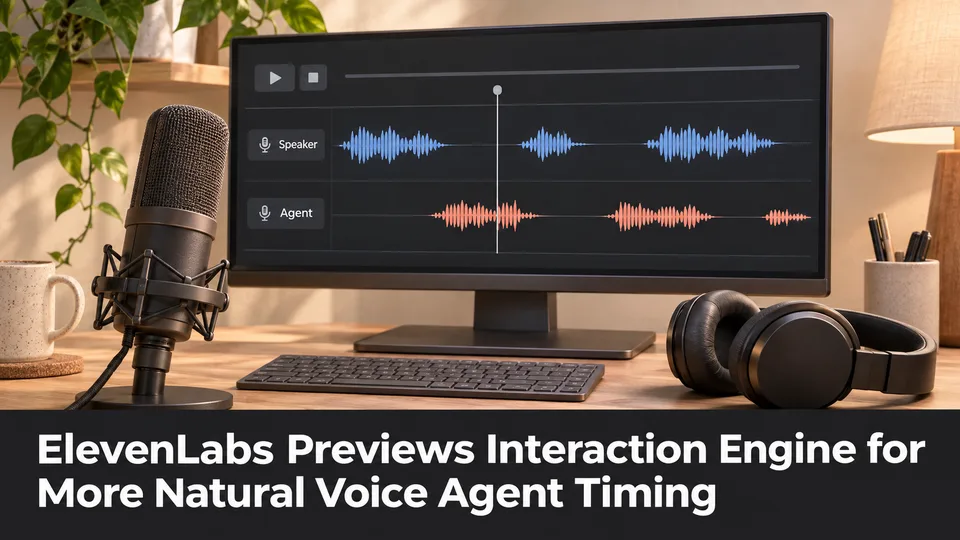
ElevenLabs Previews Interaction Engine for More Natural Voice Agent Timing
At its New York summit, ElevenLabs previewed an Interaction Engine that manages turn-taking, interruptions and model selection in conversations. Real-time game NPC use remains a proposed application, not a shipped game integration.
Comments