
OpenAI Images 2.6 Adds Faster Iteration and SVG Export for Game UI Concepts
OpenAI has introduced Images 2.6 in ChatGPT, Codex and the API, adding new editing controls, GIF creation and SVG exports. For game teams, these are image-asset workflow improvements rather than tools for generating engine-ready 3D models.
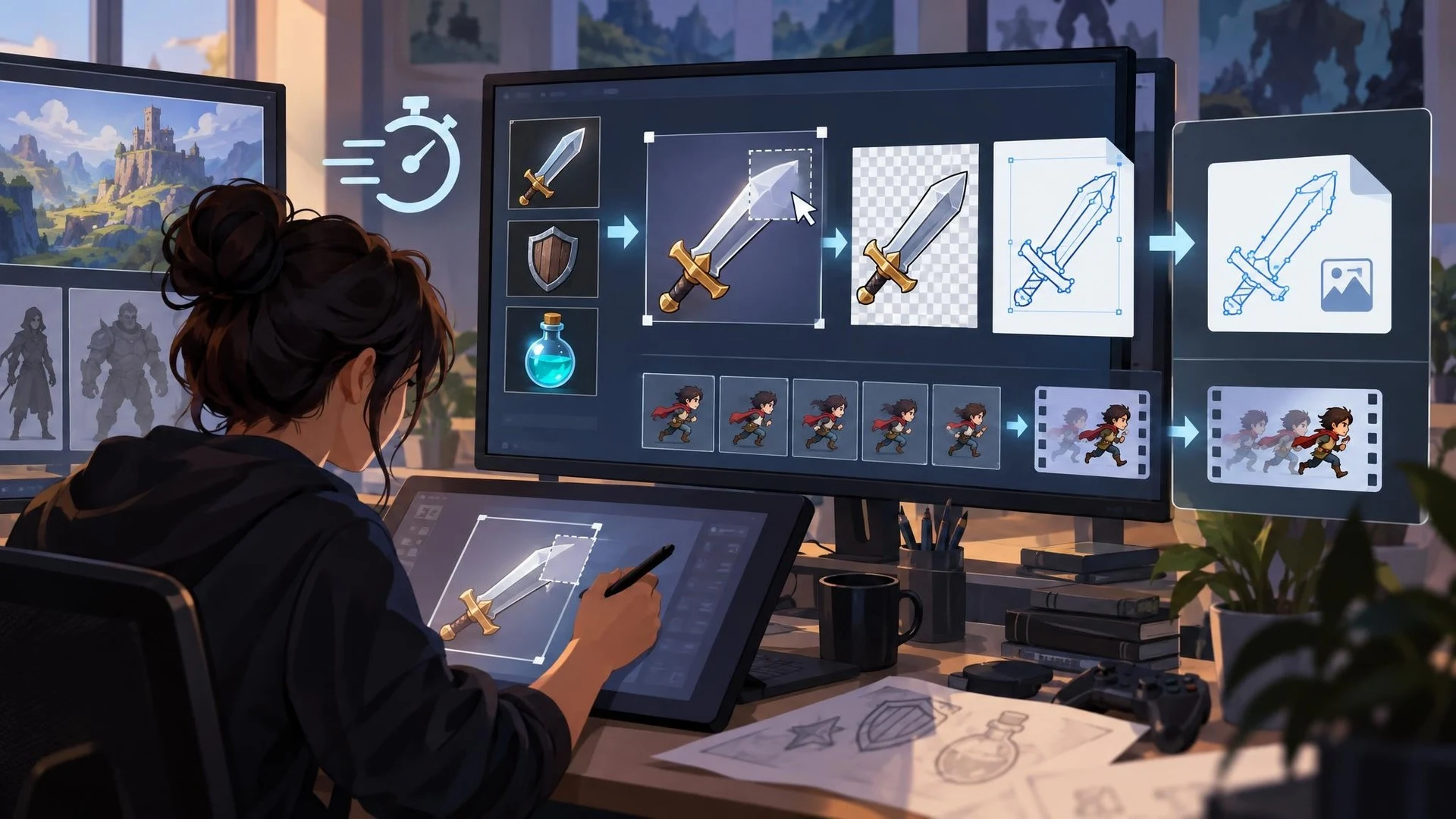
Creating temporary visual assets often interrupts programming work. OpenAI announced Images 2.6 on November 4, 2026, bringing an updated generation and editing system to ChatGPT, Codex and the API. Its features have potential uses in interface mockups, illustrative placeholders, character reference images and early marketing concepts for Unreal Engine or Unity projects.
OpenAI says the new system generates images approximately 50 percent faster than its predecessor, based on the company's measurement. The API provides two named variants: GPT-Image-2.6 Flare and Sunburst. Flare is positioned for speed, while Sunburst targets higher-detail results and consistency across editing rounds. These are product descriptions, not independent performance results for a specific game's artwork pipeline.
One addition particularly relevant to interface designers is SVG export. Vector output can be useful when a design needs to scale between different resolutions. A game developer could use the feature to experiment with menu symbols or icons, then review the exported paths and simplify them before importing. Not every generated SVG is necessarily an optimized or stylistically consistent production icon.
The API also gains image markup for indicating exactly which region should change, along with a complexity setting that adjusts planning effort. Those controls could help with a familiar problem: asking for one small modification to a character or button while preserving the rest of an image. Developers should still inspect the edited region and the unchanged areas for accidental differences.
Images 2.6 also supports GIF creation through animated sprite-sheet workflows. This can help teams visualize a simple gesture or menu transition before implementing real animation. The resulting GIF is not the same thing as a rigged character, game-engine animation asset or frame-perfect sprite atlas ready for every use case.
A practical test would start with a compact inventory interface. Generate three related icons, refine one using image markup, export the suitable results and test readability at the actual sizes used in a Unity or Unreal menu. Compare stroke thickness, colors, edge quality and background transparency. If the project needs animated feedback, create a short storyboard separately and evaluate whether its frames are consistent.
Pricing and access require separate attention. OpenAI says Images 2.6 is available in ChatGPT and Codex subscription tiers, while API models have their own usage-based pricing. The exact cost of bulk asset generation will depend on chosen model, quality and output volume.
For game production, the update improves concept and image iteration. It does not automatically produce optimized meshes, collision geometry, PBR materials or legally reviewed final art. A controlled human review step remains necessary before generated images become published game assets.
Rate this story
What did you think of this article?
Log in to rate this story, comment and like replies.
Log inNo comments yet. Be the first to share your thoughts.
More stories
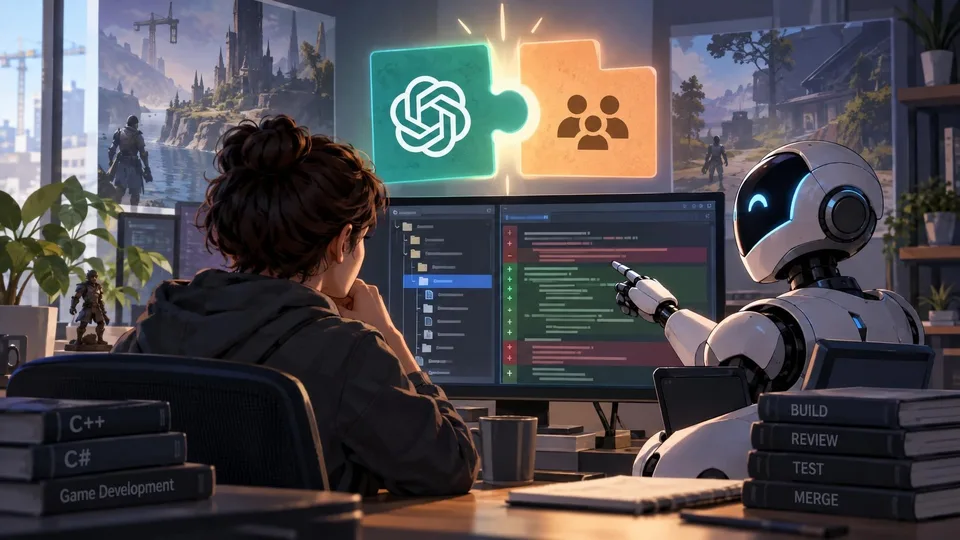
OpenAI Announces Pierre Acquisition to Expand Codex Git Workflows
OpenAI plans to acquire Pierre Computer Company, whose open-source file-tree and code-diff libraries already appear in Codex. The announcement focuses on future developer workflows and is not yet a newly shipped game-engine integration.
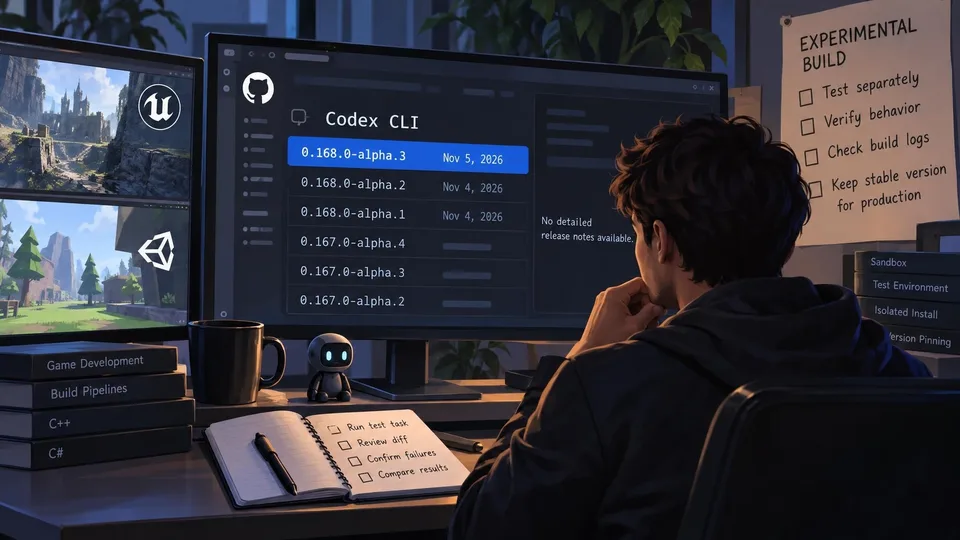
Codex CLI 0.168 Alpha Builds Appear as Experimental Pre-Releases
OpenAI’s official Codex repository lists 0.168.0-alpha.3 dated November 5 alongside earlier alpha builds. The release page does not provide a detailed feature changelog, so developers should treat it as a testing build rather than a confirmed stable upgrade.
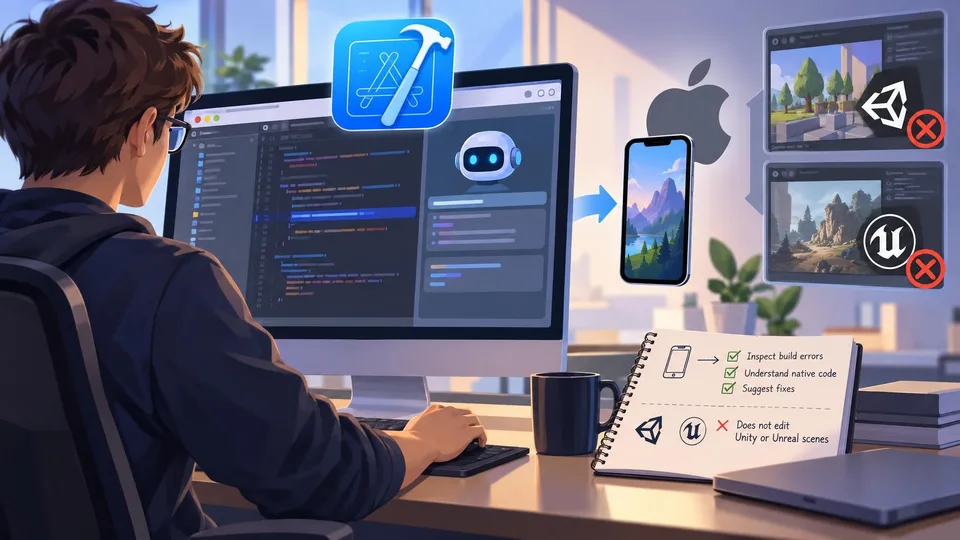
GitHub Copilot Enters the Built-In Xcode Coding Assistant in Public Preview
GitHub Copilot is now available inside the built-in coding assistant of Xcode 27.3 beta on supported Macs. The preview may assist native code around iOS game builds, but it does not directly edit Unity or Unreal Engine scenes.
Comments